 Human Skills
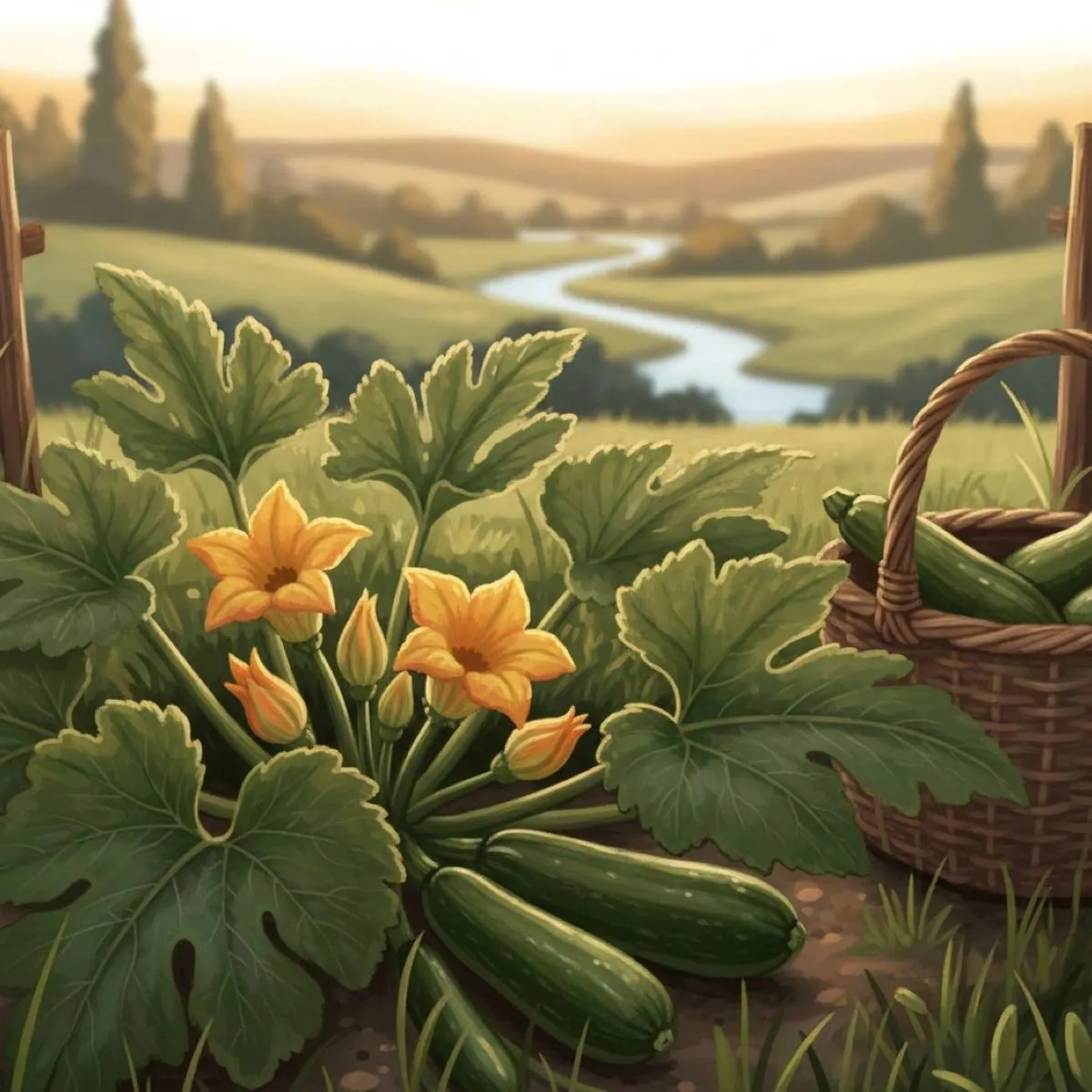
Courgette
Two plants will feed a family all summer, and the flowers are as good to eat as the fruit.
- Sow two seeds per 9 cm pot, 2 to 3 cm deep and placed on edge so they do not rot.
- Germinate at 18 to 21 C, then remove the weaker seedling.
- Dig a hole a spade deep, fill it with compost, and plant on a slight mound so water drains away from the stem.
- Space 90 cm apart. They look tiny at planting and fill that space within six weeks.
- Mulch a 60 cm circle around each plant with 5 cm of compost or straw.
- Water into a sunken pot or pipe beside the plant so the water reaches the roots, not the leaves.
- Start picking at 10 to 15 cm long, and check the plants every single day at peak season.
- Remove a few of the oldest lower leaves in midsummer to let air and light in.
Soil
Very rich, moisture-retentive soil at pH 6 to 7. A bucket of well-rotted manure or compost in each planting hole pays for itself.
Sun
Full sun, six to eight hours. In extreme heat the leaves wilt flat at midday and recover by evening, which is normal.
Water
Thirsty. 10 to 20 litres per plant per week, given at the base in one or two deep soaks rather than a daily sprinkle. Keep water off the leaves to slow mildew.
Spacing
90 cm apart each way for bush types, 120 cm for trailing types
Depth
2 to 3 cm deep, seed placed on its edge
Care
['Feed fortnightly with a high potash liquid feed once the first fruits set.', 'Pick constantly. One marrow left on the plant tells it to stop producing new fruit.', 'Hand pollinate on cool or wet mornings by brushing a male flower into the female flowers.', 'Expect powdery mildew from midsummer and accept it. Remove the worst leaves and keep picking.', 'Never let the plant dry out and then flood it, or the young fruits rot at the tip.']
Harvesting
Cut with a knife, leaving 2 cm of stalk, when the fruit is 10 to 20 cm long and the skin is glossy. Check every day in July and August. Male flowers on long thin stalks can be picked and stuffed, as can female flowers with a baby courgette attached.
Storing
Keeps one to two weeks in the fridge. Courgettes do not dry or store well raw, so preserve the glut by grating and freezing, by pickling, or by cooking and freezing a ratatouille base. Let one or two grow into marrows at the end of the season and those keep two to three months somewhere cool and dry.
Grow it next to
Good with sweetcorn, beans, nasturtiums, borage and marigolds. Keep away from potatoes, which compete heavily for water and nutrients.
Problems
[{'cause': 'Poor pollination, usually from cool wet weather or too few insects', 'fix': 'Hand pollinate in the morning: pick a male flower, strip the petals and dab the pollen into the centre of the female flower. Plant flowers nearby to bring in bees.', 'symptom': 'Small fruits turn yellow at the tip, go soft and rot off'}, {'cause': 'Powdery mildew, made worse by dry roots and humid air', 'fix': 'Water the roots well, never the leaves, remove the worst leaves, and thin the canopy for airflow. It rarely kills the plant, and the crop continues.', 'symptom': 'White dusty coating spreading across the leaves from midsummer'}, {'cause': 'Stem rot from water sitting against the crown', 'fix': 'Plant on a mound, water into a pipe or sunken pot 15 cm from the stem, and improve drainage.', 'symptom': 'Whole plant collapses suddenly with a mushy base'}, {'cause': 'The first flush of flowers on a young plant is all male, which is normal', 'fix': 'Wait a week or two. Female flowers, which have a small fruit behind them, follow shortly after.', 'symptom': 'Loads of flowers early on but no fruit at all'}, {'cause': 'Slugs and snails, which love newly planted cucurbits', 'fix': 'Protect young plants with a cut bottle cloche for the first three weeks and patrol at night.', 'symptom': 'Leaves shredded and stems chewed near the ground on young plants'}]
Saving your own seed
Possible but tricky, because courgettes cross freely with other Cucurbita pepo, including pumpkins, patty pans and ornamental gourds within about a kilometre. Let one fruit grow to full marrow size and go hard, scoop, wash and dry the seed. Hand pollinate and tape the flower shut if you want it to come true.
Containers
Possible but demanding. Use a minimum 40 litre pot, one plant only, a bush variety, and expect to water daily and feed weekly. In the ground it will always do better.
🛒 Gear for this skill
As an Amazon Associate I earn from qualifying purchases. It costs you nothing extra and keeps this site free.