 Human Skills
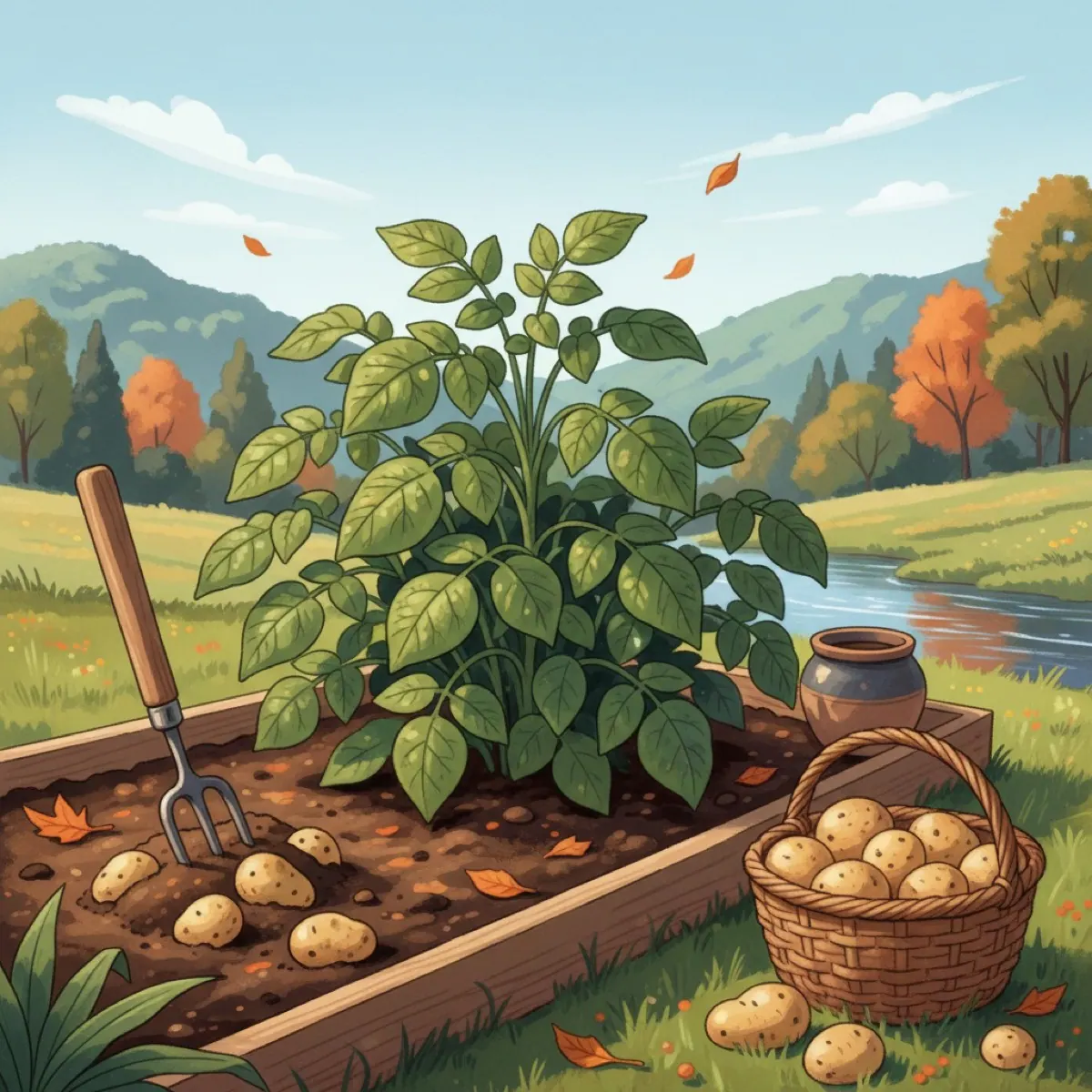
Potato
One seed potato gives you a bucket of food, and the plant does almost all the work for you.
- Buy certified seed potatoes, not supermarket ones, so you do not import blight or virus.
- Chit them: stand them eyes upward in an egg box in a cool bright room for four to six weeks until shoots are 2 cm long.
- Dig a trench 12 to 15 cm deep and drop in a little compost along the bottom.
- Set the tubers shoots upward, 30 to 40 cm apart, and cover them with soil.
- When the shoots reach 20 cm, pull soil up around them to make a ridge 15 cm high. Repeat two or three times.
- Water weekly from the moment flower buds appear, which is when tubers actually bulk up.
- Lift earlies as soon as the flowers open, and maincrop two weeks after the tops die back.
- Leave lifted maincrop on the soil surface for two or three hours to dry the skins before storing.
Soil
Loose, deep, slightly acid soil around pH 5.5 to 6.5. Dig in compost before planting but skip fresh manure, which encourages scab.
Sun
Full sun, at least six hours a day. Shade gives you leaves and very small tubers.
Water
About 20 litres per square metre per week once flowering starts. Steady water beats heavy soaking after a dry spell, which splits tubers.
Spacing
30 cm apart for earlies, 40 cm for maincrop, rows 60 to 75 cm apart
Depth
12 to 15 cm deep, then earth up as the plant grows
Care
['Earth up at least twice. Any tuber that sees daylight turns green and becomes inedible.', 'Feed once at flowering with a high potash feed, such as tomato feed or comfrey liquid.', 'Keep the bed weed free for the first six weeks, after which the foliage smothers weeds itself.', 'In a wet warm spell watch for blight and cut the tops off at ground level at the first brown patches.', 'Never let containers dry out completely. A pot that swings between bone dry and soaked gives knobbly tubers.']
Harvesting
For new potatoes, slide a fork in 30 cm from the stem and lift the whole plant when the flowers open. For maincrop, cut the tops off, wait two weeks so skins harden, then lift on a dry day. Work outwards from the stem so you spear fewer tubers.
Storing
New potatoes keep about a week in the fridge. Maincrop, once dried and sorted, keeps four to six months in paper or hessian sacks at 4 to 10 C in total darkness. Never store in plastic, never in the fridge long term, and throw out any that are soft, green or damaged.
Grow it next to
Good with beans, peas, sweetcorn and horseradish at the bed corners. Keep well away from tomatoes, peppers and aubergines because they share blight, and away from the squash family which competes for the same space.
Problems
[{'cause': 'Late blight, the same fungus-like disease that hit Ireland in the 1840s', 'fix': 'Cut all the foliage off at ground level and bin it, do not compost it. Wait two weeks, then lift the tubers. Next year choose blight-resistant varieties and plant earlies that finish before blight season.', 'symptom': 'Brown patches on leaves with a pale fuzzy edge, spreading fast in warm wet weather'}, {'cause': 'Tubers exposed to light because the ridge was too low', 'fix': 'Cut off and discard the green parts, which contain solanine and are not safe to eat. Earth up higher next time, or mulch with 10 cm of straw.', 'symptom': 'Green patches on the tubers when you lift them'}, {'cause': 'Common scab, worse in dry alkaline soil and after fresh manure', 'fix': 'Harmless once peeled. Keep the soil moist during tuber formation, avoid liming the bed, and use compost rather than fresh manure.', 'symptom': 'Rough corky brown scabs on the skin'}, {'cause': 'Wireworm or slugs, common on ground that was grass the year before', 'fix': 'Lift earlier rather than leaving maincrop in the ground into autumn, and grow earlies on new ground for the first two seasons.', 'symptom': 'Small holes and tunnels through the tubers'}, {'cause': 'Too much nitrogen, or not enough sun', 'fix': 'Stop nitrogen feeds and switch to high potash. Move the bed to a sunnier spot next year.', 'symptom': 'Tall leafy plants with hardly any tubers'}]
Saving your own seed
Potatoes are grown from tubers, not seed, so you simply keep small firm tubers from the best plants. Only do this if your crop was disease free, and buy fresh certified stock every three or four years because virus builds up.
Containers
Excellent in containers. Use a 40 litre bag or bin at least 40 cm deep, three seed potatoes per bag, start with 15 cm of compost and top up as shoots rise. Drainage holes are essential or the tubers rot.
🛒 Gear for this skill
As an Amazon Associate I earn from qualifying purchases. It costs you nothing extra and keeps this site free.