 Human Skills
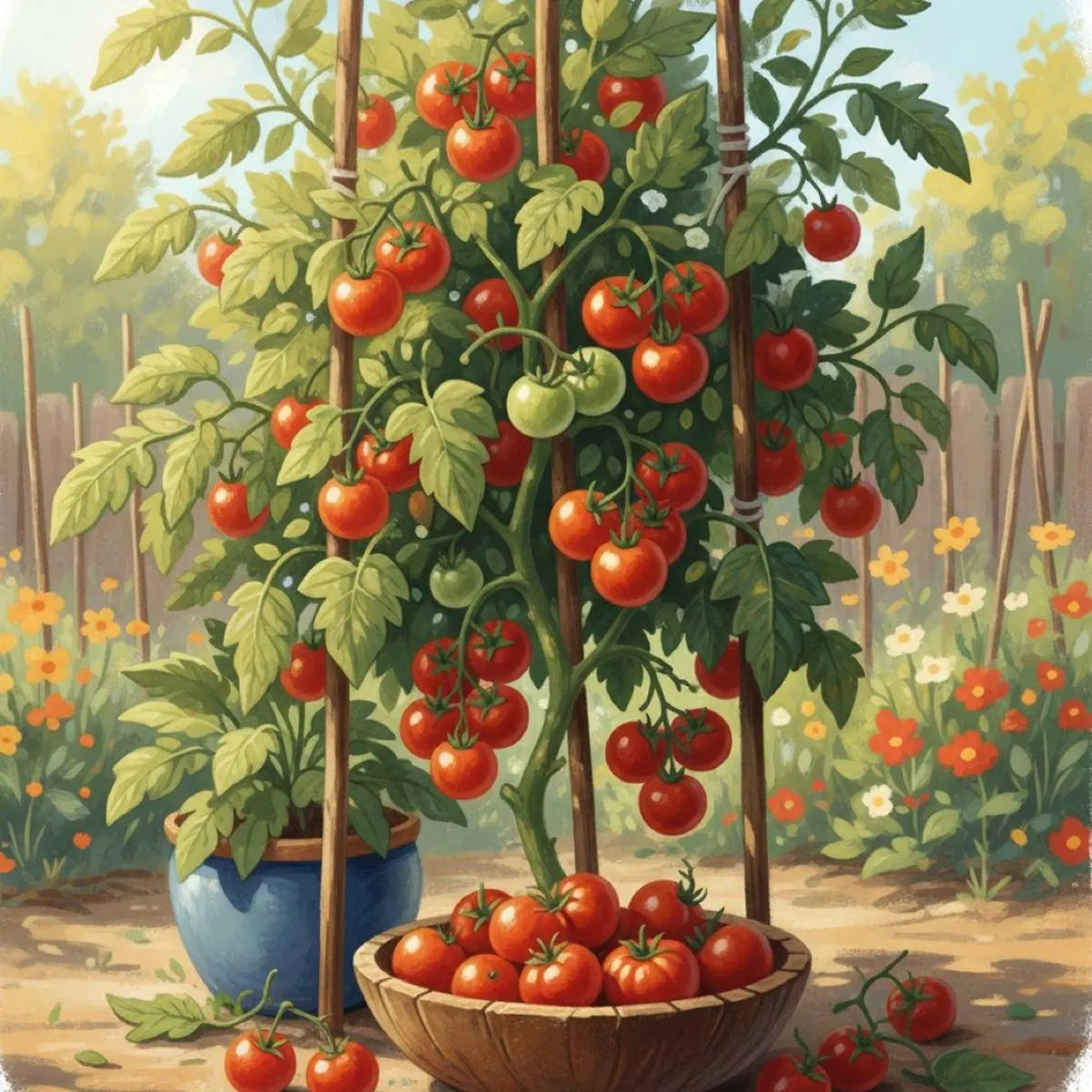
Tomato
The single crop where home-grown beats shop-bought by the widest margin, and one plant can give you five kilos.
- Sow indoors 6 to 8 weeks before your last frost, 5 mm deep in small pots at 18 to 24 C.
- Move seedlings to their own 9 cm pot as soon as the first true leaves appear, burying the stem deep.
- Give them the brightest window or a grow light so they stay short and stocky rather than leggy.
- Harden off over 7 to 10 days, putting them outside for longer each day before planting.
- Plant out after the last frost, burying two thirds of the stem so the buried part roots.
- Put the stake or string in at planting time, not later, so you do not spear the roots.
- For cordon varieties, pinch out every side shoot in the leaf joints once a week.
- Stop the plant by pinching out the growing tip two leaves above the fourth or fifth truss.
Soil
Rich, deep, well-drained soil at pH 6 to 6.8, with plenty of compost dug in before planting.
Sun
Full sun, eight hours a day. In Portugal and other very hot places give afternoon shade in July and August or the fruit scalds.
Water
Deep and regular: 2 to 4 litres per plant every two or three days in hot weather, at the base, never on the leaves. Irregular watering causes blossom end rot and split fruit.
Spacing
45 to 60 cm apart for cordons, 75 to 90 cm for bush types
Depth
Seed 5 mm deep. Plant seedlings deep, burying the stem up to the first leaves.
Care
['Feed weekly with a high potash tomato feed from the moment the first fruits set.', 'Mulch with 5 cm of straw or compost to hold moisture and stop soil splashing onto leaves.', 'Remove the leaves below the lowest ripening truss to improve airflow and speed ripening.', 'Tie cordon stems loosely to the stake every 20 cm with soft twine, in a figure of eight.', 'Tap the flowers or shake the string gently every couple of days indoors to help them set.']
Harvesting
Pick when the fruit is fully coloured and gives slightly to a gentle squeeze. Hold the fruit and bend it upwards at the knuckle in the stalk so it snaps off cleanly. Picking every couple of days keeps the plant producing.
Storing
Never refrigerate fresh tomatoes above about 12 C of ripeness, because cold destroys the flavour. Keep them stalk-side down at room temperature for up to a week. Surplus freezes whole in bags for cooking, or make passata and bottle it. At the end of the season ripen green fruit indoors in a box with a banana.
Grow it next to
Good with basil, French marigold, chives, lettuce and carrots. Keep away from potatoes, which share blight, and from fennel and brassicas.
Problems
[{'cause': 'Blossom end rot, caused by calcium not reaching the fruit because watering was irregular', 'fix': 'Water evenly and deeply rather than in bursts, and mulch. It is a watering fault, not a disease, so nothing sprayed will help.', 'symptom': 'A sunken leathery dark patch on the bottom of the fruit'}, {'cause': 'Late blight, the same organism that attacks potatoes', 'fix': 'Remove and bin affected plants immediately. Grow under cover where you can keep rain off the leaves, choose resistant varieties, and never plant next to potatoes.', 'symptom': 'Brown blotches on leaves and stems, and hard brown patches on fruit, in warm wet weather'}, {'cause': 'Heat stress or very vigorous growth, often after heavy side-shooting', 'fix': 'Usually harmless. Provide afternoon shade in extreme heat and water deeply. The crop is not affected.', 'symptom': 'Leaves curl upward and inward but stay green and healthy'}, {'cause': 'Night temperatures below 13 C or day temperatures above 35 C, or very dry air', 'fix': 'Shade during heat waves, ventilate greenhouses, and be patient. Setting resumes when temperatures return to the 18 to 30 C range.', 'symptom': 'Flowers form and then drop off without setting fruit'}, {'cause': 'Whitefly, mainly a greenhouse problem', 'fix': 'Hang yellow sticky traps, plant French marigolds nearby, and spray the undersides of leaves with soft soap solution. Ventilate well.', 'symptom': 'Sticky leaves, sooty black mould and clouds of tiny white insects'}]
Saving your own seed
Easy and reliable from open-pollinated varieties, since tomatoes mostly self-pollinate. Scoop seed and pulp into a jar, add a little water, leave it three days to ferment, then rinse and dry on a plate. Seed from F1 hybrids will not come true.
Containers
Very good in pots. Allow 30 litres per plant, minimum 30 cm wide and deep, with drainage holes. Container plants need daily watering in summer and a weekly liquid feed, because they cannot go looking for either.
🛒 Gear for this skill
As an Amazon Associate I earn from qualifying purchases. It costs you nothing extra and keeps this site free.