Human Skills
Cook It Simply, Fish Responsibly
Safe cooking, licences, seasons and size limits
6 minAdvancedUpdated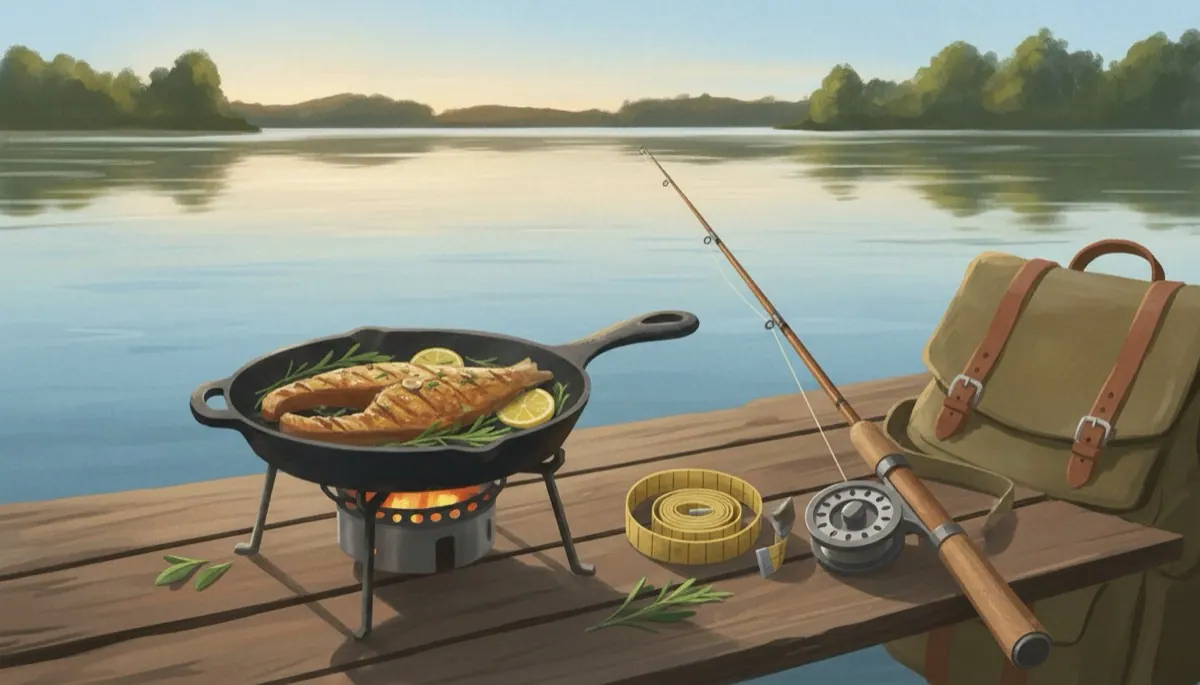
- Cook a fresh fish three simple ways to a safe temperature
- Find your local licence, season and size rules before fishing
- Fish in a way that leaves the water better than you found it
Cooking fish safely
Fish is done when the flesh turns opaque and flakes with a fork, which means an internal temperature of 63 degrees C (145 F). A cheap probe thermometer removes the guessing. Never eat freshwater fish raw; it can carry parasites, and even sea fish for raw dishes must first be frozen at minus 20 degrees C for 7 days to kill worms. Cook fish the day you catch it or the next. Keep raw fish separate from cooked, and wash hands and boards after touching it. If the flesh is mushy, smells of ammonia, or the fish came from water with a pollution warning, do not eat it. Check local advisories for mercury and other contaminants in some lakes and rivers.
Three simple ways
Grilled whole: score the sides of a gutted fish twice, rub with oil, salt and a little lemon, and grill 5 to 7 minutes per side over medium heat or under a hot grill. Sardines, mackerel and bream shine this way. Pan-fried fillet: dry the fillet, salt it, and lay it skin-side down in a hot pan with a spoon of oil. Press gently for 10 seconds, cook 3 to 4 minutes until the skin is crisp and the flesh is opaque most of the way up, then flip for 1 minute. Baked in foil: fillet or whole fish with sliced onion, tomato, herbs, a splash of white wine and olive oil, sealed in foil at 200 degrees C for 15 to 20 minutes. Three methods, any fish you catch.
Licences: location-dependent, always check
Almost everywhere, fishing legally requires some form of permission, and the rules change by country, region, water type and year. This lesson cannot tell you your local law; it can tell you how to find it. Search for your national or regional fisheries authority (in Portugal the DGRM for sea fishing and the ICNF for inland waters; in England the Environment Agency rod licence; in the USA each state's wildlife agency). Look for: whether a licence is needed, its cost and where to buy it, whether fresh and salt water are separate, and whether certain waters need an extra permit from a club or landowner. Fishing without a licence carries fines and can mean confiscated gear. Buy it before you go, keep proof on your phone, and carry it.
Seasons, sizes and limits
Three kinds of rule protect fish stocks. Closed seasons stop fishing for a species while it breeds; in many European rivers coarse fish are protected in spring, and some sea species have closed months. Minimum landing sizes let each fish breed at least once before it can be kept; measure nose to tail tip, and undersize fish go back immediately. Bag limits cap how many of a species you may keep per day. Some species are fully protected and must always be released. All three vary by place and change every year, so treat any number you read online as a prompt to check the official current list, not as fact. When unsure, release the fish.
Responsible fishing habits
Take every metre of discarded line home; it strangles birds and seals for decades. Pick up hooks, sinkers and packaging, yours and others'. Use lead-free weights and barbless hooks. Do not move live fish, bait or plants between waters; clean, dry and check boots and nets before fishing elsewhere to stop invasive species. Keep only what you will eat, and let the big breeders go. Respect private land, close gates, and give swimmers, kayakers and other anglers space. Report pollution, poaching and fish kills to the local authority. The best marks are kept good by the people who fish them.
Your pre-trip checklist
Before every trip, run five checks. One: licence valid and on your phone. Two: species you might catch, with today's minimum sizes, seasons and limits written in a note. Three: weather, tide (if coastal) and swell forecast checked. Four: someone knows where you are and when you will be back. Five: kit includes pliers, tape measure, a bag for rubbish, water, sun protection and a phone in a waterproof pouch. This takes five minutes and covers the law, your safety and the fish. Done consistently, it becomes the habit that separates an angler from someone holding a rod.
Check yourself
63 degrees C (145 F) in the thickest part; the flesh turns opaque and flakes.
Freezing kills parasitic worms. Freshwater fish should never be eaten raw at all.
Rules change yearly and by location. Only the current official source is reliable.
Tiny organisms hitch rides on wet gear and have wiped out fish in entire river systems.
Try it for real: Get legal and cook one catch
- Identify the fisheries authority for your region and confirm what licence you need; buy it if required
- Write a phone note with the season, minimum size and bag limit for three species you may catch
- Fish one session, keep at most one legal fish, release the rest
- Cook it one of the three simple ways to 63 degrees C and share it
- Bring home every scrap of line and rubbish from your spot
🛒 Gear for this skill
As an Amazon Associate I earn from qualifying purchases. It costs you nothing extra and keeps this site free.
Next lesson: Preserving a Catch Without a Freezer →
Written and checked by the Human Skills team against the sources below. How we check our content
- FAO Code of Conduct for Responsible Fisheries
- USDA Food Safety and Inspection Service
- Leave No Trace