Human Skills
Reading a Tree
Leaf, bark, shape and the trees of the Mediterranean
5 minBeginnerUpdated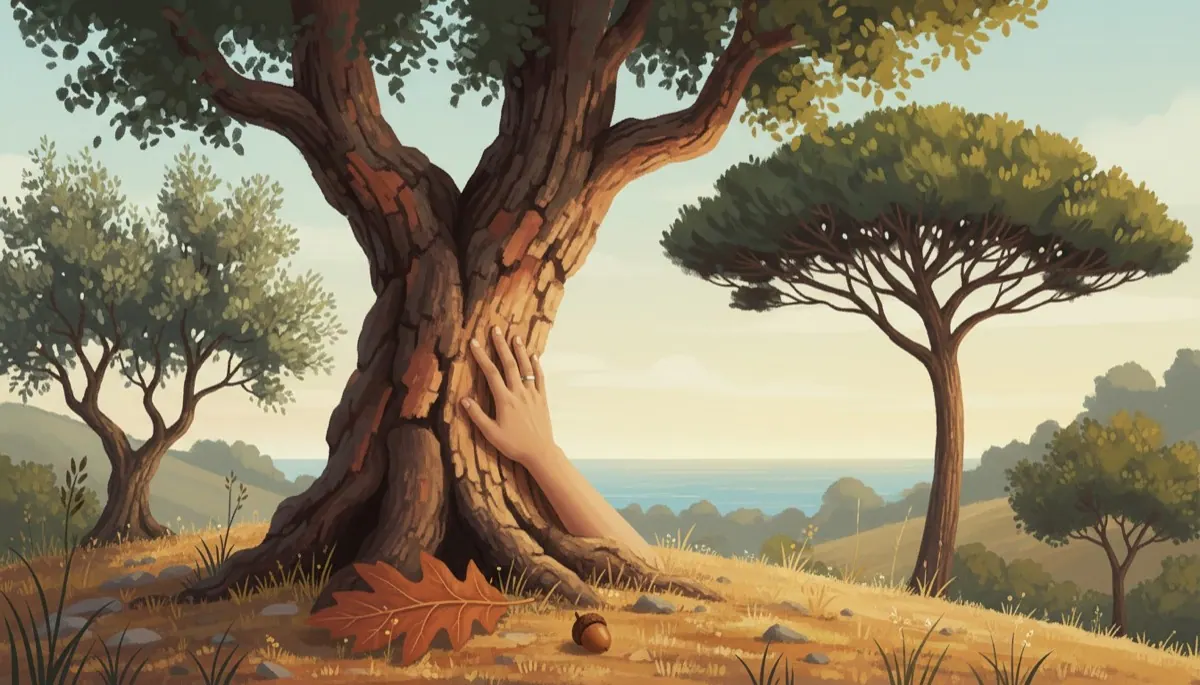
- Split trees into broadleaf and conifer, then into main families by leaf
- Use bark and silhouette to identify trees in winter
- Recognise cork oak, holm oak, stone pine, olive and eucalyptus
Start with the big split
Every tree is either a conifer or a broadleaf. Conifers carry needles or scales, usually stay green all year, and make cones: pines, firs, cypresses, junipers. Broadleaves have flat leaves, and most (not all) drop them in autumn: oaks, beeches, maples, birches, ashes. Then split the conifers by needle grouping. Pines hold needles in bundles of 2, 3 or 5. Firs and spruces hold single needles: fir needles are flat and soft, spruce needles are square and sharp. Cypress and juniper have tiny scales pressed against the twig. Broadleaves split by leaf shape and arrangement exactly as you learned for plants. Ask: simple or compound, opposite or alternate, lobed or toothed or smooth.
Leaves that name the tree
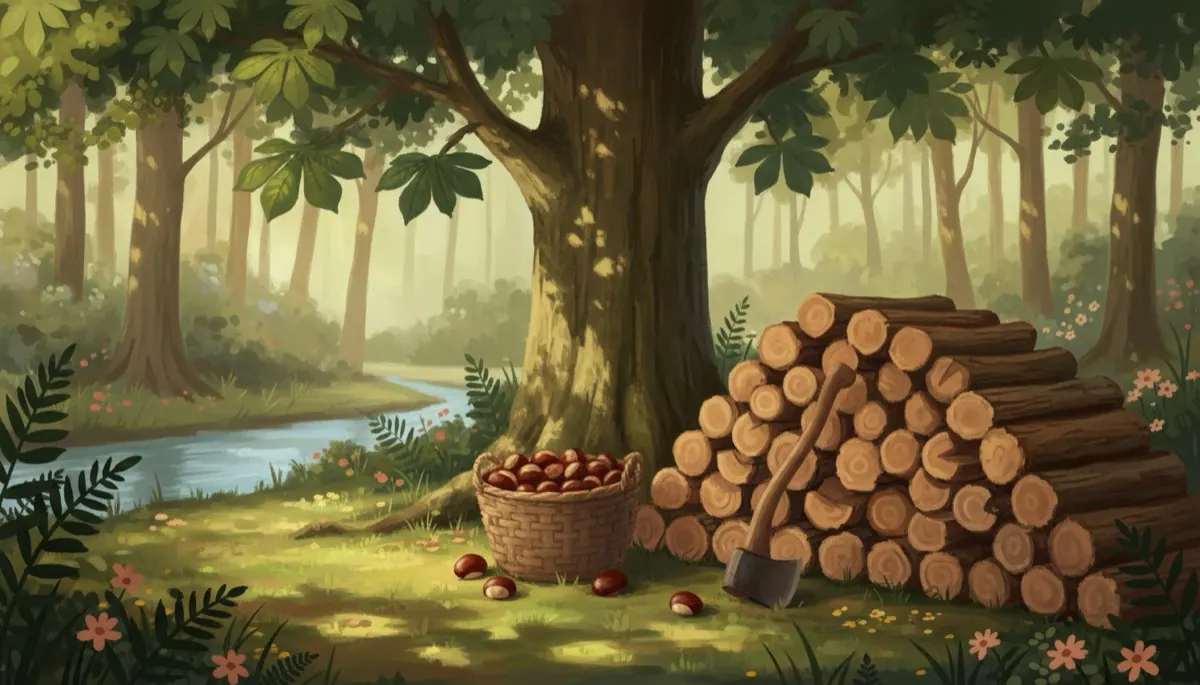
A few shapes are unmistakable. Oak: lobed leaves with rounded or pointed lobes, acorns in cups. Maple and plane: hand-shaped leaves with 3 to 5 pointed lobes, maple opposite, plane alternate with bark that flakes in patches. Ash: compound leaves with 9 to 13 leaflets, opposite, black buds in winter. Beech: smooth oval leaves with wavy edges and silky hairs when young, a grey elephant-skin trunk. Birch: small triangular toothed leaves on a white peeling trunk. Chestnut (sweet): long leaves 15 to 25 cm with sharp saw teeth, spiky husks around the nuts. Willow: long narrow leaves near water. Horse chestnut: compound hand-shaped leaves with 5 to 7 large leaflets, conkers in green spiky cases.
Bark and shape in winter
Without leaves you still have bark, silhouette and buds. Bark: birch is white and papery; beech is smooth and grey; oak is deeply furrowed in ridges; plane flakes in cream and olive patches; cherry has horizontal lines like stitches; pine is plated like reddish jigsaw pieces. Silhouette: oaks spread wide with twisting branches; poplars point up like a brush; beeches make dense domes; pines lose lower branches and hold a high crown. Buds: ash has black buds, horse chestnut has fat sticky brown buds, beech buds are long, thin and pointed like cigars. Winter identification feels harder, but with only three or four features to check, it is often faster.
Mediterranean trees you will meet
In Portugal and the western Mediterranean the tree list is short and distinctive. Cork oak (sobreiro, Quercus suber): evergreen, small leathery leaves grey underneath, thick spongy bark that is stripped every 9 years leaving a rust-red trunk with a painted number. Holm oak (azinheira, Quercus ilex): evergreen, dark rounded crown, holly-like young leaves, sweet acorns that feed the Iberian black pig. Stone pine (pinheiro manso): umbrella-shaped crown, needles in pairs, big round cones with edible pine nuts. Olive: silver-grey narrow leaves, twisted trunk. Eucalyptus: tall, blue-green sickle leaves that smell of menthol, bark peeling in long strips, planted for pulp and infamous for fuelling wildfires. Carob and almond fill the south.
Build your tree list
Aim for ten trees you can name on sight. Pick the ten most common where you live, not the ten most interesting in a book. Walk one route and photograph each tree with its leaf, bark and fruit. Check each against a regional guide and write the confirming features in your notebook. Then test yourself on the same route a week later, and on a different route the week after. Trees do not move, so you can revisit until certainty comes. Once you know ten, the next ten come faster because you recognise families. The reward is practical: you will know which wood burns well, which tree gives edible nuts, and which one is telling you the soil is wet.
Check yourself
Spruce needles are square in cross-section and roll. Fir needles are flat and will not roll. Pines hold needles in bundles.
Cork oak (sobreiro) bark regrows and is stripped roughly every nine years. The bare trunk is painted with the harvest year.
Ash is the tree with distinctive black velvety buds and opposite branching. Beech buds are long and pointed, horse chestnut buds are sticky.
Eucalyptus was planted widely in Portugal for pulp. Its oily leaves and loose bark make it burn intensely in wildfires.
Try it for real: Ten trees on one route
- Choose a walk of 20 to 30 minutes you take regularly.
- Photograph every different tree along it: whole tree, leaf, bark, fruit or cone.
- Identify each using a regional guide and note the two features that confirm it.
- A week later, walk the route and name each tree before checking your notes.
- Stop at ten confirmed trees.
🛒 Gear for this skill
As an Amazon Associate I earn from qualifying purchases. It costs you nothing extra and keeps this site free.
Next lesson: Useful Trees and What Wood Is Good For →
Written and checked by the Human Skills team against the sources below. How we check our content
- Royal Horticultural Society (RHS)
- ICNF Instituto da Conservação da Natureza e das Florestas
- Woodland Trust tree identification guides