Human Skills
Essential Hand Tools
The ten tools that cover most jobs, and how to use them safely
5 minBeginnerUpdated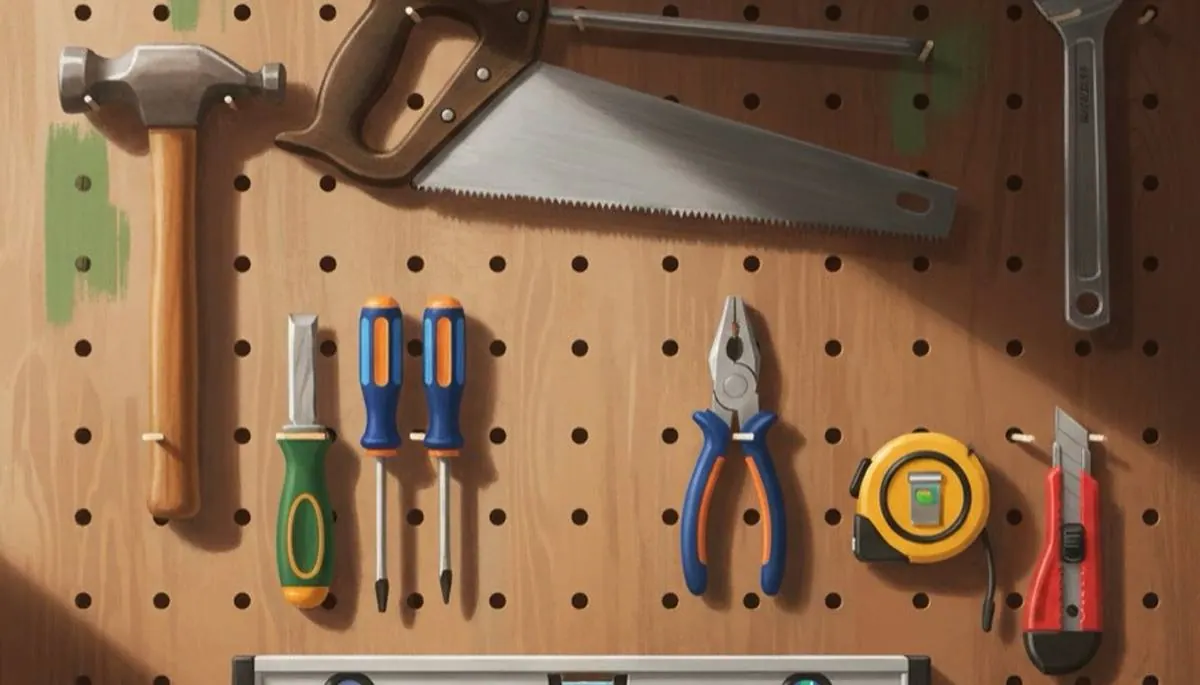
- Name the tools a beginner actually needs
- Use a hammer, saw and screwdriver correctly
- Follow the basic safety habits that prevent injuries
The starter kit
You do not need a wall of tools. Ten cover most household and garden jobs: a 450 g claw hammer, a set of screwdrivers (flat and Phillips, plus a PZ2 for European screws), an adjustable spanner, combination pliers, a retractable knife with spare blades, a 5 m tape measure, a spirit level, a hand saw for wood, a cordless drill with a set of bits, and a garden spade. Add a pair of secateurs and a wheelbarrow if you have outdoor space. Buy mid-priced tools from a hardware store, not the cheapest set in a plastic case; a bad screwdriver strips screws and a bad saw makes every cut a fight.
Hammer and nails
Hold the hammer near the end of the handle, not up by the head; the handle length gives you the power. Start the nail with two light taps holding it between finger and thumb, then move your fingers away and swing from the elbow, keeping your eye on the nail head, not the hammer. Let the weight of the head do the work. To avoid splitting wood near an edge, blunt the nail tip with a tap of the hammer first. The claw pulls nails: slide it under the head and lever with a block of wood underneath to protect the surface and give more leverage.
Screws and screwdrivers
Match the driver to the screw exactly: a Phillips driver in a Pozidriv screw, or a driver one size too small, rounds the head. Push hard into the screw and turn slowly; most stripped screws come from too little downward pressure. Drill a pilot hole slightly narrower than the screw shank in hardwood or near an edge. With a cordless drill, set the clutch low for small screws so it stops before over-tightening. Remember the rule: righty tighty, lefty loosey, and the same goes for most taps and bolts. For a stuck screw, press hard, turn slightly tighter first to break it free, then back it out.
Sawing and cutting
Mark the line with a pencil and a square, then start the cut with a few backward strokes using your thumb knuckle as a guide beside the blade. Once the groove is there, use long, relaxed strokes with the full length of the blade, letting the saw’s weight do the cutting. Support the offcut near the end so it does not tear away. With a retractable knife, always cut away from your body and hands, extend only as much blade as you need, and change blades often; a dull blade needs more force and slips. Keep the hand that holds the work behind the cutting edge, never in front of it.
The safety habits
Injuries come from rushing, poor light, and bad footing. Wear safety glasses when hammering, drilling, cutting or grinding: a chip in the eye is a hospital trip. Wear gloves for rough handling but never around rotating tools, where a glove can pull your hand in. Clamp the work instead of holding it, so both hands are free and your fingers are out of the line of the blade. Keep the floor clear and the light good. Unplug or remove the battery before changing a drill bit or saw blade. Keep a small first aid kit with plasters, a pressure bandage and antiseptic within reach.
Check yourself
Gripping near the end lets the handle length and head weight do the work, with less effort and better accuracy.
A driver that does not fit, or one that is not pushed firmly into the screw, cams out and rounds the head.
A glove caught in a rotating bit pulls the hand in. Wear gloves for handling, never near spinning tools.
Always cut away from yourself with the holding hand behind the blade, so a slip goes into empty air.
Try it for real: Build a tool corner
- Gather or buy the ten starter tools and check each one works
- Give them a fixed home: a box, a drawer or a pegboard
- Practise driving three screws into scrap wood with a pilot hole, then remove them
- Saw a straight 30 cm line in a plank, marked with a square, and check it with the level
🛒 Gear for this skill
As an Amazon Associate I earn from qualifying purchases. It costs you nothing extra and keeps this site free.
Next lesson: Tool Maintenance →
Written and checked by the Human Skills team against the sources below. How we check our content
- HSE (UK Health and Safety Executive) hand tool guidance
- OSHA Hand and Power Tools
- Red Cross First Aid