Human Skills
Shelter Basics
Site, insulation and a simple tarp setup that beats wind and rain
5 minIntermediateUpdated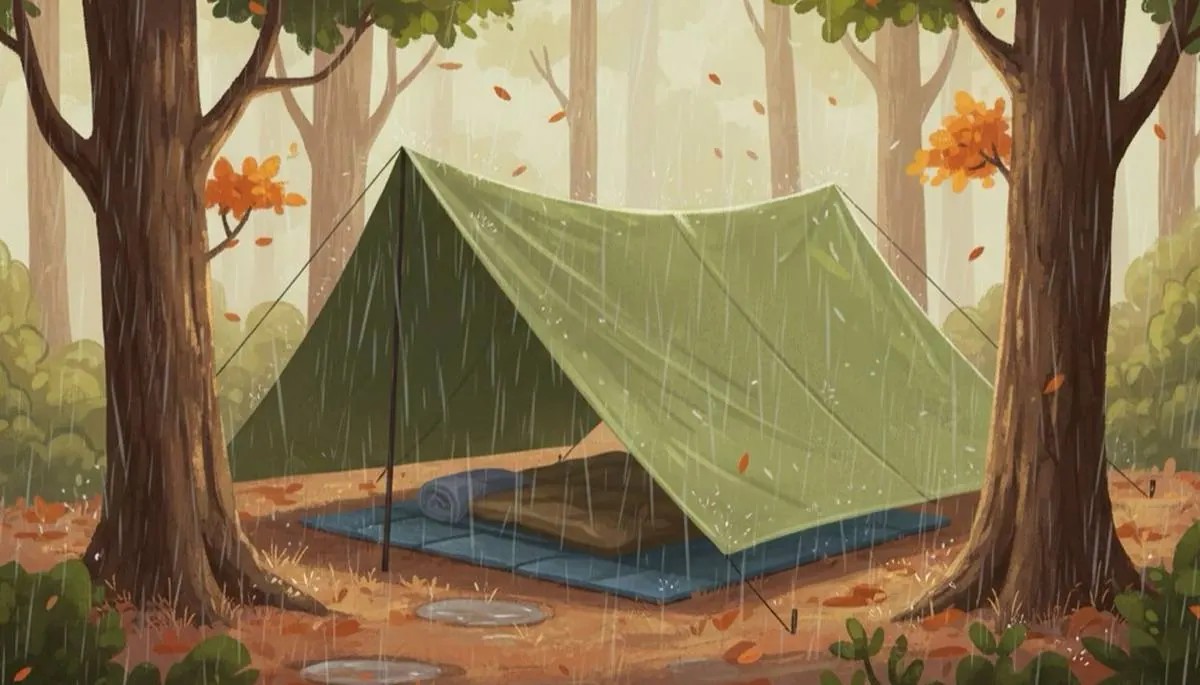
- Choose a safe, dry shelter site and avoid the classic mistakes
- Insulate yourself from the ground, the biggest heat thief
- Pitch a tarp lean-to that sheds wind and rain
Why shelter comes before food
In cold, wet or windy conditions, exposure can become dangerous in hours, long before hunger matters. Wind strips heat from wet skin many times faster than still air, and lying on cold ground pulls heat straight out of your body. Shelter is anything that blocks wind, keeps rain off and puts insulation between you and the ground. It does not need to be a hut. A dry hollow behind a boulder with a mat of dead bracken underneath you counts. Start looking for a shelter site at least two hours before dark, while you can still see, gather materials and fix mistakes.
Choosing the site
Pick ground that is flat, slightly raised and well drained, so rain runs away from you rather than pooling. Avoid valley bottoms where cold air collects at night, dry stream beds that flood in a storm, and the base of cliffs where rocks fall. Look up: dead branches, called widowmakers, kill campers every year, so never sleep under a dead tree or a large dead limb. Stay out of the open on ridge tops where wind is strongest. The ideal spot is on the sheltered side of a hill, near but not next to water, with natural windbreaks such as a boulder, a thick bush or a fallen log to build against.
Insulate from the ground
Most of your heat loss at night goes downwards, not upwards. Before anything else, build a bed at least 15 centimetres thick of dry leaves, bracken, pine needles, grass or small springy boughs. Compress it by lying on it and add more; it should end up thick enough that you cannot feel the ground when you press your hand into it. A closed-cell foam mat or an inflatable pad does the same job and packs small. A rucksack under your legs, a rope coil under your hips and spare clothing under your torso all help. A sleeping bag on bare ground is far colder than clothes on a thick bed of leaves.
The tarp lean-to
A 3 by 3 metre tarp and 15 metres of cord make a fast, reliable shelter. Tie a ridge line between two trees at about hip height, with the line running across the wind. Throw the tarp over so two thirds hangs on the windward side down to the ground, and peg or weigh that edge with rocks. The remaining third forms a short roof on the sheltered side. Peg the low edge tight so the wind cannot get under it. Lay your ground bed inside. This blocks wind, sheds rain and reflects heat from a small fire built 1 to 2 metres in front of the open side.
Natural debris shelter
Without a tarp, a debris hut works but takes two to three hours and a lot of material. Prop a ridge pole about 3 metres long against a stump or a forked branch at roughly hip height, with the low end on the ground. Lean sticks along both sides at a 45 degree angle to make a narrow A-frame just big enough for your body. Pile dead leaves, bracken and grass over the whole frame until it is at least 60 centimetres thick, then lay light branches over to hold it in wind. Stuff the inside with dry leaves and crawl in feet first. It is cramped by design; your body heat warms the small space.
Check yourself
Dead branches and trees fall without warning, especially in wind. Always look up before you settle.
Conduction into cold ground is the biggest heat loss, which is why a thick ground bed comes first.
Around 15 centimetres of compressed dry leaves or needles stops you feeling the ground and blocks heat loss.
The tarp's long side faces the wind and is pegged to the ground so gusts cannot get underneath.
Try it for real: Pitch a tarp in your garden or a park
- Buy or borrow a 3 by 3 metre tarp and 15 metres of cord
- Tie a ridge line between two points at hip height and pitch a lean-to with the low side into the wind
- Build a ground bed from leaves or use a foam mat and lie inside for ten minutes
- Note what flapped or leaked and fix it before taking it down
🛒 Gear for this skill
As an Amazon Associate I earn from qualifying purchases. It costs you nothing extra and keeps this site free.
Next lesson: Staying Warm, Staying Cool →
Written and checked by the Human Skills team against the sources below. How we check our content
- Leave No Trace
- Mountaineering: The Freedom of the Hills