 Human Skills
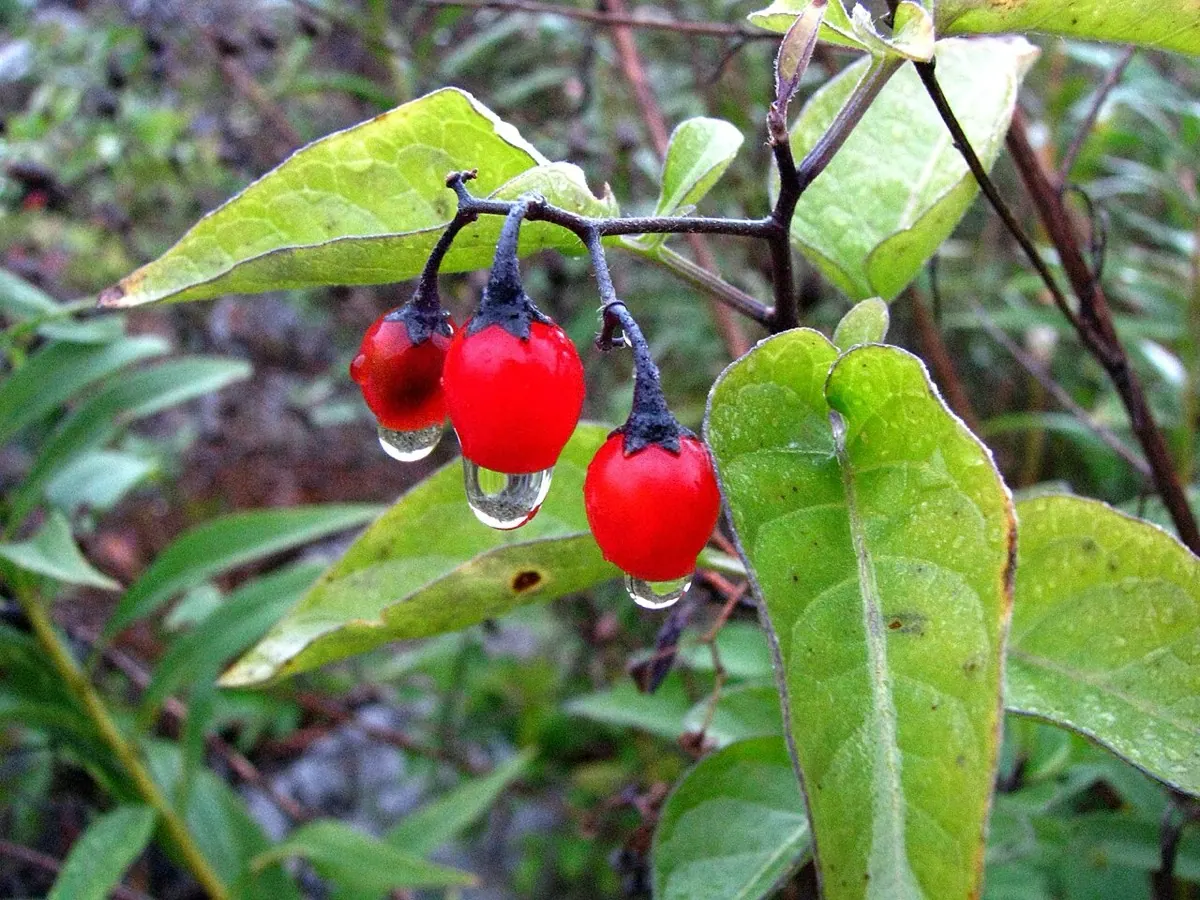
Photo: David Eickhoff from Pearl City, Hawaii, USA, CC BY 2.0, Wikimedia Commons

Bittersweet
Solanum dulcamara
PoisonousScarlet berries in hedges that look like redcurrants and burn the gut of any child who eats them.
Confused with
Danger: Solanine-type poisoning: burning mouth and throat, vomiting, stomach pain, drowsiness and, with a lot of berries, a slowed heart and breathing trouble. Serious cases are mostly children.
How to tell: Look at the plant, not the berry. Redcurrants grow on an upright woody bush with maple-shaped lobed leaves and hang in long neat strings. Bittersweet scrambles through a hedge, has pointed leaves with little ears at the base, and its berries hang in loose few-berried bunches. If you see purple flowers with a yellow beak anywhere on the plant, it is bittersweet.
Danger: Same burning gut poisoning. People assume any red berry in the nightshade family is a tomato relative worth eating.
How to tell: Goji leaves are narrow and grey-green on a spiny arching shrub and the berries are long ovals. Bittersweet has eared leaves and scrambles without spines. Being a tomato relative does not make anything edible.
Leaves
Dark green, 4 to 12 cm, pointed oval, often with one or two small separate lobes or ears at the base, giving a little arrow or halberd shape. Alternate, thin, slightly hairy.
Flowers
Very distinctive: five backswept purple petals with a bright yellow cone of anthers pointing forward, 1 to 1.5 cm across, in loose drooping clusters. Berries follow, oval, 8 to 12 mm, ripening green to yellow to bright glossy scarlet, hanging in small bunches.
Stem
Woody at the base, green and soft at the tips, round, hollow-ish in older growth, scrambling and twining through other plants.
Smell or taste
Crushed stems smell unpleasant and slightly bitter. The old name comes from a bitter then sweetish taste of the stem, and that is exactly the kind of test this guide tells you never to do.
Habitat
Hedges, riverbanks, reedbeds, damp woodland, ditches, waste ground and shingle. Common across Europe and in damp ground in northern and central Portugal.
Preparation
No preparation makes it safe. Cooking and drying do not remove the glycoalkaloids. Do not make jelly, wine, syrup or tea from any part.
Traditional use
The stems were once dried and used in folk medicine for skin complaints and rheumatism, and it appears in old pharmacopoeias as dulcamara. Those preparations were poisonings waiting to happen and are no longer used. There is no safe home use.
Harvest rule
Cut it out of hedges bordering play areas, poultry runs and paddocks. Gloves on, cut the woody base and pull the growth clear, and bag the berries so seed is not spread. Elsewhere it feeds birds, so leaving it in a wild hedge is reasonable as long as everyone using that path can recognise it.
Doce-amarga, erva-moira-trepadeira (PT); woody nightshade, bittersweet (EN)