 Human Skills
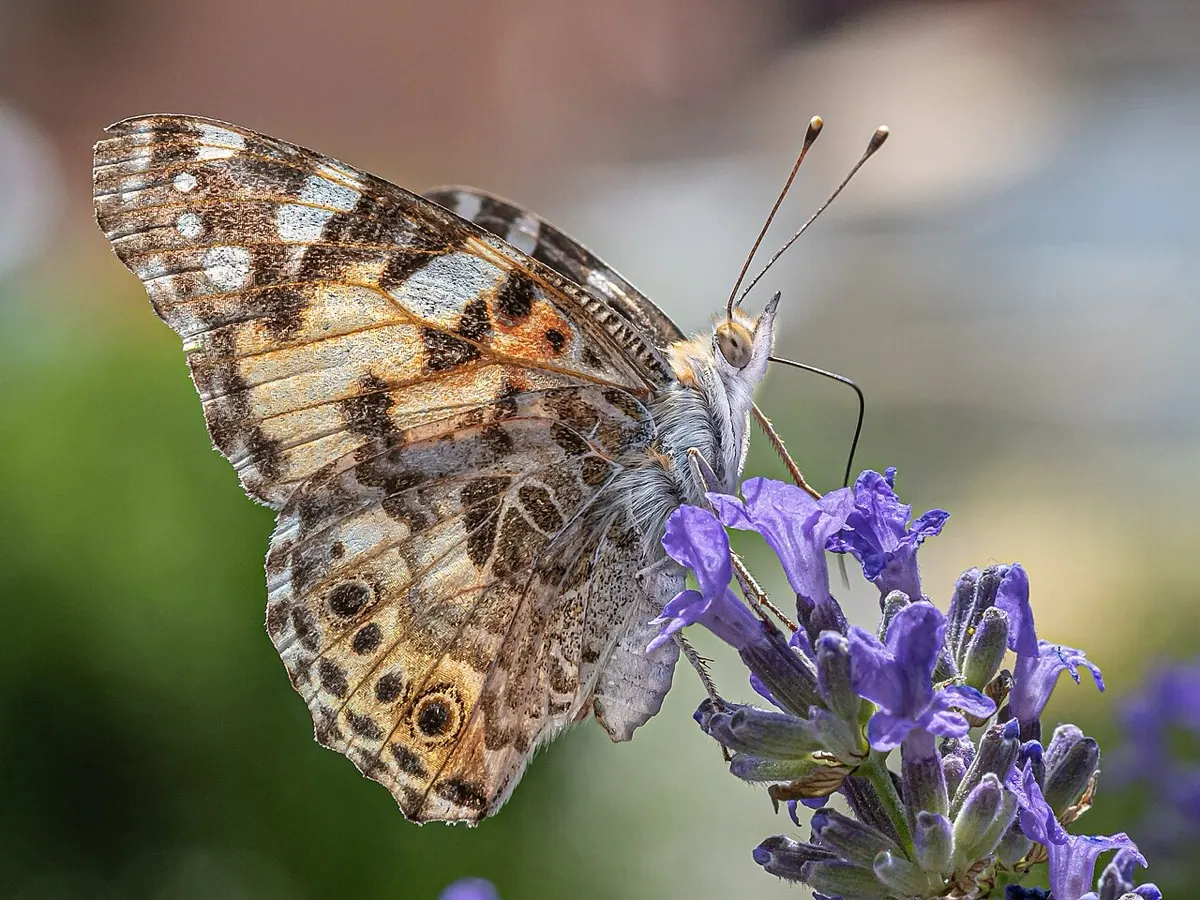
Photo: Isiwal, CC BY-SA 4.0, Wikimedia Commons

Lavender
Lavandula angustifolia
Grey narrow leaves, purple spikes and a scent that carries on a hot afternoon: the calming and linen herb of the Mediterranean.
Confused with
Danger: Not dangerous, but much higher in camphor, harsher in smell, and not the species behind most traditional and modern lavender products.
How to tell: L. stoechas has a short, fat, dark purple flower head topped by a conspicuous tuft of large purple petal-like bracts, like rabbit ears. True lavender has a slim spike with nothing on top.
Danger: Not dangerous, but far more camphorous and usually grown for oil volume rather than for quality.
How to tell: Lavandin is a much bigger bush, often over a metre, with long branched flower stalks carrying side spikes. True lavender is smaller with single unbranched spikes.
Leaves
Opposite, narrow and strap-like, 2 to 6 cm long and only 2 to 6 mm wide, grey-green with a fine white down, edges slightly rolled under, crowded on the lower part of the shoots.
Flowers
Small violet-blue two-lipped flowers, 8 to 12 mm, in interrupted whorls forming a slim spike 3 to 8 cm long on a long bare stalk well above the foliage. True lavender has no tuft of coloured bracts on top of the spike.
Stem
Square and grey-downy in the young growth, woody and grey-brown at the base with shredding bark. Flower stalks are long, slim, leafless and four-angled.
Smell or taste
The classic clean, sweet, soapy floral scent, released by brushing past the plant on a hot day. Do not taste to identify; culinary lavender is used, but only in tiny quantities and only from plants you have grown and identified with certainty.
Habitat
Dry sunny slopes, poor stony well-drained soil, garden borders and field-scale plantings. Common in Portuguese gardens and increasingly grown as a crop in the interior.
Preparation
Cut the flower spikes when about half the buds on the spike have opened, in the morning of a dry day, which is when the scent is strongest. Tie small loose bundles and hang them upside down in a dark, dry, airy room for two to three weeks. Once fully dry, rub the buds off over a bowl and store them in a sealed dark jar; they hold their scent for a year or more. Infusion: half a teaspoon to a teaspoon of dried flower buds in a cup of hot water, covered five to ten minutes, then strained. Lavender is strongly flavoured and traditionally used sparingly. Infused oil for massage: fill a jar loosely with fully dried buds, cover with almond or olive oil, seal, leave warm for two to three weeks shaking daily, then strain. Use dried flowers only; fresh ones bring water and spoil the oil. Dried buds also go into linen sachets, which is the oldest use of all.
Traditional use
Lavender has been the calming and cleansing herb of Mediterranean households for centuries. Dried alfazema was traditionally put among bed linen and stored clothes to keep moths out and to scent the cupboard, added to bathwater at the end of a hard day, and drunk as a weak evening infusion for a restless mind. Infused lavender oil was rubbed into tired shoulders, and the smell was considered to settle a household. This is tradition and household custom, not a treatment for anxiety, insomnia, headaches or anything else.
Harvest rule
Cut the flower stalks with shears, leaving at least 5 cm of green growth above the old wood, and never cut into the bare grey wood, which does not resprout. Take no more than a third of a bush. Lavender is easily grown from cuttings, so plant your own rather than stripping anyone else's. Ask permission on private land, and check local rules, which vary by country and are restrictive inside protected areas.
Alfazema, lavanda (PT); lavanda, espliego (ES)