 Human Skills
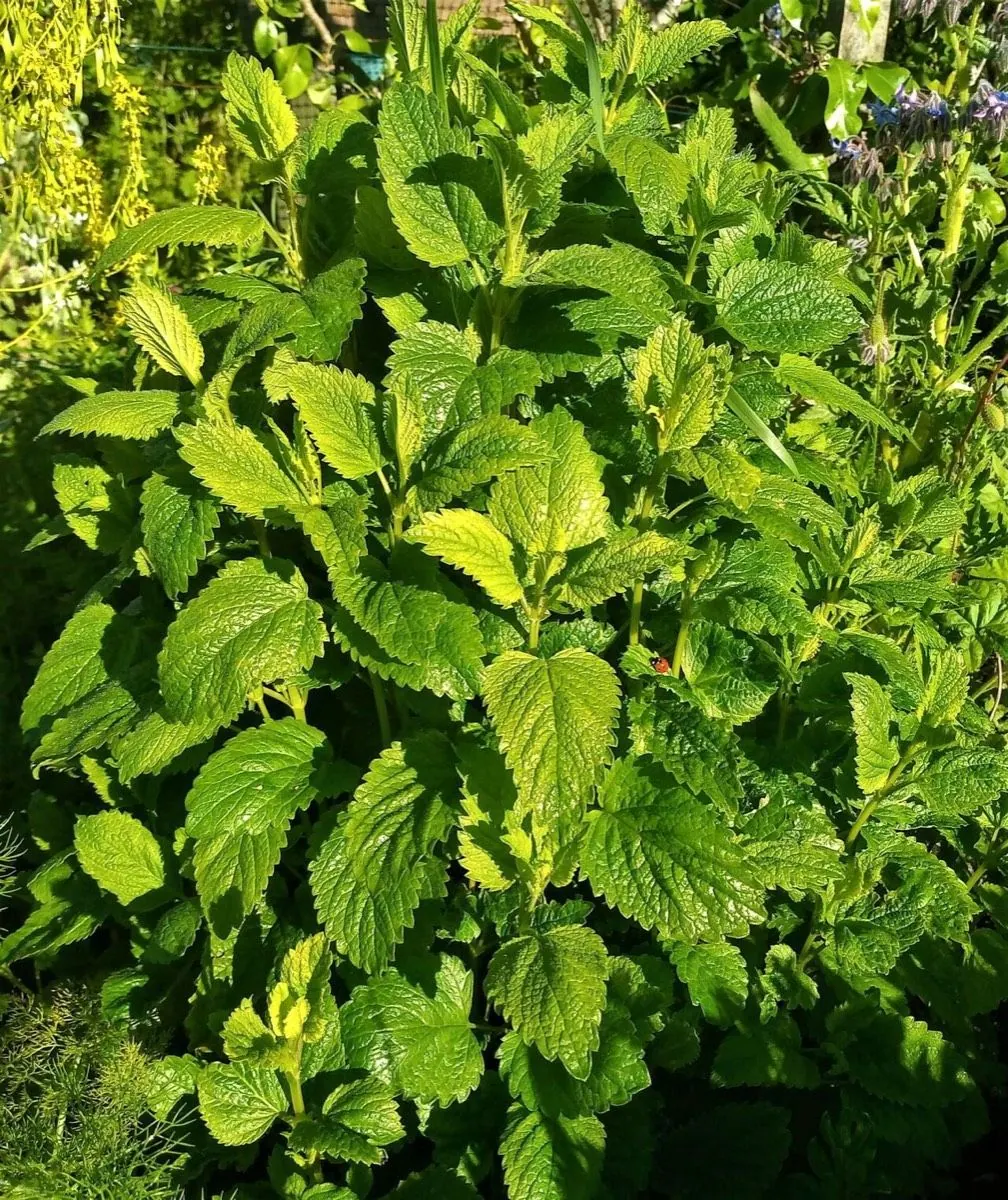
Photo: Amitchell125, CC BY-SA 4.0, Wikimedia Commons

Lemon Balm
Melissa officinalis
A square-stemmed mint relative whose crushed leaf smells unmistakably of lemon sweets, and which Portugal drinks as erva-cidreira.
Confused with
Danger: Not dangerous. White deadnettle does not sting and mints are edible, but they are not lemon balm and the tea is a different thing entirely.
How to tell: Smell decides it in one second. Only lemon balm smells of lemon. Deadnettle smells faintly rank and carries large hooded white flowers; mints smell of mint.
Danger: Painful sting rather than poisoning, but an unpleasant way to learn.
How to tell: Nettle leaves are longer, sharply saw-toothed, dull dark green and covered in stinging hairs, and they have no lemon smell. Lemon balm is soft, scalloped and lemon-scented. Look before grabbing.
Leaves
Opposite, in pairs set at right angles to the pair below, heart-shaped to oval, 2 to 8 cm long, with a clearly scalloped or bluntly toothed edge, a deeply wrinkled surface between sunken veins, and soft hairs. Bright fresh green, paler underneath.
Flowers
Small, 8 to 15 mm, pale white or faintly yellowish turning cream, in little clusters tucked into the leaf joints along the upper stem rather than in a showy head. Modest and easy to miss. Bees crowd them.
Stem
Square in cross section, and you can feel the four edges by rolling it between finger and thumb. Hairy, branched, hollow only in the oldest lower part, and it stands upright before sprawling.
Smell or taste
Rub a leaf between your fingers: a clean, sweet, unmistakable lemon scent, softer and sweeter than a real lemon. This is the identifying feature. Once you have confirmed the plant by the square stem, opposite wrinkled leaves and lemon smell together, the leaf is well known as a safe kitchen tea herb.
Habitat
Gardens, old walls, orchard edges, shaded damp ground and hedge bottoms, usually as a garden escape. Very common in Portuguese quintas and gardens, and widespread across southern and central Europe.
Edible parts
Leaves, as a tea herb and kitchen flavouring.
Preparation
Cut leafy stems before or just as the plant flowers, when the lemon scent is strongest, on a dry morning. Strip the leaves, spread them in a single layer out of sunlight in a warm airy room and dry them for roughly five to ten days until they crumble. Lemon balm loses its scent faster than almost any other herb, so store it whole in a sealed jar in the dark and replace it every year. Freezing chopped fresh leaves in a little water in an ice tray keeps the aroma better than drying. Infusion: a heaped teaspoon of dried leaf, or a small handful of fresh leaf, in a cup of hot water, covered for five to ten minutes, then strained. Fresh leaves are also traditionally dropped into cold water, into fruit salads, or steeped in honey.
Traditional use
Erva-cidreira is the everyday calming tea of Portuguese households, drunk in the evening or after a stressful day, and traditionally given to settle a churning stomach and to ease a restless night. European herbals from the Middle Ages onwards describe it as the herb that gladdens the heart, and it has long been kept by beekeepers because bees love it. Crushed fresh leaf was also rubbed on insect bites in folk practice. That is tradition and custom, recorded as history. It is not a treatment for anxiety, insomnia or any illness.
Harvest rule
Cut stems with scissors, taking no more than a third of any clump and never pulling up the roots, so it regrows within weeks. It spreads readily in gardens, so grow your own rather than stripping wild stands. Ask permission before cutting on other people's land, and check local rules, which differ by country and are strictest inside protected areas and national parks.
Erva-cidreira, melissa (PT); toronjil (ES)