 Human Skills
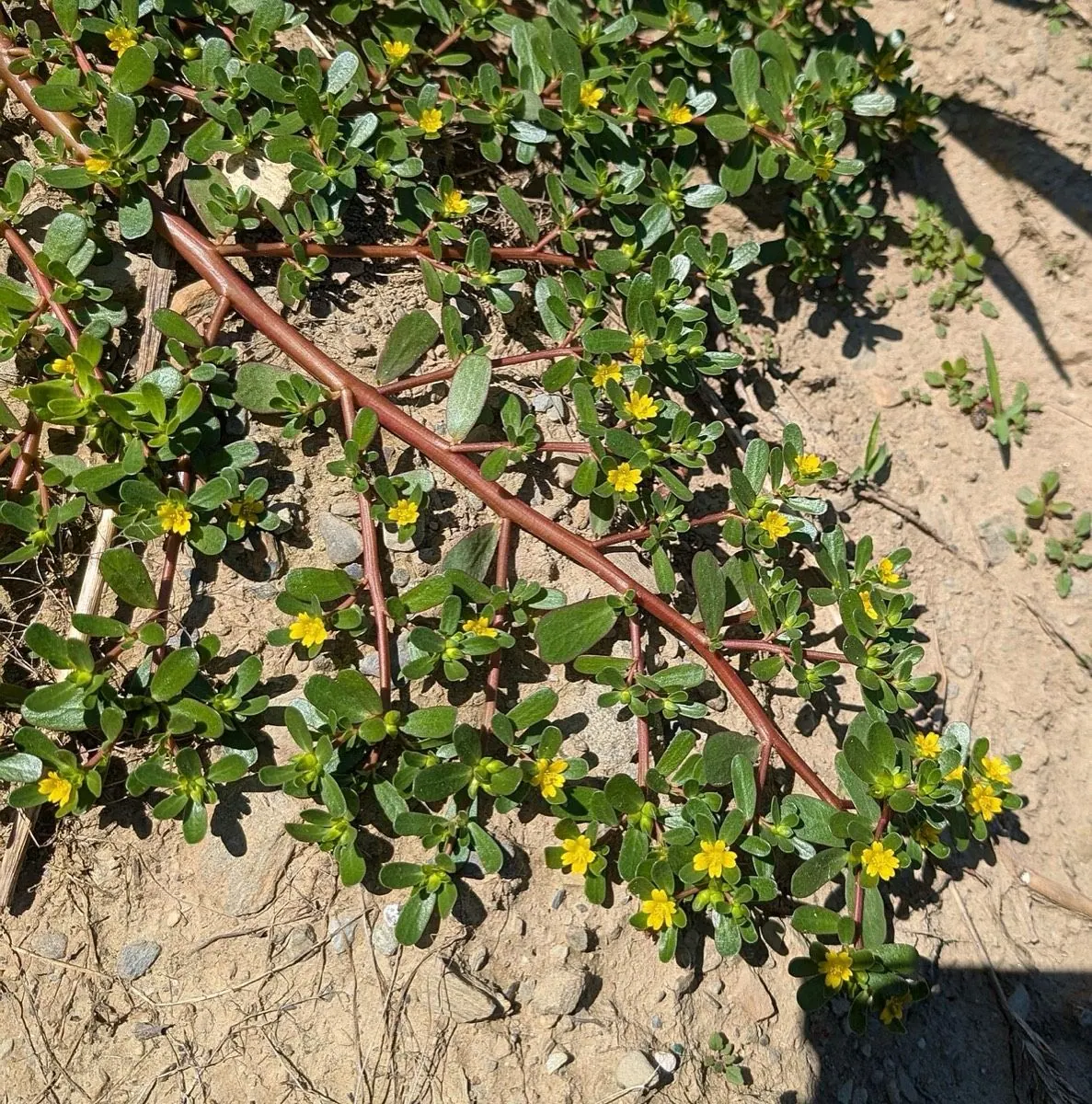
Photo: (c) Tyler Ekholm, some rights reserved (CC BY), CC BY 4.0, Wikimedia Commons

Purslane
Portulaca oleracea
EdibleA fat, succulent summer weed of Portuguese vegetable plots that is one of the richest plant sources of omega-3 fats known.
Confused with
Danger: Toxic and caustic. The latex burns mouth and skin and can cause lasting eye damage. Spurges sprawl on exactly the same warm bare soil and the flat kinds look genuinely similar from above.
How to tell: Snap a stem. Spurge bleeds white milky latex within a second or two; purslane sap is clear and watery. Spurge leaves are thin and flat, not fat and succulent, and the creeping kinds often carry a dark blotch. Do this break test on every single plant you pick, not once per patch, because the two grow intermingled.
Danger: None worth worrying about; the garden forms are the same species.
How to tell: Larger, more upright, often golden-leaved. Eat them the same way.
Leaves
Thick, smooth and succulent like a small jade plant leaf, 1-3 cm, spoon or paddle shaped with a rounded tip, often crowded in a rosette at the branch ends. They snap with a juicy click rather than tearing. Mostly alternate but crowded so they can look opposite.
Flowers
Small, 5-10 mm, yellow with five petals, sitting where the leaves crowd together at the stem tips. They open only in strong morning sun and close by midday, so you may never see them. The seed capsule pops open like a tiny lid to release many black seeds.
Stem
Round, smooth, hairless, distinctly fleshy and swollen, usually reddish-pink to purplish-red, radiating flat from a central taproot. Solid and full of water.
Smell or taste
No noticeable smell. Confirmed safe once identified; the taste is crisp, juicy, slightly salty and pleasantly sour in the afternoon, milder in the morning.
Habitat
Hot bare soil: irrigated vegetable beds, gravel, path edges, cracks in yards, coastal sand. It is the emblematic summer weed of Portuguese and Alentejo horta ground, and the basis of the traditional soup sopa de beldroegas.
Edible parts
Leaves, stems, flower buds and seeds.
Preparation
Cut the tops with scissors, leaving 2 to 3 cm of stem so the plant regrows within a fortnight. Wash carefully, since it lies flat on soil and hides grit in the leaf crowds. Raw is excellent: chop stems and leaves into a tomato salad, where the crunch and slight salinity do the work of a cucumber. Cooked, it thickens like okra because of its mucilage. For the Alentejo soup, sweat garlic and a chopped tomato in olive oil, add 1 litre of water and a diced potato, simmer 15 minutes, then add 300 g of chopped purslane for 5 minutes and poach an egg per person in the broth. Finish with bread. It also pickles well: pack stems in a jar, cover with a boiled brine of 1 part vinegar, 1 part water and 30 g of salt per litre, and keep refrigerated for up to a month. Seeds can be collected in late summer, dried and ground into a flour extender.
Traditional use
A food plant rather than a medicine across Portugal, Greece and the Levant, though it was traditionally regarded as cooling in summer heat. Modern interest is nutritional: it carries unusually high levels of alpha-linolenic acid for a leaf vegetable.
Harvest rule
A prolific annual weed, so harvesting it is doing a gardener a favour. Cut rather than pull, leave a few plants to set seed, and remember that the plots it grows in are almost always private property in Portugal, so ask. Foraging law varies by country. Inside ICNF protected areas and Rede Natura sites, check before collecting.
Beldroega (PT), verdolaga (ES), pourpier (FR)