 Human Skills
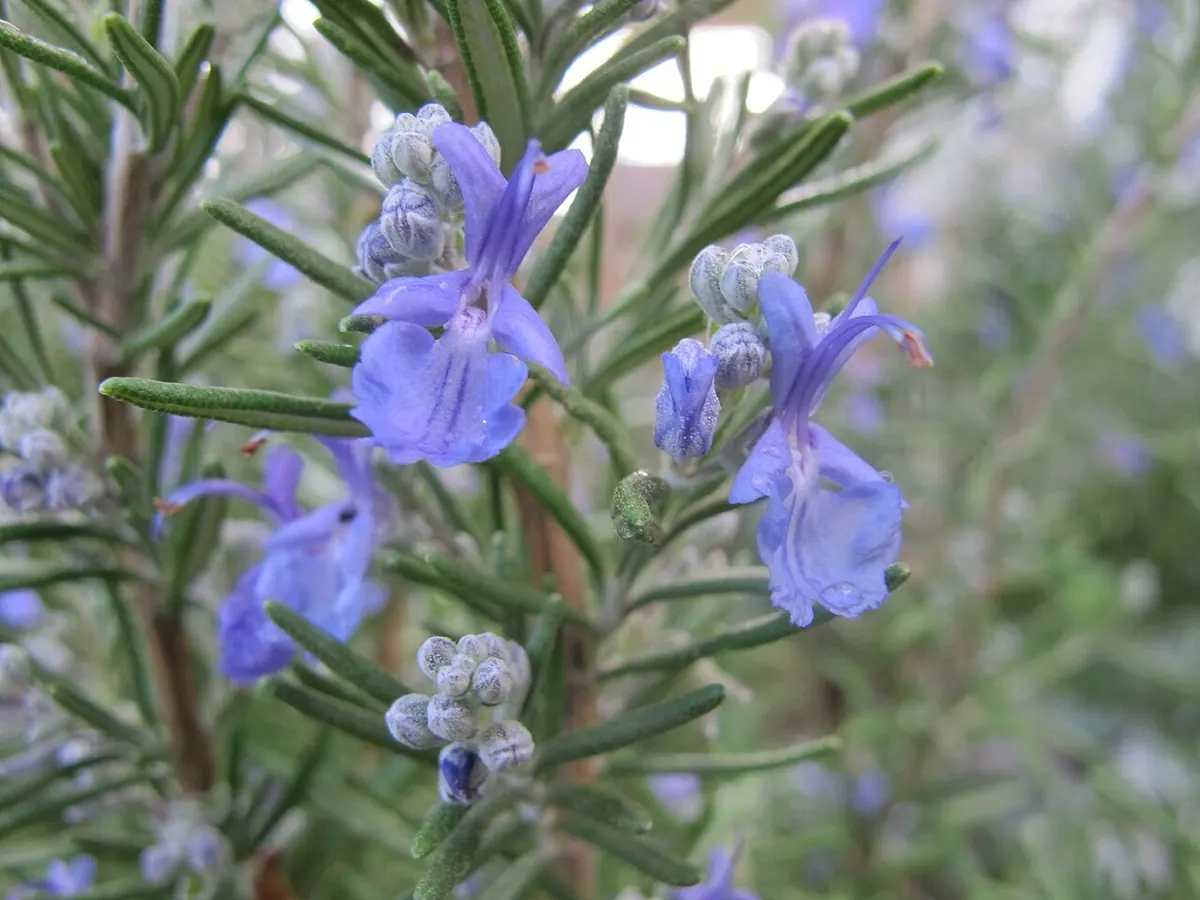
Photo: Margalob, CC BY-SA 4.0, Wikimedia Commons

Rosemary
Salvia rosmarinus
EdibleThe resinous needle-leaved shrub of Portuguese hillsides, as much a kitchen staple as a folk remedy.
Confused with
Danger: Not dangerous, but a different plant, and confusing in Portugal because it is also called rosmaninho in some regions.
How to tell: Lavandula stoechas has flat grey narrow leaves, not rolled needles, and a dense dark purple flower head topped by a tuft of large petal-like purple bracts, like little rabbit ears. Rosemary has glossy rolled needles white underneath and small scattered pale blue flowers.
Danger: Yew is deadly. Its foliage and seeds contain taxines that stop the heart, and there is no antidote.
How to tell: Yew needles are flat, soft, 1 to 3 cm, dark green on both sides with a pale green underside and no white felt, arranged in two flat rows along the twig, and they have no aromatic smell when crushed. Rosemary needles are stiff, white-felted underneath and intensely resinous when rubbed. If it does not smell of rosemary, it is not rosemary.
Leaves
Opposite, needle-like, 1.5 to 4 cm long and only 2 to 4 mm wide, leathery, with the edges rolled under. Dark glossy green above, dense white felt beneath, and crowded thickly along the stem.
Flowers
Pale blue to lilac, occasionally white, two-lipped, 1 to 1.5 cm, in small clusters along the leafy shoots. In Portugal it commonly flowers through the winter and early spring as well as later.
Stem
Square and grey-woolly when young, becoming round, woody and grey-brown with flaking bark. Rigid and brittle in old wood.
Smell or taste
Powerfully resinous, piney and camphor-like when the needles are crushed, a smell most people recognise instantly. It is a confirmed culinary herb and tastes resinous and slightly bitter, but identify by the plant, never by taste.
Habitat
Dry, rocky, sunny slopes, limestone ground, coastal scrub, roadside plantings and every second Portuguese garden. Abundant across the Mediterranean.
Edible parts
Leaves and flowering tops, as a culinary herb.
Preparation
Cut soft green shoots at any time of year, most strongly scented just before or during flowering. Hang bundles in a dark airy place for one to two weeks, or dry the sprigs flat, then strip the needles and store them whole in a sealed dark jar for up to a year. Infusion: a teaspoon of dried needles, or a 5 cm fresh sprig, in a cup of hot water, covered five to ten minutes, then strained. Infused oil, the traditional rub: pack a clean dry jar loosely with fully dry rosemary, cover completely with olive oil, seal, keep on a warm windowsill for two to three weeks shaking daily, then strain through cloth into a clean bottle and store in the dark. Any fresh, wet plant material left in the oil will spoil it and can breed bacteria, so dry the herb properly first and discard the oil if it smells rancid or cloudy.
Traditional use
Alecrim is woven into Portuguese life, from roast kid to Midsummer bonfires. Traditionally an infusion has been drunk as a morning pick-me-up and for a tired head, and rosemary-infused oil has been massaged into stiff, aching shoulders, backs and cold hands across the Mediterranean for centuries. Rosemary has an old European reputation as the herb of memory and remembrance, carried at funerals and weddings alike, and a sprig in hot water is a traditional hair rinse. That is custom and history. Rosemary is not a treatment for memory loss, arthritis or anything else.
Harvest rule
Cut green shoots only, never into old grey wood, and take no more than a quarter of a bush in a year. Do not uproot wild plants: Mediterranean scrub recovers slowly and rosemary anchors thin hillside soil. Grow your own from cuttings, which root easily. Ask permission on private land, and check local rules, since collection in national parks, Natura 2000 sites and other protected areas is often restricted and the rules differ by country.
Alecrim, rosmaninho-comum (PT); romero (ES)