 Human Skills
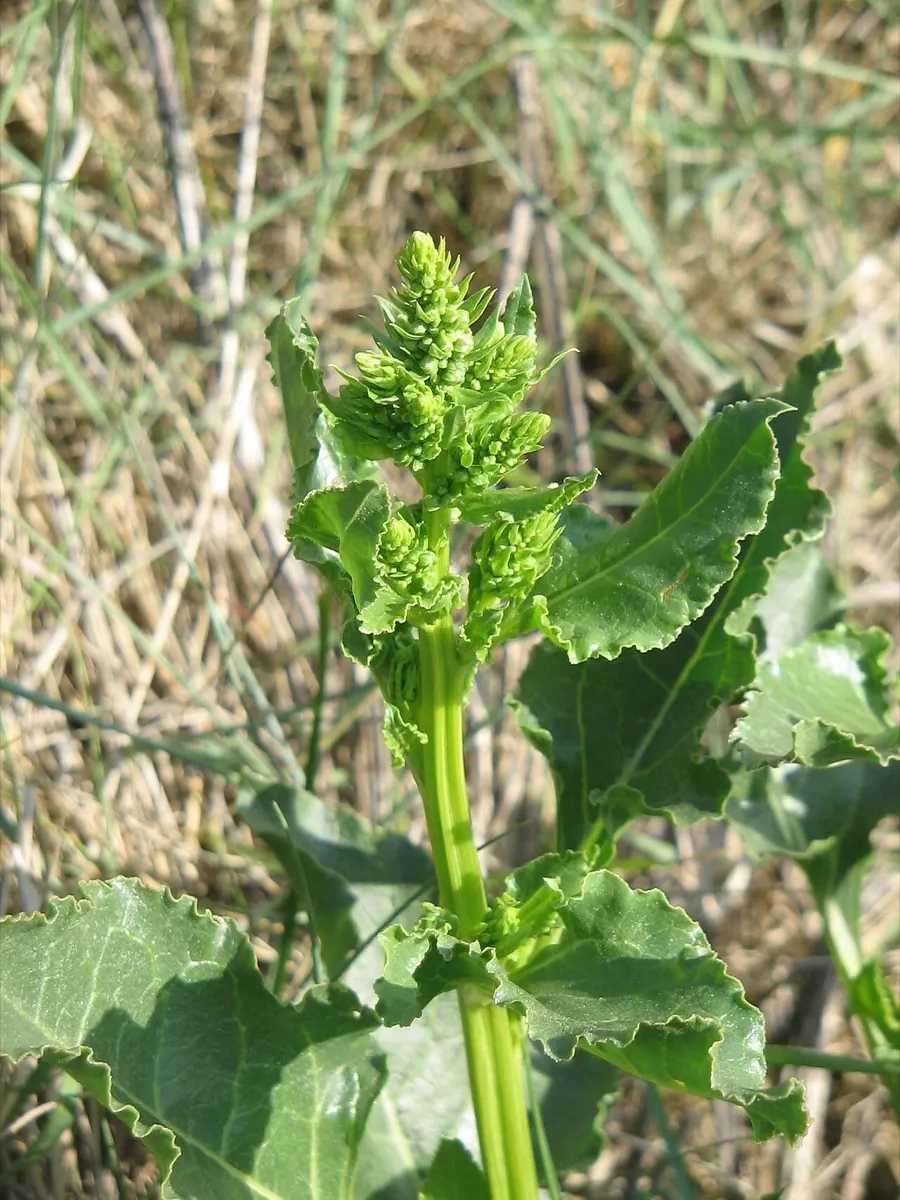
Photo: Meneerke bloem, CC BY-SA 3.0, Wikimedia Commons

Sea Beet
Beta vulgaris subsp. maritima
EdibleThe wild ancestor of chard and beetroot, growing on sea walls and clifftops as thick glossy dark leaves that cook exactly like spinach.
Confused with
Danger: All of these are edible, so this group is a low-stakes confusion, but knowing which is which matters for how you cook it.
How to tell: Sea beet has broad glossy leathery leaves with a wavy edge and a red midrib. Sea purslane has small grey silvery paired leaves on a woody stem, glasswort is a jointed leafless succulent, and orache is mealy grey. Only sea beet has that thick glossy chard-like leaf.
Danger: Deadly. It grows on brackish ditch banks and upper estuary edges where people also gather sea beet, and a handful of its leaf can kill.
How to tell: Water-dropwort leaves are divided into many separate toothed celery-like leaflets along a stalk, and its flowers are flat white umbels. Sea beet has one thick glossy undivided leaf blade and dull green flower spikes. Anything with a divided fern-like or celery-like leaf on a coastal bank is not sea beet, and you should not be picking it.
Danger: Various, and none worth the risk.
How to tell: Sea beet leaves are large, glossy and clearly chard-like with a thick red-tinged stalk, and old plants usually show the tall knobbly green flower spikes nearby. If there is no chard look, leave it.
Leaves
Alternate, thick, leathery and distinctly glossy, 5-20 cm, triangular to diamond or spear-shaped with a wavy untoothed edge and a broad base tapering into a stout stalk. Dark green, often flushed red or bronze, and the midrib and stalk are frequently red or pink, exactly like the chard it became.
Flowers
Long slim green spikes of tiny petal-less green flowers clustered in groups along the stem, becoming hard knobbly seed clusters. Dull and easy to overlook.
Stem
Ridged, tough, solid, hairless, often red-tinged, sprawling then rising. Not hollow, not blotched.
Smell or taste
Almost no smell when crushed, faintly earthy and beety. Confirmed safe once identified; cooked it tastes like a stronger, saltier chard.
Habitat
The splash zone and just above it: sea walls, shingle, clifftops, the upper edge of salt marsh, harbour walls, estuary banks. Common along the Portuguese and Atlantic coasts and all round the Mediterranean.
Edible parts
Leaves and tender leaf stalks. The root is woody and not worth eating.
Preparation
Pick the younger inner leaves, which are tender, and leave the huge old outer ones, which are leathery. Cut with scissors, do not tear the crown. Wash in fresh water first, because coastal leaves carry salt, sand and often sea spray residue. A brief rinse is enough for young leaves; older ones benefit from a soak. Cook it like chard. Strip the thick stalk from the blade if the leaf is large, since the stalk needs a few minutes longer. Boil the leaf 3 to 5 minutes in unsalted water, drain and squeeze, then finish in olive oil with garlic. The boiling water also removes some of the oxalate. 500 g of leaves gives about 150 g cooked. It is excellent in a caldo verde style soup, in an omelette, or wilted under a piece of fish. It can be eaten raw when very young but it is better cooked, and cooking reduces the oxalate load. Blanch 2 minutes and squeeze dry to freeze.
Traditional use
A food plant rather than a remedy, and a historically important one: every cultivated beetroot, chard, sugar beet and mangel descends from this species. It was eaten by coastal communities all round Europe long before beet was domesticated.
Harvest rule
Take a few leaves from each plant across a stretch of coast rather than stripping one rosette, and never pull the plant, since it is a long-lived perennial that anchors thin coastal soil. Coastal habitats are heavily protected: much of the Portuguese coast lies inside Rede Natura 2000 sites, natural parks such as the Parque Natural do Sudoeste Alentejano e Costa Vicentina, and protected dune systems where ICNF rules restrict or forbid plant collection and where walking off the boardwalk is itself an offence. Check before you pick, stay off dunes, and assume that a protected coastal area means no collecting. Foraging law varies by country and coastal rules are usually stricter than inland ones.
Acelga-brava, beterraba-marinha (PT), acelga marina (ES), bette maritime (FR)