 Human Skills
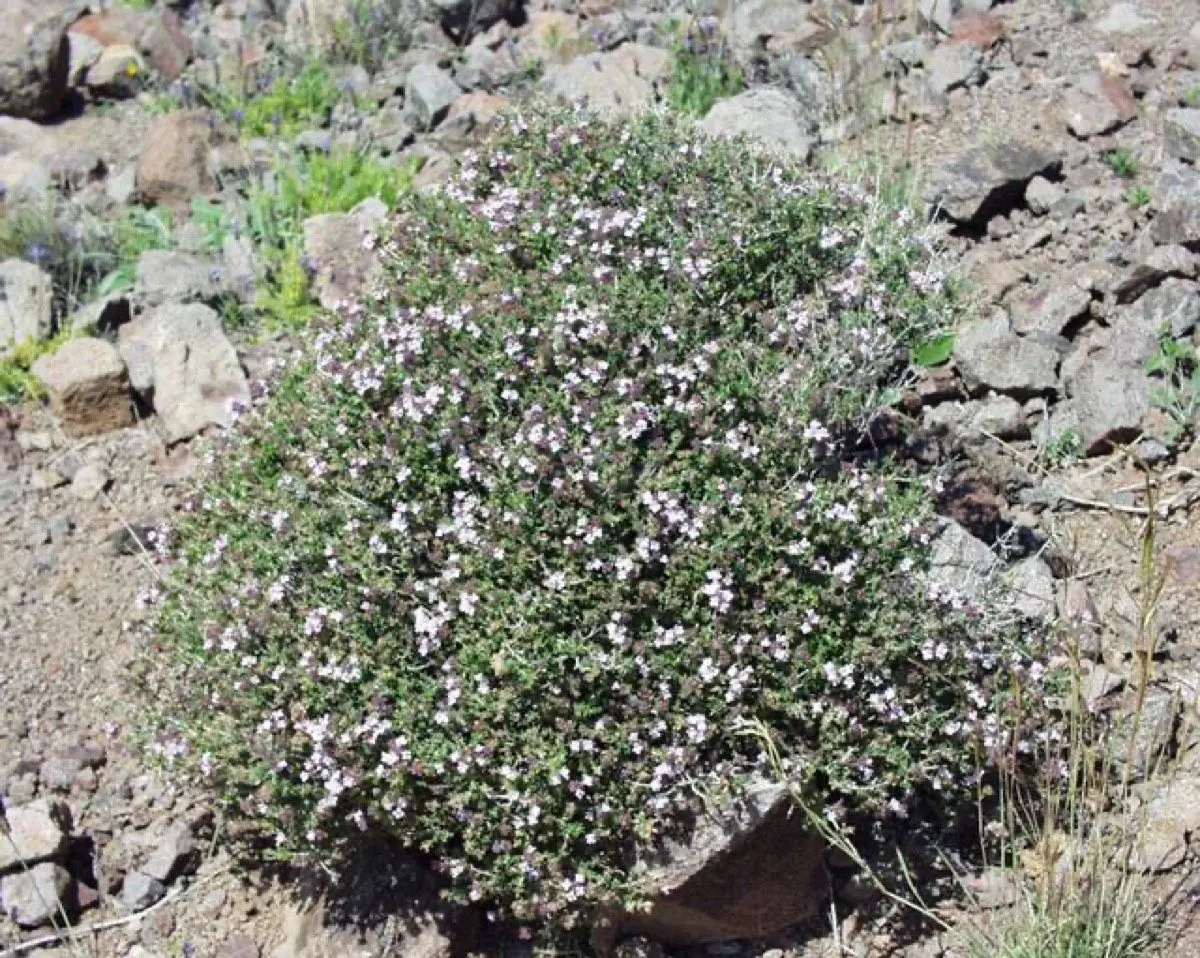
Photo: Henry Brisse (upload by user:Abalg), CC BY-SA 3.0, Wikimedia Commons

Thyme
Thymus vulgaris
EdibleA tiny-leaved creeping shrublet of dry ground whose sharp, hot, herbal smell has made it Europe's traditional chest and throat herb.
Confused with
Danger: Not dangerous. All are aromatic kitchen herbs, but their strength varies a great deal.
How to tell: Oregano has much larger leaves, 1 to 4 cm, on taller upright stems and smells sweeter and more peppery. Wild thymes are separated by fine details of leaf hairs and habitat; for household use they are interchangeable, but if you want Thymus vulgaris specifically, grow it.
Danger: Mostly harmless but not herbs, and some Mediterranean shrublets are irritant.
How to tell: Rub the leaves. Thyme releases a strong hot herbal smell. Heathers and rock roses smell of nothing, of resin, or of sticky gum. No smell means it is not thyme.
Leaves
Opposite, very small, 4 to 10 mm long and 1 to 3 mm wide, oval to narrow, grey-green, with edges rolled under and fine hairs, dotted with tiny oil glands visible as pinpricks when held to the light.
Flowers
Small two-lipped pale pink to lilac flowers, 4 to 6 mm, crowded into rounded heads at the shoot tips, swarming with bees in early summer.
Stem
Square in the young green growth, wiry, hairy, woody and brown at the base, branching into a dense tangle.
Smell or taste
A sharp, hot, clean herbal scent when the leaves are rubbed, more pungent and less sweet than oregano. Thyme is a confirmed culinary herb and tastes savoury and slightly hot, but never taste to identify a plant.
Habitat
Dry stony hillsides, limestone scrub, thin poor soils, garden edges and paths. Widespread in Portugal and around the Mediterranean; many closely related wild Thymus species grow alongside it.
Edible parts
Leaves and flowering tops, as a culinary herb.
Preparation
Cut the top third of the green shoots just as flowering begins. Hang small loose bundles in a dark airy place for one to two weeks until the leaves rub off easily, then strip and store the leaves whole in a sealed dark jar for up to a year. Infusion: a teaspoon of dried thyme in a cup of hot water, covered for ten minutes, then strained. Traditionally sweetened with honey, which is not for babies under one year. A steam inhalation is the old household form: a handful of thyme in a bowl of hot water, face held well above it with a towel over the head, eyes closed, for a few minutes. Keep a safe distance from the water, never do this with a child leaning over scalding water, and never add essential oil to the bowl for a child. Thyme essential oil is extremely concentrated, corrosive undiluted, and not something to prepare or dose at home.
Traditional use
Tomilho has been the chest and throat herb of Mediterranean households for centuries, traditionally drunk as a hot infusion with honey during a rattling cough or cold, gargled for a rough throat, and used as a steam over a bowl for a blocked head. In the kitchen it flavours grilled fish, beans and chouriço across Portugal, and in the old days it was strewn and burned as a cleansing fumigant. This is recorded custom. A cough lasting more than three weeks, a cough with blood, breathlessness, chest pain or high fever needs a doctor, urgently.
Harvest rule
Clip the soft green tips, never cutting into the old woody base, which does not resprout, and take no more than a quarter of any plant. Never uproot: thyme holds thin hillside soil together and regrows slowly. Several wild Mediterranean Thymus species are locally rare or protected, so identify to species before cutting wild plants, ask the landowner's permission, and check local rules, which vary by country and are strict inside national parks and protected areas.
Tomilho (PT); tomillo (ES)