 Human Skills
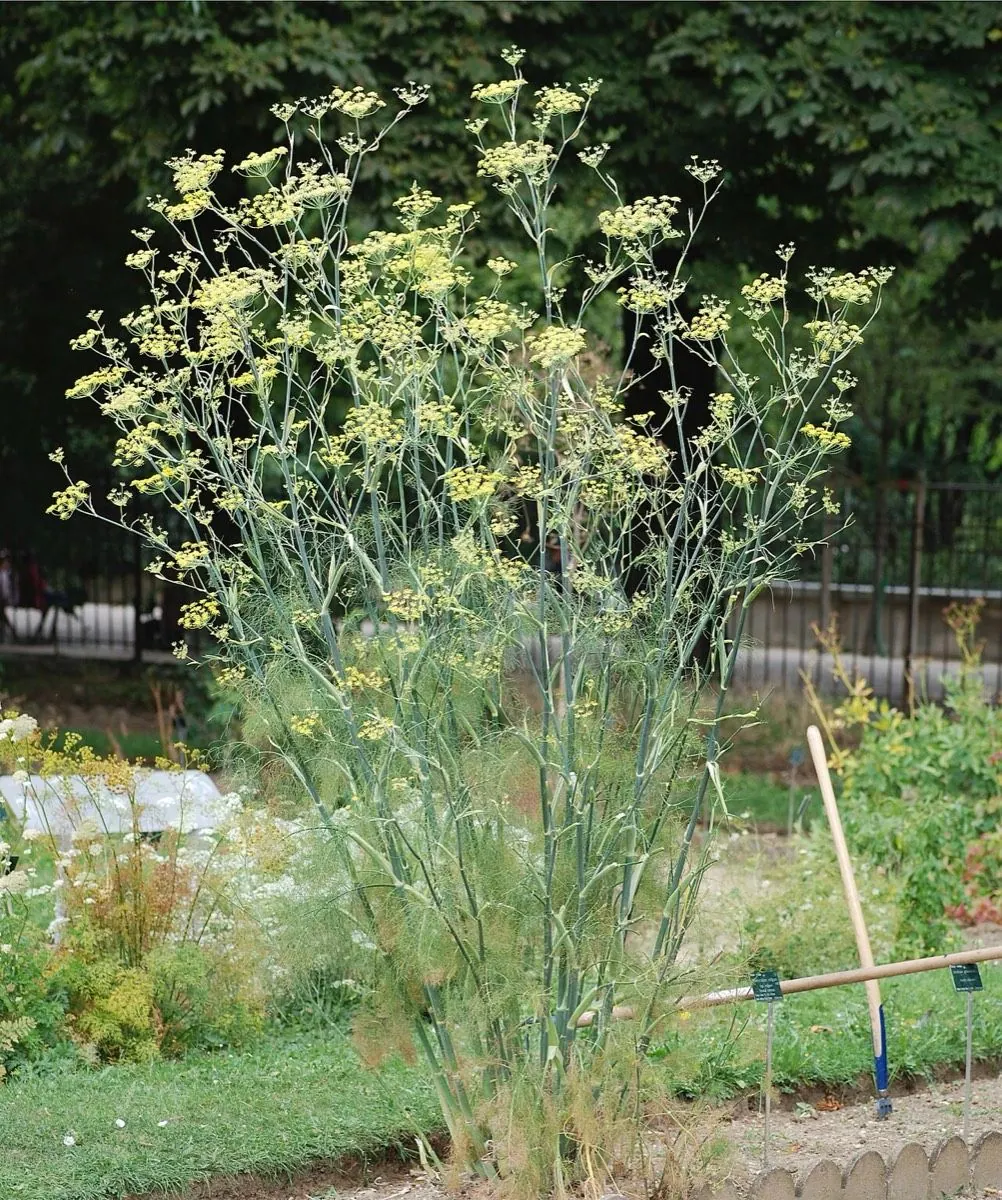
Photo: Alvesgaspar, CC BY-SA 3.0, Wikimedia Commons

Wild Fennel
Foeniculum vulgare
EdibleThe best-smelling plant on a Portuguese roadside, but it sits in the carrot family alongside the deadliest plants in Europe, so smell alone is never enough.
Confused with
Danger: Deadly. Coniine causes progressive paralysis starting at the feet and rising, with a clear mind, until the breathing muscles stop. A few leaves or one root can kill an adult. There is no antidote, only breathing support in hospital.
How to tell: Three checks, all of which must pass. First the stem: hemlock has a hairless, hollow stem clearly blotched and streaked with purple-red, especially near the base. Fennel stem is unblotched blue-green with a waxy bloom. Second the smell: hemlock crushed stinks rank and mousy, never of aniseed. Third the flowers and leaves: hemlock flowers are white, and its leaves are fern-like triangles with flat toothed leaflets, not thread-fine hair. Any purple blotching on a stem, in any carrot-family plant, means walk away.
Danger: Deadly, and the most lethal plant in Britain and common in northern and central Portugal. Oenanthotoxin causes violent convulsions within an hour and often death. One bite of the root has killed adults, and the roots have killed whole herds of cattle. It is sometimes called dead man's fingers because of the bundle of pale finger-like tubers.
How to tell: Habitat first: it grows with its feet in water, in ditches, stream edges, wet meadows and marsh, whereas fennel prefers dry sunny ground. Then the stem, which is stout, hollow, deeply grooved and bright green, not waxy blue-green. Then the leaves, which are broad flat celery-like or parsley-like leaflets with toothed edges, nothing like the thread-fine fennel leaf. Then the flowers, which are white. And the smell is sweaty and parsley-like, never aniseed. The yellow sap that turns orange in air on a cut root is another sign, but do not go handling roots to find out.
Danger: Wild carrot itself is edible, but it is the exact shape that hemlock and fool's parsley also take, and giant hogweed in the same family causes severe burns in sunlight.
How to tell: Wild carrot has a hairy, solid, round stem, a ruff of long finely divided bracts under the umbel, a single dark purple flower in the middle of many umbels, and the whole plant smells of carrot. Fennel is hairless, waxy, yellow-flowered and aniseed. Because hemlock lives in this group, treat every white-flowered umbellifer as expert-only and leave it.
Leaves
Alternate, divided three or four times into very fine thread-like segments only about 0.5 mm wide and up to 5 cm long, soft to the touch like dill, blue-green with a slight waxy bloom. The leaf base widens into a broad sheath that wraps right around the stem.
Flowers
Flat-topped compound umbels 5-15 cm across, made of 10 to 30 rays each carrying a small cluster of tiny bright yellow flowers. Yellow, not white. There are no collar bracts under the umbel.
Stem
Upright, smooth, round with fine lengthwise ridges, hairless, blue-green with a waxy bloom, solid or only slightly pithy when young, and never blotched or spotted with purple. Older stems are tough and hollow between the joints, so check for purple blotching every time.
Smell or taste
Crush any part and it smells powerfully and sweetly of aniseed. This is essential but not sufficient: a plant that does not smell of aniseed is definitely not fennel, while a plant that does still has to pass every other check, because your fingers may already carry the smell. Poison hemlock crushed smells foul and mousy, like mouse urine, and hemlock water-dropwort smells like sweaty parsley or celery.
Habitat
Dry sunny roadsides, field edges, waste ground, coastal slopes, riverbanks, olive-grove margins. Abundant across Portugal, especially the Algarve and Alentejo, where it lines the roads.
Edible parts
Leaf fronds, stems, flower heads, green seed and ripe seed. Wild fennel has a thin root, not the swollen bulb of the cultivated vegetable.
Preparation
Cut fronds in spring and summer with scissors. Chop them raw into salads, into pork and fish dishes, and into bean soup. The tender young stalks can be peeled and used like a celery stick or braised for 10 minutes. Flower heads are cut in July and August and used fresh, or the whole head is dried and shaken so the green seeds fall out. Green seeds are the best part: strong, sweet and resinous. For seed, cut the heads in September when the seeds have gone from green to grey-brown, hang them upside down in paper bags for 2 to 3 weeks in a dry airy place, then shake and winnow. Store whole in a sealed jar and grind as needed; ground fennel goes flat in a couple of months. For a traditional after-dinner infusion, lightly crush 1 teaspoon of seed and steep in 250 ml of water just off the boil, covered for 10 minutes. Dry stalks make excellent grilling wood for fish.
Traditional use
Fennel seed has been used all around the Mediterranean as a traditional digestive, taken as an infusion after meals for wind and bloating, and it was folk-used to settle colic in infants. That infant use is specifically discouraged today.
Harvest rule
Fennel is abundant and often invasive outside its native range, so cutting fronds and seed heads is harmless, but never dig the root and never strip a whole plant. Leave seed heads standing over winter, since they feed birds and shelter insects. Do not pick from road verges within a few metres of traffic, where the plant is loaded with exhaust residue and where verges get sprayed. Foraging law varies by country: in Portugal roadside verges are usually public but under the road authority, field margins are private, and ICNF rules apply inside protected areas.
Funcho, funcho-bravo (PT), hinojo (ES), fenouil sauvage (FR)