 Human Skills
Shore Fishing and Tides
Beaches, rocks, harbours and the timing that matters
6 minIntermediateUpdated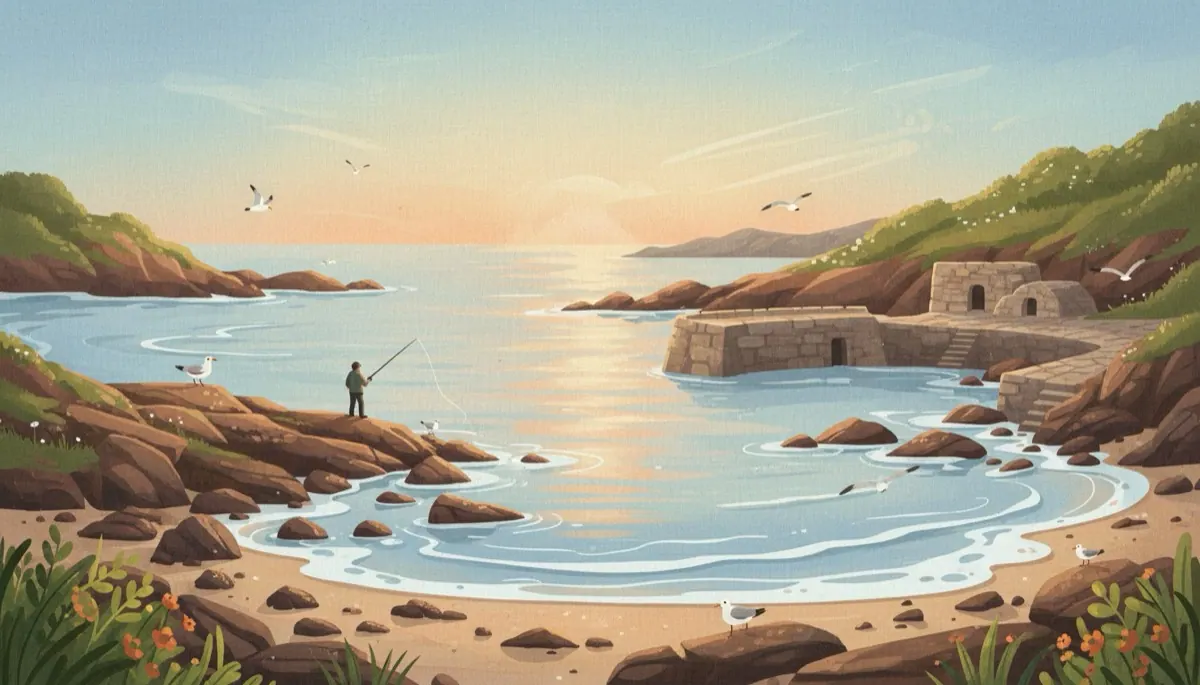
- Read a tide table and pick the best two hours to fish
- Choose between beach, rocks and harbour for the conditions
- Stay safe on rocks and beaches with swell and rising water
How tides work
The sea rises and falls about twice a day, pulled by the moon. From low to high takes roughly 6 hours 12 minutes, then it falls again. High tide moves about 50 minutes later each day. Around new moon and full moon the range is biggest (spring tides: very high highs, very low lows) and the water moves fastest. A week later, at half moon, come neap tides with a small range and gentle flow. Tide tables are free online and in fishing shops; each port has its own times. Learn to read yours: it lists the time and height of each high and low. Everything about shore fishing starts with that table.
When to fish the tide
Moving water brings food, so fish feed when the tide is running, not at slack high or slack low. The classic window is the two hours before high tide and the first hour after. Rising water floods beaches and rock pools that were dry, and fish move in behind it to eat what was uncovered. A big spring tide at dawn or dusk is the best combination there is. Falling tides fish well at the mouths of estuaries, where the ebb carries food out to fish waiting in the channel. A neap tide midday in bright sun is the worst combination. Plan the trip around the table, not around when you are free.
Beaches, rocks and harbours
Sandy beaches: look for gullies and dark patches (deeper water) at low tide, then fish those spots when the water covers them. Worm or squid on a bottom rig with a 40 to 60 g grip sinker; flounder, bass and bream feed in the surf. Rocks: deep water close in, weed and gullies full of wrasse, bass and bream. Float fish a prawn or crab, or work a lure along the edges; expect to lose some tackle. Harbours and piers: easy access, calm water, mullet, small bream, mackerel and squid in season. A float rig with bread or a strip of fish works, and a small sabiki-style rig catches mackerel. Harbours are where beginners should start.
Rock and beach safety
More anglers die on rocks than in any other kind of fishing. Never fish a rock mark alone. Check the swell forecast, not just the wind: a long-period swell throws waves far higher than their size suggests, and every seventh or so wave is bigger. Watch a spot for ten full minutes before stepping onto it; if any wave wets it, walk away. Know your exit route and the tide time; rocks and sand bars that are dry now may be cut off by rising water in an hour. Wear boots with grip, never sandals. Carry a phone in a waterproof pouch, tell someone where you are, and if you fall in, do not fight to climb out where waves are breaking; swim along to a calmer spot.
Reading the sea surface
Birds diving mean baitfish, and predators under them. A line of foam or scum shows where currents meet and food collects. Water that goes from clear to green-brown marks a channel edge or a sand bar; fish patrol that line. Rips (channels of water pulling out through the surf) look flatter and darker than the waves either side; bass hunt in them, but they drag swimmers out, so never wade into one. In estuaries, fish the deepest channel at low water and the flooded margins at high. On calm evenings watch for swirls and splashes in the shallows: mullet and bass feeding within a rod length of the sand.
Check yourself
Spring tides come when sun and moon line up, at new and full moon, giving the largest range and strongest flow.
The flooding tide brings food and fish over ground that was dry. Slack water at high and low fishes worst.
Big sets arrive every few minutes. If any wave wets the ledge in ten minutes, it is not a safe mark.
Harbours offer calm water, easy access, plenty of fish and a safe place to learn tackle and tides.
Try it for real: Fish one flooding tide
- Find the tide table for your nearest port and pick a day with high tide near dawn or dusk
- Choose a harbour wall or pier, not rocks, for this first trip
- Arrive 3 hours before high tide and fish a float rig with bread or a strip of fish
- Note what bit and when relative to high tide
- Tell someone your plan and return time before you go
🛒 Gear for this skill
As an Amazon Associate I earn from qualifying purchases. It costs you nothing extra and keeps this site free.
Next lesson: Small Boat and Kayak Safety →
Written and checked by the Human Skills team against the sources below. How we check our content
- NOAA Tides and Currents
- RNLI sea safety guidance
- Angling Trust beginner guides
Related lessons

Reading Rivers and Lakes
Fish live where food, cover and comfort meet
Small Boat and Kayak Safety
Lifejacket, float plan, limits, cold water and capsize
Shellfish and Shore Gathering
Limpets, mussels, clams, razor clams, percebes and the rules that keep you alive

Eating From Fresh Water
Which species pay, crayfish, eels, parasites and pollution