 Human Skills
Reading Rivers and Lakes
Fish live where food, cover and comfort meet
6 minIntermediateUpdated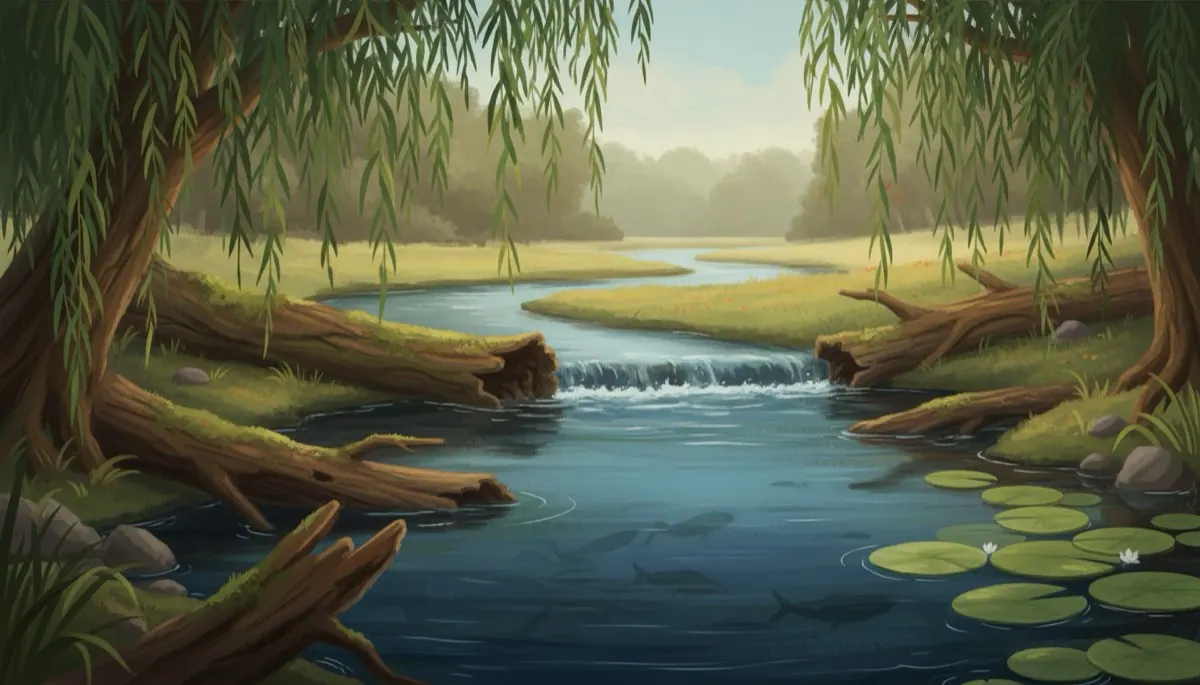
- Spot the five river features that hold fish
- Find the productive zones of a lake in each season
- Use time of day and weather to choose when to fish
Three things every fish wants
Fish are not spread evenly through water. Ninety percent of them live in ten percent of the water, and that ten percent is where three needs overlap. Food: insects, small fish, worms washed in by current. Cover: rocks, weed, sunken trees, undercut banks and shade that hide them from herons and bigger fish. Comfort: the right temperature and oxygen, and a place to rest out of strong current. When you arrive at a water, do not cast immediately. Spend five minutes walking and looking for spots where all three come together. A fisher who reads water catches more in an hour than a fisher who casts randomly all day.
River features that hold fish
Look for these five. Pools: deeper slow water below a fast stretch, where fish rest; the head of the pool, where fast water enters, delivers food. Eddies: swirling water behind a rock or bend where current reverses; fish sit in the calm and grab passing food. Seams: the visible line where fast and slow water meet; fish hold in the slow side facing upstream. Undercut banks on the outside of bends: deep, shaded, full of larger fish. Riffles: shallow, broken water full of oxygen and insects; fish feed here at dawn and dusk. Cast upstream of the feature and let the bait drift naturally into it. Fish face upstream, so approach from below.
Lake structure
Lakes look featureless but they are not. Fish gather at changes: the drop-off where a shallow shelf falls into deep water, weed bed edges, points of land that stick out, inflowing streams that bring food and cool water, and any sunken tree or jetty. The wind matters. A wind blowing onto a shore piles food and warm surface water against it, so fish the windward bank even though it is less comfortable. In spring fish move into shallow bays that warm first. In summer they go deeper by day and shallow at dawn and dusk. In autumn they feed hard along the drop-offs. In winter they gather in the deepest holes and move slowly.
Time, light and weather
Dawn and dusk are the best hours almost everywhere: low light makes predators bold and prey careless. Bright midday sun pushes fish into shade and depth. An overcast day fishes like a long dawn. A falling barometer just before a storm often triggers heavy feeding; the day after a cold front is often dead. Light rain is good, as it stirs food into the water and hides you. Heavy rain that colours a river brown makes it hard, though the edges of muddy water can be excellent. Water temperature drives everything: most fish feed best between 12 and 22 degrees C and go slow outside it.
Approach quietly
Fish feel footsteps through the bank and see movement against the sky. Walk softly, stay low, and keep 2 m back from the edge until you are ready. Do not stand skylined on a high bank; crouch or use a bush as background. Cast the near water first before wading or casting far, because fish often sit right under the bank. In clear water, dull clothing and slow movements matter more than the bait. If you spook a spot, rest it for 20 minutes and try again. Moving between five good spots in a morning is better than sitting in one average spot all day.
Check yourself
Fish hold facing the current so food comes to them. Approach from downstream and drift bait down to them.
Wind pushes floating food and warmer water onto the windward shore, and fish follow the food.
Fish sit on the slow side of a seam and pick off food carried by the fast side.
Low light makes predators active and less cautious. First and last light outfish the middle of the day almost everywhere.
Try it for real: Map one water
- Visit a river or lake at dawn with polarised sunglasses and no rod
- Walk 500 m of bank and mark five features on a phone map: pools, seams, drop-offs, weed edges, inflows
- Note wind direction, water colour and where you saw fish or rises
- Return with a rod and fish only those five spots for one hour
🛒 Gear for this skill
As an Amazon Associate I earn from qualifying purchases. It costs you nothing extra and keeps this site free.
Next lesson: Shore Fishing and Tides →
Written and checked by the Human Skills team against the sources below. How we check our content
- Take Me Fishing (Recreational Boating and Fishing Foundation)
- Angling Trust beginner guides
- Leave No Trace
Related lessons
Shore Fishing and Tides
Beaches, rocks, harbours and the timing that matters
Small Boat and Kayak Safety
Lifejacket, float plan, limits, cold water and capsize
Shellfish and Shore Gathering
Limpets, mussels, clams, razor clams, percebes and the rules that keep you alive
Eating From Fresh Water
Which species pay, crayfish, eels, parasites and pollution