Human Skills
Cooking Without Electricity
Gas, fire and outdoor cooking done safely
5 minIntermediateUpdated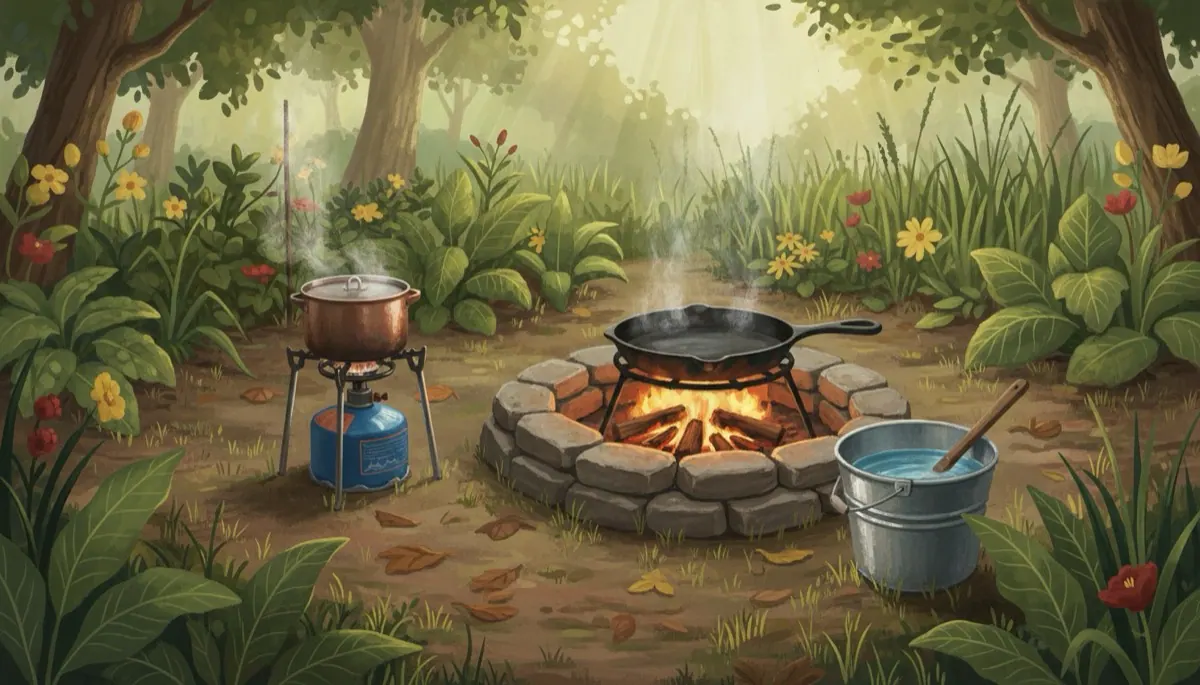
- Cook a hot meal when the power is out
- Choose a safe fuel and place for outdoor cooking
- Recognise the carbon monoxide risk and keep every stove outdoors
First rule: never burn fuel indoors
Charcoal, camping gas stoves, wood, petrol generators and patio heaters all produce carbon monoxide, a gas you cannot see or smell. In a closed room it builds up and kills. The US CDC records deaths every year from people using a barbecue or camping stove inside during a power cut. A cracked window is not enough. Never use these indoors, in a garage, in a tent or on a balcony enclosed by glass. Cook outside, well clear of doors and windows, and bring the food in. Headache, dizziness, nausea and confusion are early signs of carbon monoxide poisoning: get into fresh air and call local emergency services.
What you can cook on
A gas hob usually still works in a power cut; light it with a match or lighter. A portable butane or propane camping stove is the simplest backup for a household and cooks a full meal in a pan; store the cartridges cool and out of the sun. A charcoal barbecue or a small wood fire in a fire pit works for grilling and for a pot over the coals. A solar cooker is silent and fuel-free on a sunny day but slow. A thermos and a kettle stretch one boil into hours of hot drinks and rehydrated meals. Choose one method, practise it once a season, and keep its fuel with your pantry.
Setting up a safe outdoor fire
Cook on bare earth, gravel, sand or a purpose-built pit, never on dry grass, and at least 3 metres from anything that can burn including your tent, fences, low branches and fuel bottles. Clear a circle of leaves and twigs. Keep a bucket of water or sand beside you before you strike a match. Build small: a fire the size of a large frying pan cooks anything you need and is easy to control. Use dry, seasoned wood; green or painted wood smokes and can be toxic. Never leave a fire unattended, and never use petrol or spirit to start or revive it. Check local fire rules and bans before lighting anything.
Cooking over coals
Flames are for boiling water; coals are for cooking. Let a wood fire burn down until it is a bed of glowing embers with a light grey ash, or let charcoal go grey all over, about 20–30 minutes after lighting. Then you get steady, even heat. Grill meat directly over the coals and finish thicker pieces at the edge where the heat is lower. A heavy pot or Dutch oven set on the coals, with a few coals on the lid, will bake bread and simmer stews. Use long tongs and a glove, keep the handle turned away from the heat, and hold your hand 15 cm above the coals: if you can count to 4 before pulling away, it is medium heat.
Putting it out properly
Most wildfires from campfires start from fires that were “out”. Drown the coals with water until the hissing stops, stir them with a stick, and drown again. Feel the ashes with the back of your hand: if they are too hot to touch, it is not out. Charcoal can stay hot for 24 hours; leave it in a metal container with a lid, not a plastic bin, and never dump it in the garden while warm. Pack away gas cartridges only once the stove is fully cool. Leave the site with nothing but cold ash, and take rubbish and food scraps home so animals do not learn to visit.
Check yourself
All burning fuel makes carbon monoxide. Only outdoor use with open air on all sides is safe.
These symptoms are easy to mistake for flu. Get into fresh air at once and call local emergency services.
Grey ash means steady, even heat; open flames burn the outside before the inside cooks.
Buried or smokeless coals can stay hot for a day. Drown, stir, drown and feel for heat.
Try it for real: Power-cut dinner rehearsal
- Pick your backup cooking method and check its fuel supply
- Set it up outdoors, at least 3 metres from anything flammable, with water beside you
- Cook one simple hot meal from pantry ingredients
- Put everything out fully and note what you were missing
🛒 Gear for this skill
As an Amazon Associate I earn from qualifying purchases. It costs you nothing extra and keeps this site free.
Next lesson: Drying and Dehydration →
Written and checked by the Human Skills team against the sources below. How we check our content
- CDC Carbon Monoxide Poisoning Prevention
- USDA Safe Minimum Internal Temperatures
- Leave No Trace