 Human Skills
Drying and Dehydration
Sun, oven and dehydrator basics
5 minIntermediateUpdated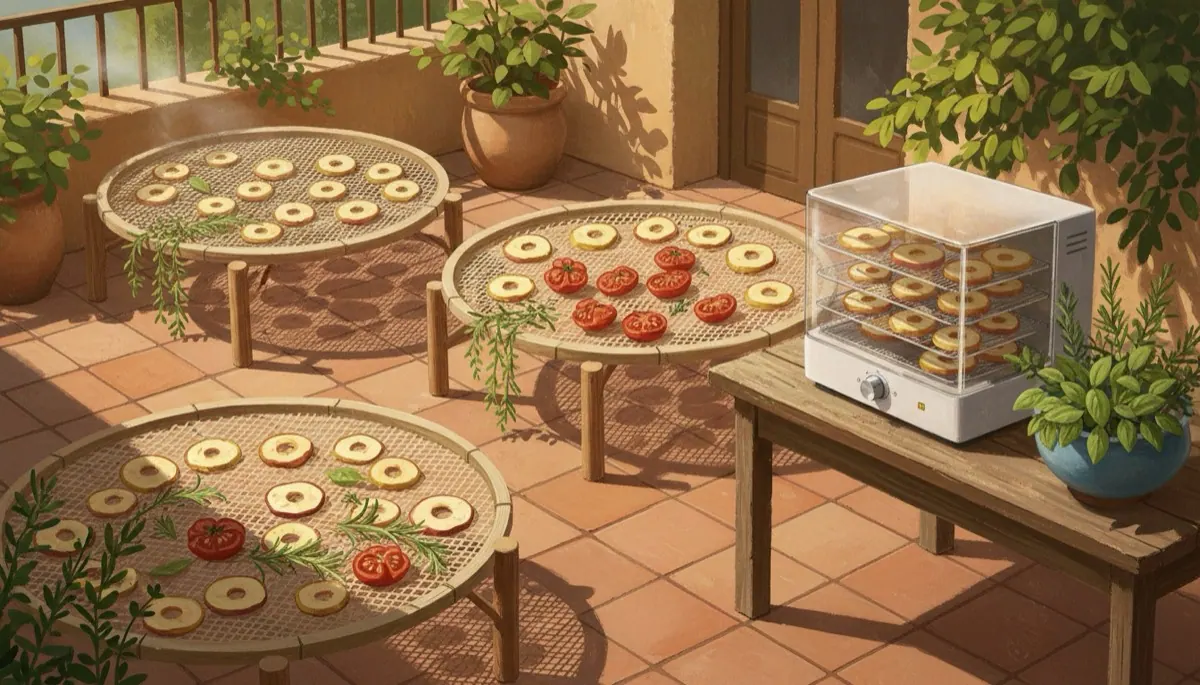
- Explain why removing water stops spoilage
- Dry fruit, vegetables and herbs with sun, oven or dehydrator
- Test dryness and store dried food so it keeps
Why drying works
Microbes need water to grow. Take enough of it out of a food and bacteria, yeasts and moulds simply stop. Drying is the oldest preservation method and still one of the safest, because a properly dried food has no water for anything to live in. Dried fruit ends up leathery with about 20 percent moisture; vegetables must go further, to brittle, around 10 percent, because they have less sugar and acid to help. Dried food is light, needs no fridge and keeps for months to a year. The trade-off is time: hours in gentle warm air with good circulation. Heat alone is not enough; moving air carries the water away.
Preparing the food
Wash, then cut into even pieces 5–6 mm thick so everything finishes at the same time. Apples, pears and peaches brown when cut; dip slices in water with lemon juice for 10 minutes to keep colour. Most vegetables, such as carrots, beans and peas, should be blanched first: boil for 2–3 minutes, plunge into cold water, pat dry. Blanching stops the enzymes that would turn them off-tasting in storage. Tomatoes, peppers, onions and herbs need no blanching. Meat requires more care and higher temperatures; the NCHFP recommends heating meat strips to 71 °C (74 °C for poultry) before or during drying, so learn jerky separately with a tested recipe.
Sun drying
Sun drying needs several days in a row of at least 30 °C, humidity under 60 percent and a breeze. Lay the pieces in a single layer on clean mesh screens, raised off the ground, covered with fine netting against insects, and bring them indoors at night so dew does not undo the day’s work. Fruit and tomatoes suit sun drying because their acid and sugar protect them. Vegetables and meat do not: they are low in acid and can spoil before they dry, so use an oven or dehydrator for those. Because sun-dried food may carry insect eggs, pasteurise it afterwards: 48 hours in a freezer at −18 °C, or 30 minutes in an oven at 71 °C.
Oven and dehydrator
A dehydrator gives the most reliable result: set 55–60 °C for fruit and vegetables, 40 °C for herbs, and expect 6–12 hours. An oven works if it can hold 60–70 °C: spread food on racks, prop the door open a few centimetres with a wooden spoon so moist air escapes, and turn pieces every couple of hours. Fan ovens work better than conventional. Herbs are easiest: tie in small bunches and hang in a warm, dark, airy room for 1–2 weeks, or dry on a rack until the leaves crumble. Do not raise the temperature to speed things up; the outside hardens and traps water inside, which later moulds.
Testing, conditioning and storing
Cool a piece before testing; warm food always feels softer. Fruit is done when leathery and no moisture appears when you press or tear it. Vegetables should be brittle and snap. Then condition: put the cooled food loosely in a jar for a week, shaking daily. If moisture beads on the glass, dry it longer. Store in airtight glass jars or vacuum bags, in the dark, below 20 °C. Check the first month for any sign of mould and discard the whole jar if you see any. Most dried fruit and vegetables keep 6–12 months; herbs lose flavour after a year. To use, soak vegetables in water for 30 minutes or add straight to soups.
Check yourself
Without water, bacteria, yeasts and moulds cannot grow. That is the whole principle.
High-acid, high-sugar fruits and tomatoes are protected while they dry. Low-acid vegetables and meat need an oven or dehydrator.
A 2–3 minute blanch deactivates enzymes so dried vegetables stay good for months.
Beads of moisture mean water is still in the food; return it to the dryer or it will mould.
Try it for real: Dry your first batch
- Slice 4 apples or 6 tomatoes into 5 mm pieces and dip apples in lemon water
- Dry at 60 °C in an oven with the door propped, or in a dehydrator, 6–10 hours
- Cool and test: leathery for fruit, no moisture when pressed
- Condition in a jar for a week, shaking daily, then store in the dark
🛒 Gear for this skill
As an Amazon Associate I earn from qualifying purchases. It costs you nothing extra and keeps this site free.
Next lesson: Freezing, Salting and Smoking →
Written and checked by the Human Skills team against the sources below. How we check our content
- National Center for Home Food Preservation (NCHFP)
- FAO Drying of Fruits and Vegetables
- USDA Complete Guide to Home Canning
Related lessons
Freezing, Salting and Smoking
Three classic ways to hold food for months
Preserving Meat Without a Fridge
Cooling, curing, drying, smoking and canning done safely
Keeping Fish Safe From Catch to Plate
Bleed, chill, salt, dry, smoke and freeze without the risks
Safe Canning Principles
Water bath for acid, pressure for everything else