 Human Skills
Freezing, Salting and Smoking
Three classic ways to hold food for months
6 minIntermediateUpdated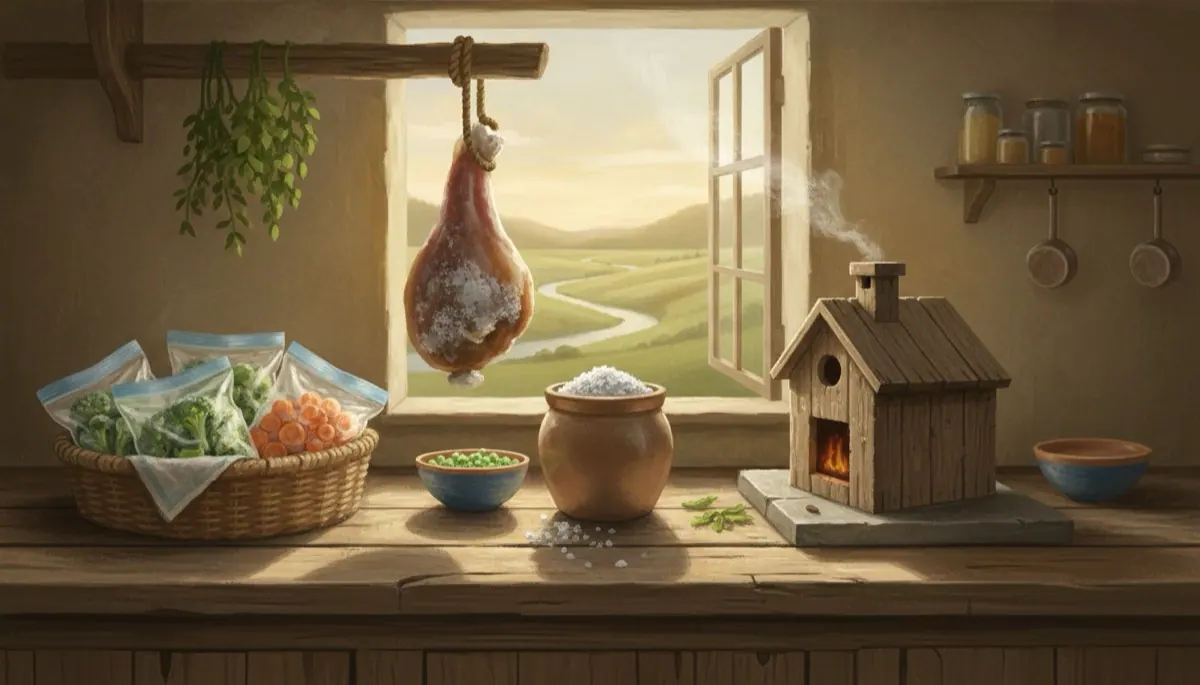
- Freeze food so it keeps quality for months
- Explain how salt preserves and use it for a simple cure
- Tell hot smoking from cold smoking and know which is beginner-safe
Freezing: pausing time
Freezing at −18 °C stops microbial growth almost completely and slows enzymes to a crawl. It does not kill bacteria, so frozen food must be handled as fresh once thawed. Quality, not safety, is what limits freezer life: fat goes rancid slowly and ice crystals damage texture. Freeze fast, in small flat portions, so crystals stay small. Wrap tightly to exclude air, which causes freezer burn, those dry grey patches that are safe but tasteless. Label with contents and date. Rough quality limits: minced meat 3–4 months, whole cuts 6–12 months, fish 3–6 months, bread 3 months, blanched vegetables 8–12 months, cooked dishes 2–3 months.
Freezing vegetables and fruit
Most vegetables need blanching before freezing, just as for drying, or they lose colour, flavour and vitamins within weeks. Boil 2–3 minutes, cool in iced water, drain and pat dry, then spread on a tray to freeze loose before bagging. That way you can pour out a handful. Peppers, onions and herbs can be frozen raw. Fruit freezes well without blanching: hull, slice, tray-freeze, then bag. Soft fruit will be mushy when thawed but is perfect for cooking and smoothies. Do not freeze whole eggs in the shell, high-water salads such as lettuce and cucumber, or cream-based sauces, which split.
How salt preserves
Salt pulls water out of food and out of microbial cells by osmosis. At high enough concentration, the water that remains is bound and unusable for bacteria, so the food is stable. Portuguese bacalhau is the classic example: cod buried in salt for weeks, dried, then kept for a year or more. Salting is safest with fish and whole muscle cuts, done cold, in the fridge, with plenty of salt. It is not the same as curing sausages or hams, which involve nitrites and controlled humidity and can go dangerously wrong; leave those until you have learned from a tested source. Salt also helps ferments, which is the next node.
A simple safe cure: gravlax-style fish
A beginner cure you can do in a fridge: take 500 g of very fresh salmon or trout fillet, skin on, from a source you trust; if it has not been previously frozen, freeze it at −20 °C for 7 days first to kill parasites, as the FDA advises for fish eaten without cooking. Mix 50 g salt and 50 g sugar, add black pepper and dill. Coat the fish, wrap tightly, weigh it down and refrigerate 36–48 hours, turning once. Rinse, pat dry, slice thinly. Eat within 3 days. This is a short cure, so it is a fridge food, not a shelf food. Whole salted cod requires far more salt and time and is best bought until you know the method well.
Smoking: hot and cold
Smoke adds flavour and its compounds slow spoilage on the surface, but smoke alone does not preserve. Hot smoking cooks the food, at 80–120 °C, in a covered barbecue or smoker with wood chips, until the inside reaches a safe temperature: 63 °C for fish and whole cuts, 74 °C for poultry. The result is a cooked food that keeps a few days in the fridge or freezes well. Cold smoking, below 30 °C for hours or days, does not cook and relies on a prior salt cure to be safe; done wrong it is a botulism and listeria risk. Start with hot smoking and follow NCHFP guidance before attempting anything cold.
Check yourself
Frozen bacteria are dormant, so thawed food needs the same care as fresh food.
Enzymes keep working slowly even when frozen; a short blanch deactivates them.
Osmosis pulls water from the food and from microbial cells, leaving nothing for them to grow in.
Hot smoking cooks the food; cold smoking relies on a correct cure and can be dangerous if done wrong.
Try it for real: Fill the freezer properly
- Blanch, cool and tray-freeze 500 g of a vegetable, then bag and label it
- Freeze one batch of stock or sauce in ice-cube trays
- Wrap and label any meat in the freezer with its date
- Write a freezer inventory on the door with dates
🛒 Gear for this skill
As an Amazon Associate I earn from qualifying purchases. It costs you nothing extra and keeps this site free.
Next lesson: Preserving Meat Without a Fridge →
Written and checked by the Human Skills team against the sources below. How we check our content
- National Center for Home Food Preservation (NCHFP)
- USDA FoodKeeper
- FDA Fish and Fishery Products Hazards Guide
Related lessons
Drying and Dehydration
Sun, oven and dehydrator basics
Preserving Meat Without a Fridge
Cooling, curing, drying, smoking and canning done safely
Keeping Fish Safe From Catch to Plate
Bleed, chill, salt, dry, smoke and freeze without the risks
Safe Canning Principles
Water bath for acid, pressure for everything else