Human Skills
Compost at Household Volume
Hot heaps, ratios and how much you really need
6 minIntermediateUpdated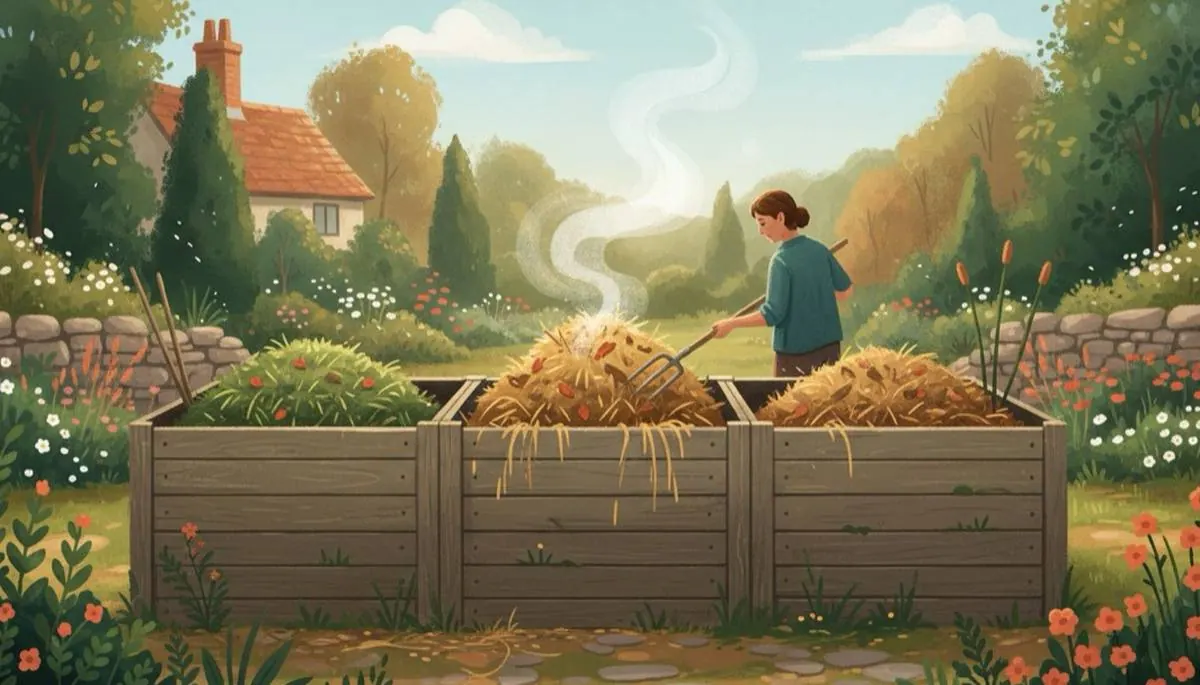
- Balance carbon and nitrogen with materials you actually have
- Build a heap big enough to heat and know when to turn it
- Work out the tonnage your garden needs each year
Hot versus cold
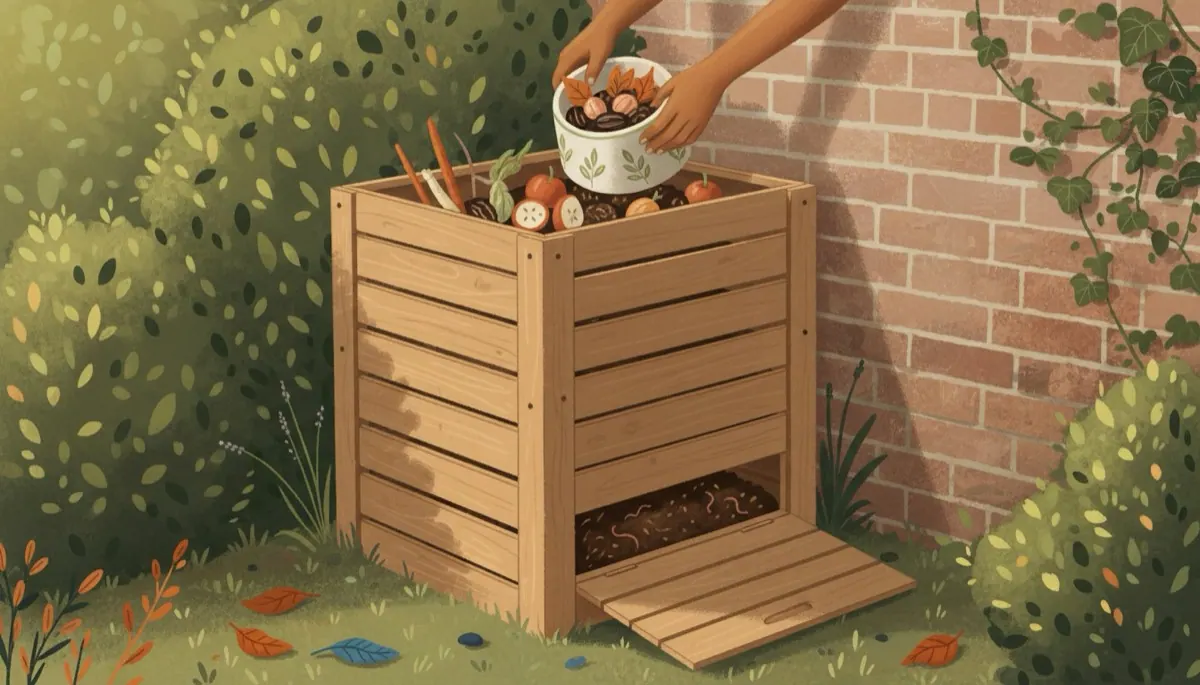
A cold heap is a pile you add to as material appears. It works, costs no effort, and takes 9 to 18 months. It never gets hot, so weed seeds and roots survive and diseased material stays diseased. A hot heap is built in one go from a stockpile, reaches 55 to 65 degrees Celsius within three to four days, and is finished in 8 to 12 weeks. Above 55 degrees for three consecutive days, most weed seeds and plant pathogens die, which matters enormously if you are composting couch grass or blighted haulm. If you feed yourself from the plot you want at least one hot heap a year, usually in spring or autumn when material piles up, and cold heaps running alongside it.
Carbon to nitrogen with real materials
Microbes want roughly 25 to 30 parts carbon to 1 part nitrogen overall. Rough carbon to nitrogen ratios: fresh grass clippings 15 to 1, vegetable scraps 20 to 1, chicken manure 7 to 1, coffee grounds 20 to 1, horse manure with bedding 30 to 1, dry leaves 60 to 1, straw 80 to 1, shredded paper and cardboard 200 to 1, sawdust 400 to 1. In practice you do not calculate, you layer. Two to three buckets of brown, dry and bulky, to one bucket of green, wet and fresh, lands close to the target. Too much green goes slimy and smells of ammonia. Too much brown just sits there cold. Adjust by smell and speed.
Size, water and air
A hot heap needs a minimum of one cubic metre, so a bay a metre wide, a metre deep and a metre high, or it loses heat faster than it makes it. A metre and a half cubed is better and holds temperature through a cold night. Chop material to 5 cm or so; big lumps rot slowly. Water each layer as you build until it feels like a wrung-out sponge, around 50 to 60 percent moisture, meaning a squeezed handful yields one or two drops. Too dry and it stalls, too wet and it goes anaerobic and sour. Air comes in through bulky browns and from turning. A cheap compost thermometer with a 40 cm probe is worth the 20 euros because it tells you exactly when to turn.
Turning and finishing
Temperature typically peaks at 60 to 65 degrees on day three or four, holds for several days, then falls. Turn when it drops below about 45 degrees, moving the outside of the heap to the middle so everything gets cooked. Four turns over six weeks, roughly every seven to ten days, will finish a heap in 8 to 12 weeks. After the last heat, let it mature for a further four to six weeks so fungi and worms move in; uncured compost can stunt seedlings. It is ready when it is dark, crumbly, smells of woodland floor, has cooled to air temperature and you cannot recognise the ingredients. Expect the heap to shrink to about a third of its original volume.
What never goes in
Meat, fish, bones, fat, oil and dairy attract rats and go putrid. Cooked food scraps with sauce likewise. Dog, cat and pig faeces can carry parasites that survive a garden heap and must never go on food beds. Coal ash, glossy printed card, plastic-lined coffee cups, tea bags with polypropylene, treated timber and vacuum dust from synthetic carpet all add contaminants. Perennial weed roots such as bindweed, couch and oxalis, and anything gone to seed, only go in a heap you are certain will hit 55 degrees for three days; otherwise drown them in a bucket of water for six weeks first. Manure from pasture sprayed with aminopyralid stays toxic through composting, so ask before you accept a trailer load.
How much you actually need
A working figure for a productive vegetable garden is 25 to 50 litres of finished compost per square metre per year, which is a 2.5 to 5 cm layer, roughly 15 to 30 kg. For 200 square metres of beds, that is 5 to 10 cubic metres a year, or five to ten full one metre bays. Almost nobody makes that from kitchen scraps alone; a household produces perhaps 200 to 400 litres a year from the kitchen. The gap is closed with imported bulk: grass, leaves, manure, straw, spoilt hay, wood chip and green manures grown on the plot itself. Once beds are established you can drop to 2.5 cm a year on most beds and save the thicker dose for the hungry crops.
Check yourself
Below about one cubic metre a heap loses heat to the air faster than the microbes generate it, so it never reaches thermophilic temperatures.
Roughly two to three buckets of dry bulky browns per bucket of wet fresh greens lands near 25 to 30 to 1 without any arithmetic.
Three consecutive days above 55 degrees is the standard threshold for killing most weed seeds and plant pathogens.
That is a 2.5 to 5 cm layer, about 15 to 30 kg per square metre, and far more than kitchen scraps alone will ever supply.
Try it for real: Build one hot heap and measure it
- Stockpile browns and greens for two weeks until you have a full cubic metre of material
- Build the heap in one session, layering two to three parts brown to one part green and watering each layer
- Take the temperature daily for a week and write it down
- Turn it when it drops below 45 degrees, and again every seven to ten days
- Measure the finished volume and work out how many heaps your beds need per year
🛒 Gear for this skill
As an Amazon Associate I earn from qualifying purchases. It costs you nothing extra and keeps this site free.
Next lesson: No-Dig and When to Dig Anyway →
Written and checked by the Human Skills team against the sources below. How we check our content
- Cornell Waste Management Institute Composting
- RHS Composting Guide
- FAO On-Farm Composting Methods