 Human Skills
How Much Land Feeds One Person
The honest arithmetic behind a number everyone gets wrong
6 minBeginnerUpdated
- Work out calories per square metre for any crop
- Tell the three levels of self-supply apart
- Size a plot against what your household really eats
Start with calories, not beds
An adult who is not doing heavy physical work needs roughly 2000 to 2500 calories a day, so about 800000 calories a year. That single number is the whole problem in front of you, and every square metre of ground has to be measured against it.
The arithmetic is simple. Take the yield of a crop in kilograms per square metre, multiply by the calories in a kilogram, and you get calories per square metre. Potatoes at 3.5 kg and 770 calories per kilogram give about 2700 calories from one square metre. Lettuce at 2.5 kg and 150 calories gives 375. That is a seven times difference from the same patch of soil.
Why the quoted figure is usually wrong
You will read that 100 square metres feeds a person, and also that you need 4000. Both are quoted honestly and both are nearly useless, because they answer different questions.
The small figures come from intensive beds growing only the highest calorie crops, in a good climate, worked by someone with years of practice, and they assume every bed produces twice a year. The large figures include grain, oil, pasture for animals and the ground lost to paths, sheds and failures.
Neither figure includes the year the blight arrives, the fortnight you are away in August, or the fact that nobody wants to eat potatoes at every meal. Treat any single number you are given as a claim to check, not an answer.
Three very different goals
Supplementing your shopping is the first level. Around 50 square metres of well worked beds gives a household most of its salad, herbs, summer fruiting vegetables and some roots for perhaps six months a year. It cuts a food bill and it is genuinely achievable in a first season.
Feeding a household through a season is the second. Roughly 150 to 250 square metres per person, planted heavily with potatoes, squash, roots and brassicas, covers most of what you eat from July to January.
True year round independence is the third, and it is a different animal: 400 to 1000 square metres per person once you count grain, beans, oil, fruit trees and land that is resting. Most people who claim the first are quietly doing the second.
Doing the sum for your own plot
Work an example. A bed of 10 square metres of potatoes gives about 35 kg, roughly 27000 calories, which is eleven days of one adult. To carry one adult for a year on potatoes alone you would need about 300 square metres and you would still have no fat, no protein worth the name and nothing to eat in May.
Now do it with a mix. Potatoes, winter squash, parsnips and dry beans together average roughly 1500 to 2000 calories per square metre once paths and failures are counted. Divide 800000 by 1750 and you get about 460 square metres per adult for a full year of staples.
That is the honest figure to plan against.
What the numbers leave out
Ground is only half of it. Water in a dry summer, storage space that stays cool, and time in the two or three weeks of the year when everything must be planted or lifted at once are the limits that stop most people, not area.
Assume you will lose 20 to 30 percent of a planned harvest in a normal year to weather, pests and mistakes, and plan the extra ground in from the start rather than being shocked by it. Assume too that your first two seasons will produce well under half of what the tables predict.
None of this is a reason not to start. It is a reason to start small, measure what you actually harvest, and scale from real numbers.
Check yourself
Around 2200 calories a day across a year comes to roughly 800000. Every land calculation starts from this number.
35 kg at 770 calories per kilogram is about 27000 calories, which is roughly eleven days of eating.
Once grain, beans, oil, fruit and resting ground are counted, 400 to 1000 square metres per adult is the honest range.
Weather, pests and simple mistakes take a fifth to a third of a planned harvest in an ordinary season.
Try it for real: Measure your ground and do the sum
- Measure your growing area in square metres, counting only beds, not paths.
- List the four crops you grow most of and find their calories per square metre.
- Multiply area by the average to get your plot's yearly calorie ceiling.
- Divide by 800000 to see what fraction of one adult your land can carry.
- Write the figure down and compare it with your real harvest next autumn.
🛒 Gear for this skill
As an Amazon Associate I earn from qualifying purchases. It costs you nothing extra and keeps this site free.
Next lesson: Why Salad Does Not Feed You →
Written and checked by the Human Skills team against the sources below. How we check our content
- FAO Food Balance Sheets
- John Jeavons, How to Grow More Vegetables
- RHS Grow Your Own
Related lessons
Crop Rotation and Planning a Year of Food
Move plant families, fill every gap, eat all year
Why Salad Does Not Feed You
The staple four, and the hard problem of fat
Planning a Year of Eating
Work backwards from the kitchen, not forwards from the seed box
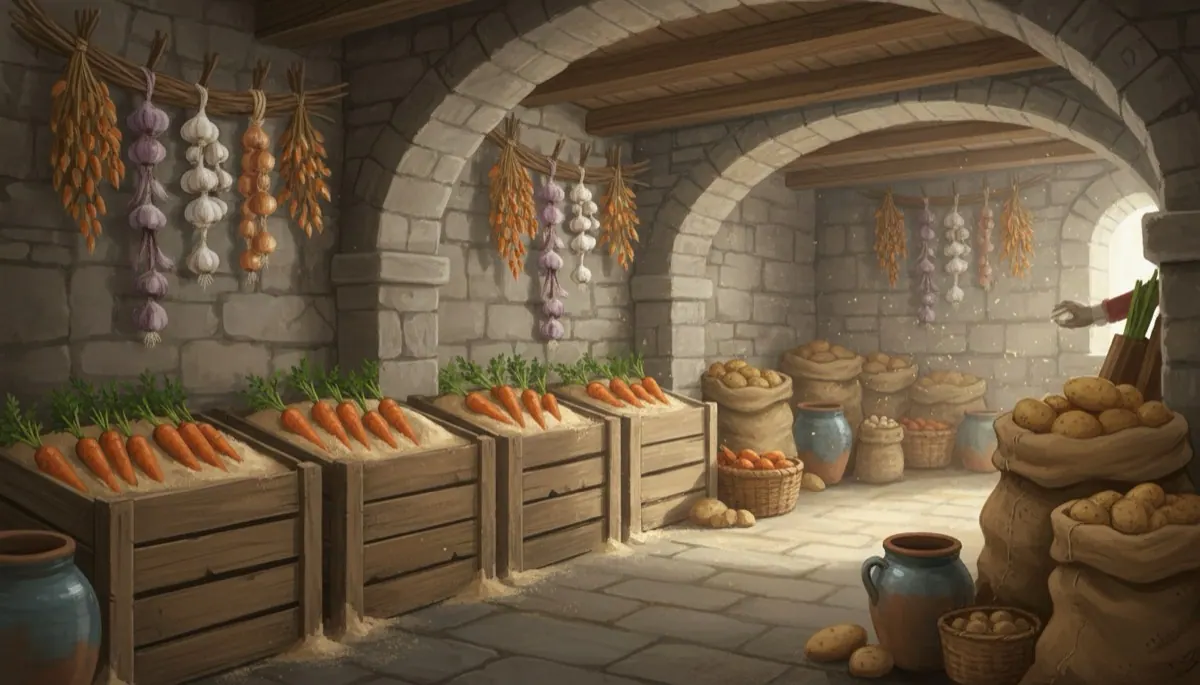
Getting the Harvest to Next Spring
Clamps, sand boxes, plaits and dry stores without a freezer