 Human Skills
Crop Rotation and Planning a Year of Food
Move plant families, fill every gap, eat all year
6 minAdvancedUpdated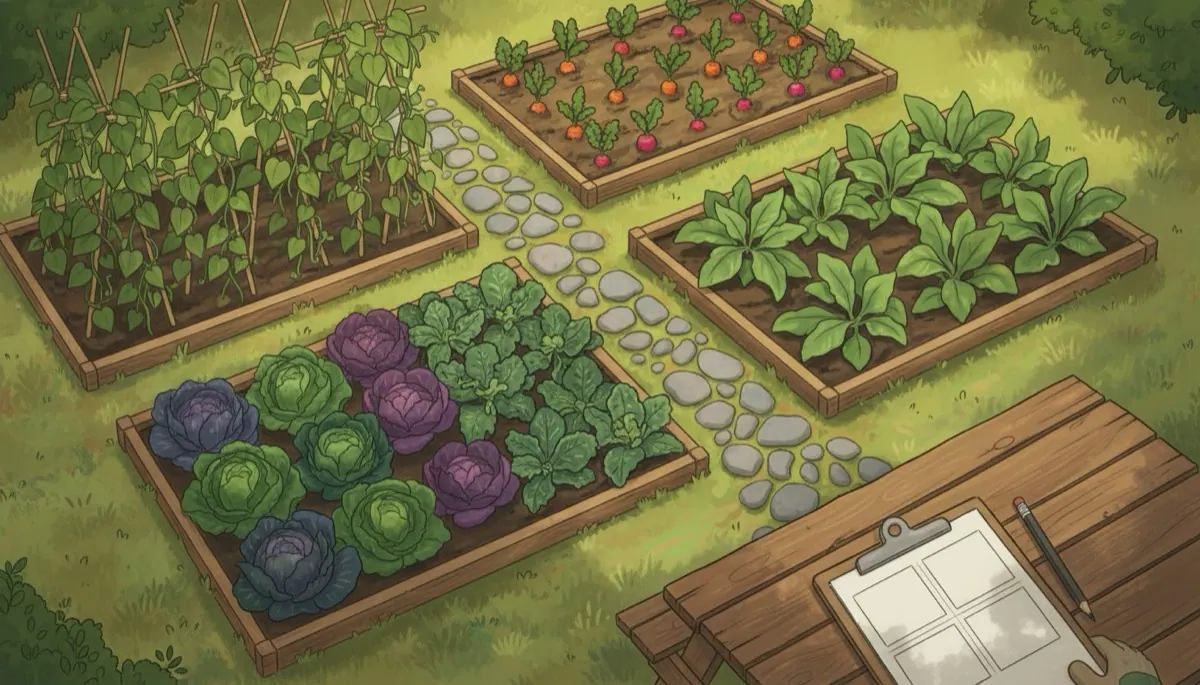
- Group crops into rotation families and move them each year
- Plan successions so beds are never empty
- Match a year's plan to your climate's two growing seasons
Why rotate
Growing the same family in the same bed every year builds up its specific pests and diseases in the soil: club root in brassicas, eelworm in potatoes, white rot in onions, some lasting 10 years or more. It also drains the nutrients that family uses most. Rotation moves each family to a different bed each year so problems die out and nutrient demand is balanced. A 4-bed, 4-year rotation is the classic. It is not a rule to obsess over in a tiny garden, but even in containers, fresh compost each year does the same job. The families that matter most to rotate are potatoes, brassicas and onions.
The four groups
Group 1, legumes: peas, beans and broad beans. They fix nitrogen into the soil. Group 2, brassicas: cabbage, kale, broccoli, cauliflower, turnips, radishes and rocket. They love the nitrogen the legumes left. Group 3, roots and onions: carrots, beetroot, parsnips, onions, garlic and leeks. They prefer soil not freshly manured. Group 4, potatoes and the tomato family: potatoes, tomatoes, peppers, aubergines, plus squash and courgettes for convenience. They are hungry and get the compost. The order runs legumes, then brassicas, then roots, then potatoes, then back to legumes. Salads, sweetcorn and herbs fit anywhere and are used to fill gaps.
Succession and gap filling
A bed that sits empty grows weeds and loses nutrients. Succession sowing means sowing small amounts every 2 to 3 weeks so lettuce, radish, rocket, spring onions and beans come in a steady stream rather than a glut. Gap filling means having a tray of seedlings ready to drop in the moment something is harvested: garlic out in June, leeks or beans in the same day. Fast crops such as radish, rocket and baby leaf take 25 to 40 days and can be sown between slower ones and cleared before they need the space. Keep a small seed tray going all season for this.
Planning a year on paper
Start with what you actually eat. List the 10 vegetables your household buys most and plan around those. For each, note the months you want to harvest it, then count back the days to maturity to find sowing dates. Sketch each bed with a column per month and pencil crops in so every bed has something growing 10 to 12 months of the year. Include overwintering crops: garlic, onions, broad beans, kale and leeks go in during autumn and take up space until spring or summer. A family of four eats roughly 30 to 50 square metres of well-managed beds' worth of vegetables. Start with 10 and grow into it.
Green manures and rest
A bed with nothing planned for 6 weeks or more should get a green manure: a crop sown only to be dug in or cut down. Field beans, clover and vetch add nitrogen over winter. Phacelia and buckwheat grow in 6 weeks in summer, smother weeds and feed bees. Mustard grows fast but is a brassica, so count it in the rotation. Cut them down before they set seed, leave the tops on the surface as mulch or chop them into the top 5 cm, and wait 2 to 3 weeks before sowing. This replaces bare fallow, which just loses soil to rain and wind.
Two seasons, not one
In cool climates the year has one growing season and a winter rest. In Mediterranean and subtropical climates it has two: spring to early summer, and autumn into winter, with high summer as the difficult season. Plan the year around both. Summer beds carry tomatoes, peppers, beans, squash and sweetcorn from April to September. As those come out, the same beds take lettuce, spinach, chard, brassicas, peas, broad beans, onions and garlic from September to November for harvest through winter and spring. Cool-season crops sown in autumn often outperform spring sowings because they mature before heat and pests arrive.
Check yourself
Family-specific soil diseases such as club root and eelworm die out when their host is absent for several years.
Brassicas are hungry for nitrogen, which peas and beans have just fixed into the soil.
Regular small sowings turn a glut into a steady supply and keep beds productive.
A green manure protects the soil, suppresses weeds and adds nitrogen and organic matter for free.
Try it for real: Draw next year's plan
- List the 10 vegetables your household buys most
- Sketch your beds and assign each a rotation group for this year and next
- Fill in a month-by-month plan so every bed is planted at least 10 months of the year
- Order or set aside the seed you need for the first sowing window
- Sow a green manure on any bed that will be empty for more than 6 weeks
🛒 Gear for this skill
As an Amazon Associate I earn from qualifying purchases. It costs you nothing extra and keeps this site free.
Next lesson: How Much Land Feeds One Person →
Written and checked by the Human Skills team against the sources below. How we check our content
- RHS Crop Rotation Guide
- FAO Crop Rotation and Intercropping
- Eliot Coleman, The New Organic Grower
Related lessons
How Much Land Feeds One Person
The honest arithmetic behind a number everyone gets wrong
Why Salad Does Not Feed You
The staple four, and the hard problem of fat
Planning a Year of Eating
Work backwards from the kitchen, not forwards from the seed box
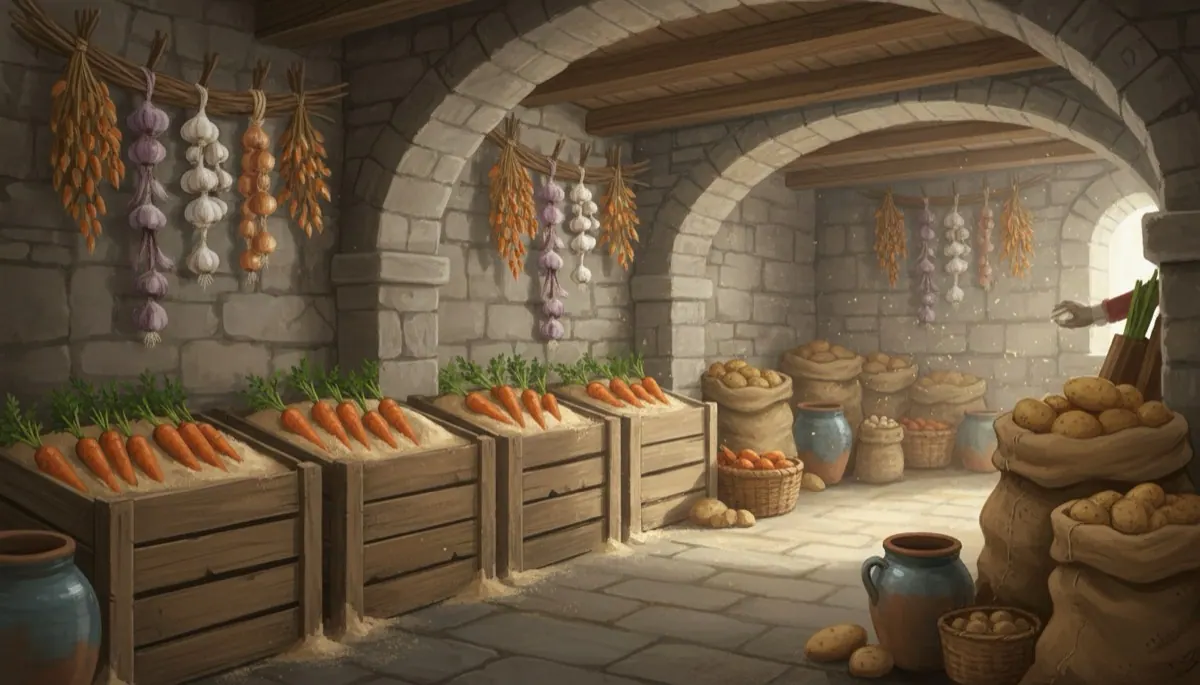
Getting the Harvest to Next Spring
Clamps, sand boxes, plaits and dry stores without a freezer