 Human Skills
Eggs: Collecting, Cleaning and Storing
From nest box to kitchen without waste
4 minBeginnerUpdated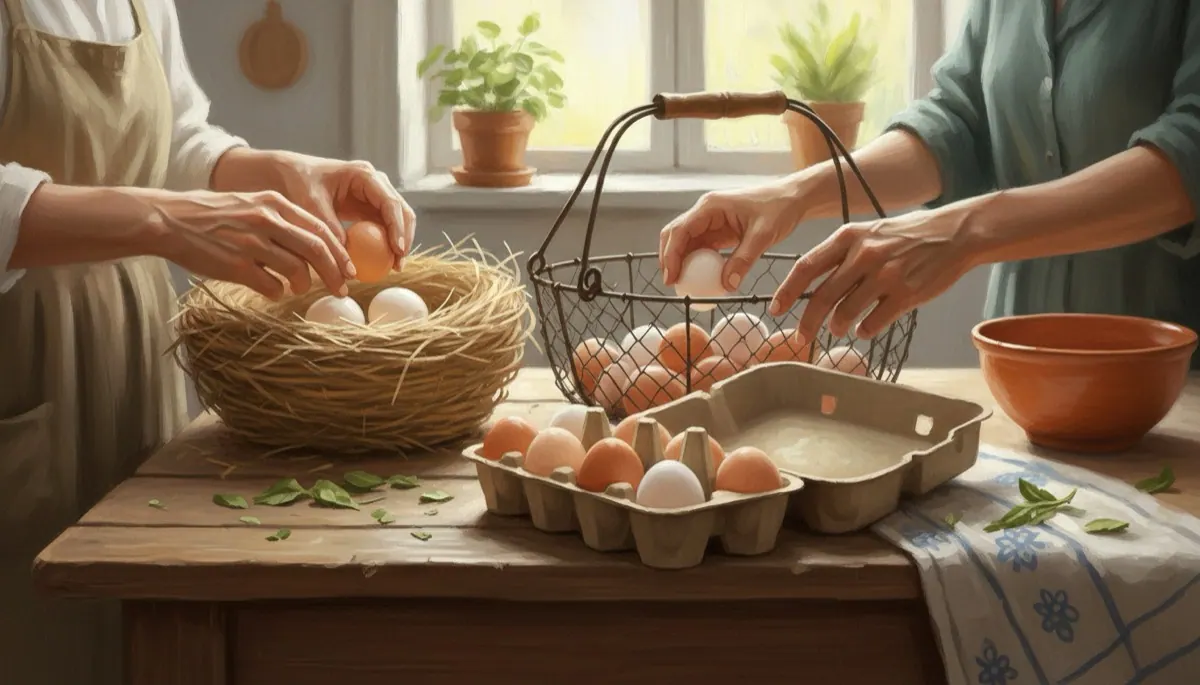
- Collect eggs at the right time and handle them safely
- Decide when to wash an egg and when to leave it
- Test an egg for freshness in a glass of water
Collect early and often
A hen lays most eggs in the morning. Collect once before noon and again in the late afternoon. Eggs left in the nest get dirty, cracked, pecked or eaten by rats, and in summer heat they age fast. Use a basket or an egg carton, not your pockets. Check for cracks by rolling each egg gently: cracked eggs let bacteria in, so use them the same day, cooked through, or bin them. Keep nest boxes lined with clean straw or wood shavings and replace it weekly. Clean bedding means clean eggs, which means less washing later.
To wash or not to wash
A freshly laid egg has a natural coating called the bloom or cuticle that seals the pores of the shell against bacteria. Washing removes it. So the rule is simple: if an egg is clean, do not wash it. If it has a smudge of dirt, rub it off dry with a cloth or fine sandpaper. If it is properly dirty, wash it under running water that is warmer than the egg (around 40 °C), never cold, because cold water shrinks the contents and pulls dirt through the shell. Dry it and use it first. Never soak eggs in a bowl.
Storing eggs
Unwashed eggs in a cool cupboard (under 20 °C) stay good for about 3 weeks; in the fridge, unwashed or washed, 5 to 6 weeks. Store them pointed end down so the air cell sits at the top and the yolk stays centred. Pencil the date on each shell. Rotate: oldest at the front. Keep them away from strong smells, since shells absorb odours. Hard-boiled eggs keep a week in the fridge. Surplus can be frozen: crack, beat lightly, freeze in ice-cube trays, then bag. They keep 6 months and work for baking and scrambles.
The float test
Not sure how old an egg is? Fill a glass with cold water and lower the egg in. A fresh egg lies flat on the bottom. An egg a week or two old stands on its end, because the air cell has grown. An egg that floats has a large air pocket and should be thrown away. The test works because the shell is porous and moisture slowly leaves the egg as gas replaces it. Also crack a doubtful egg into a separate bowl before adding it to anything, and trust your nose: a bad egg smells unmistakably of sulphur.
When laying slows down
A good laying hen gives 250 to 300 eggs in her first year, then fewer each year after. Laying slows in winter as daylight shrinks below about 12 hours, stops for a few weeks during the autumn moult when hens regrow feathers, and drops sharply in extreme heat. A sudden stop in a healthy flock usually means stress: a new predator visiting at night, a change in feed, no water for a few hours, or a hen laying somewhere hidden in the garden. Look for the hidden nest before you assume illness.
Check yourself
The bloom seals the shell’s pores against bacteria. Once washed, an egg needs refrigeration.
Warm water keeps the egg contents expanded so dirt is not drawn inward through the pores. Cold water does the opposite.
A large air cell makes an old egg float. Fresh eggs lie flat on the bottom.
Pointed end down keeps the air cell at the top and the yolk centred, which helps eggs keep longer.
Try it for real: Run an egg freshness check
- Take three eggs of different ages, or buy a fresh carton and keep one egg a week
- Float-test each one in a glass of cold water and note the result
- Crack the oldest into a bowl and compare yolk height and white spread with a fresh one
- Set up a dated, pointed-end-down egg tray in your kitchen
🛒 Gear for this skill
As an Amazon Associate I earn from qualifying purchases. It costs you nothing extra and keeps this site free.
Next lesson: Basic Animal Care Principles →
Written and checked by the Human Skills team against the sources below. How we check our content
- EFSA guidance on egg storage and hygiene
- USDA Shell Eggs from Farm to Table
- FAO
Related lessons
Keeping Backyard Chickens
Space, feed, water, predators and the rules

Basic Animal Care Principles
The five freedoms, daily checks and when to call the vet
Designing a Coop That Works
Ventilation, perches, nest boxes and a run that stays dry
Spotting a Sick Chicken
Daily checks, parasites and when to call a vet