 Human Skills
Spotting a Sick Chicken
Daily checks, parasites and when to call a vet
5 minIntermediateUpdated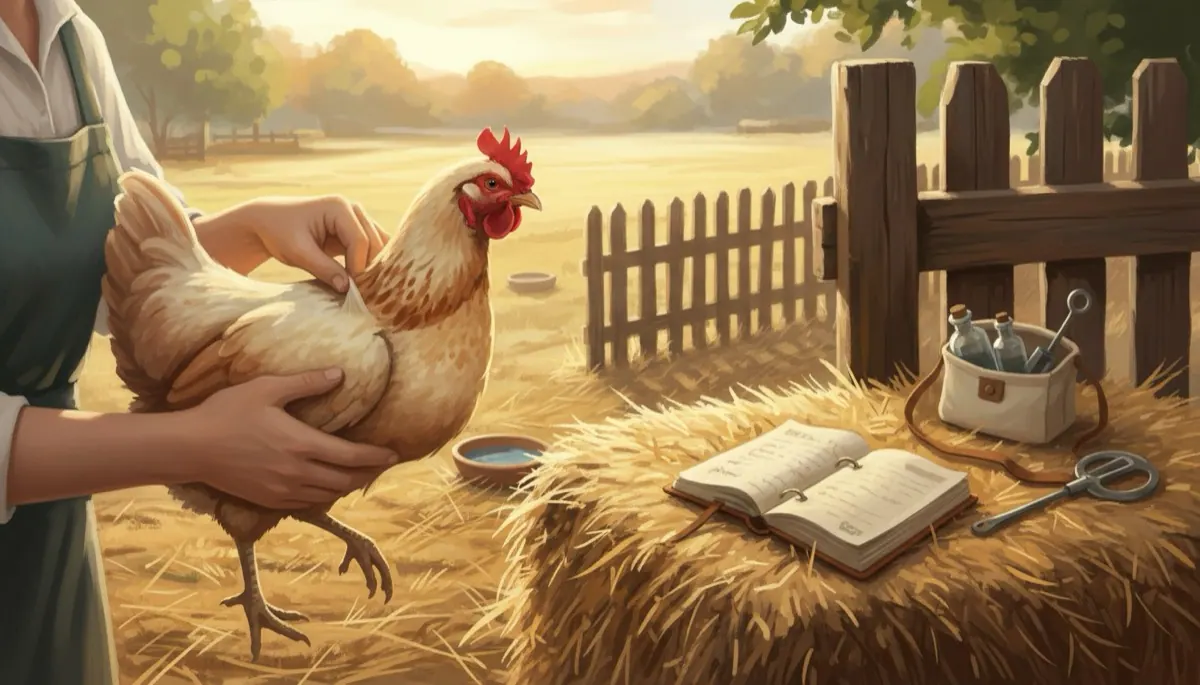
- Run a two-minute daily health check on a flock
- Recognise red mite, lice and worms early
- Decide when a problem needs a vet or an official report
Chickens hide illness
A sick bird in the wild is the one that gets eaten, so hens conceal symptoms until they are seriously unwell. That means you have to look on purpose rather than wait to notice. Every morning, count the flock, then watch for a full sixty seconds before you do anything. Healthy hens are busy: bright eyes, a red upright comb, clean nostrils, smooth feathers, a clean vent and immediate interest in food. The bird standing apart with her tail down, eyes half closed and feathers fluffed is telling you something, and so is the one that ignores breakfast.
The hands-on check
Once a month, and whenever a bird looks off, lift each hen after dark when she is calm. Feel the keel bone down the middle of the breast: it should be padded either side, not a sharp ridge. Check the crop at night, when it should be full and soft, and at dawn, when it should be empty. Part the feathers around the vent and under the wings and look for fast-moving straw-coloured lice and cream egg clumps at the feather bases. Look at the leg scales for raised crusts, and the underside of each foot for a black scab.
Red mite, the invisible one
Red mite lives in the coop, not on the bird, feeds at night and hides by day in perch ends and cracks, so you can have a heavy infestation and see nothing in daylight. The signs are hens reluctant to go in at dusk, pale combs, a sudden drop in laying and grey ash-like dust in joints. Confirm it by wiping under the perch ends with white kitchen paper: red smears mean blood, and blood means mites. Treat the building, not the bird: strip, scrub, dry, treat every crack, and repeat after five to seven days at least twice.
Worms and droppings
Normal droppings are firm and brown with a white cap, plus one frothy brown caecal dropping a day. Gradual weight loss despite good appetite, a pale comb, loose droppings and a slow drop in laying point at internal worms, and a bird stretching her neck and gasping suggests gapeworm. Do not worm on a calendar and do not guess. Send a pooled droppings sample for a worm egg count twice a year and treat with a licensed poultry wormer only when the count justifies it. Blanket worming breeds resistance and unlicensed products have unknown egg withdrawal periods.
When it is a vet, and when it is a report
Call a vet the same day for laboured breathing, a hen straining in the nest and unable to pass an egg, visible red tissue outside the vent, a bird unable to stand, or bleeding you cannot stop with gentle pressure. Several birds sick or dying at once is different again: avian influenza and Newcastle disease are notifiable in most countries and you are legally required to report suspicion to the national authority. Find a poultry vet before you need one. Do not attempt injections, tube feeding or any surgical procedure you have not been trained to do.
Check yourself
Red mite hides in the coop by day and feeds at night. Blood smeared on white paper wiped under the perch ends is the classic confirmation.
Testing before treating avoids breeding resistance and unnecessary egg withdrawal periods. A worm egg count twice a year is the practical routine.
Multiple birds affected at once raises the possibility of a notifiable disease such as avian influenza, which must be reported. Self-medicating is both ineffective and illegal in most places.
A healthy hen's keel is padded on both sides. A prominent sharp keel means muscle loss, often from parasites, illness or being kept off the feeder.
Try it for real: Set up a real health routine
- Do the sixty-second watch before feeding, every morning for a week
- Handle every bird one evening and record keel condition, vent, legs and feet
- Wipe the perch ends with white paper and act if you see red
- Find a vet who treats poultry and write the number on the coop door
- Start a notebook for treatments, dates and egg withdrawal periods
🛒 Gear for this skill
As an Amazon Associate I earn from qualifying purchases. It costs you nothing extra and keeps this site free.
Next lesson: The Chicken Keeper's Year →
Written and checked by the Human Skills team against the sources below. How we check our content
- World Organisation for Animal Health (WOAH)
- RSPCA Chicken Welfare
- DGAV Portugal
Related lessons
Keeping Backyard Chickens
Space, feed, water, predators and the rules
Eggs: Collecting, Cleaning and Storing
From nest box to kitchen without waste

Basic Animal Care Principles
The five freedoms, daily checks and when to call the vet
Designing a Coop That Works
Ventilation, perches, nest boxes and a run that stays dry