Human Skills
Rainwater Harvesting
Catch it, store it, use it wisely
5 minBeginnerUpdated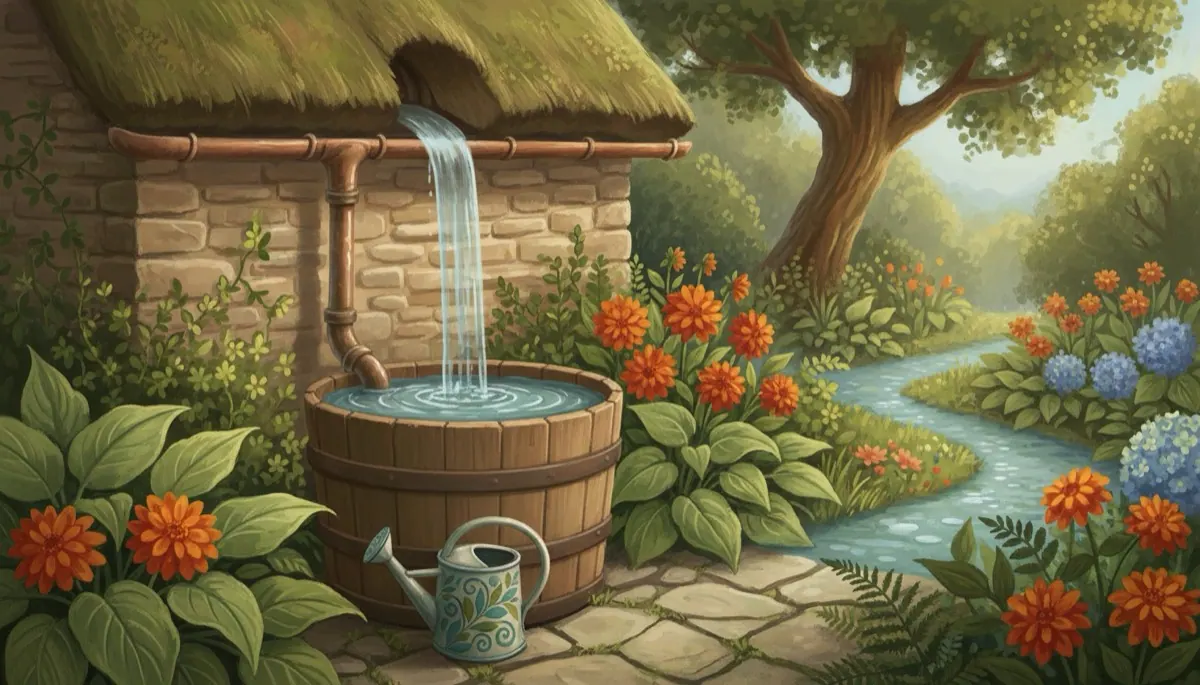
- Estimate how much rain your roof can collect
- Set up a simple, safe barrel system
- Know what rainwater is safe for and what it is not
How much water is on your roof
The sum is simple: roof area in m² times rainfall in mm gives litres. A 50 m² roof in a place with 600 mm of rain a year catches about 30,000 litres. Knock off 20 percent for splash, evaporation and overflow and you still have 24,000 litres, enough to water a vegetable patch through a dry summer if you can store it. The problem is timing. In a Mediterranean climate, 80 percent of that rain falls between October and April, and almost none falls when the garden needs it most. Storage capacity, not roof size, is the real limit.
The basic barrel setup
Start with one downpipe. Fit a rain diverter (a small kit that cuts into the pipe) leading to a 200 to 300 litre barrel on a raised stand of concrete blocks so you can get a watering can under the tap. Add a fine mesh screen where water enters to keep out leaves and mosquitoes, a sealed lid, and an overflow pipe that sends excess back to the drain or away from your foundations. A first-flush diverter, a short vertical pipe that fills with the dirtiest first litres before clean water passes on, improves quality a lot. Link two or three barrels with a hose at the base to multiply storage.
What rainwater is safe for
Roof water carries bird droppings, dust, moss, pollen and whatever the roof is made of. Treat it as non-potable: fine for watering plants, washing tools, flushing toilets, cleaning the car, and topping up a pond. Water vegetables at the soil, not over the leaves, and stop a couple of days before harvest for salad crops. Do not drink it, cook with it, or give it to animals as their only water without proper filtration and disinfection, which is a separate, serious project. Never connect a rain tank to your house plumbing; a cross-connection can contaminate your mains supply and is illegal in most places.
Keeping it clean
Mosquitoes breed in open water within a week, so every inlet and overflow needs mesh finer than 1 mm. Empty and rinse barrels once a year, ideally at the end of summer before the autumn rains. Clean gutters in autumn after leaf fall. Keep the barrel out of direct sun or paint it a dark colour, because light grows algae. If the water smells, it has gone anaerobic: drain it onto the garden and start fresh. Avoid collecting from roofs treated with moss killer, from old asbestos-cement roofs, or from lead flashing runs if the water will go anywhere near food crops.
Scaling up and the rules
Once barrels feel small, the next step is a 1,000 litre IBC tote (cheap second-hand, but only ever food-grade ones) or a buried cistern of 5,000 litres and up. Traditional Portuguese and Spanish farms ran on cisterns for centuries, filled from roofs and courtyards. Larger systems may need planning consent, especially buried tanks, and using rainwater indoors (toilets, washing machine) requires a separate labelled pipe network and usually a plumber and building approval. Collecting rain for your garden is legal almost everywhere; check with your municipality before digging or plumbing indoors.
Check yourself
Area in m² times rainfall in mm gives litres: 40 × 500 = 20,000 litres, before losses.
The first rain washes dust and droppings off the roof. The diverter catches that dirty water so cleaner water goes to the tank.
Untreated rainwater is non-potable. It is excellent for gardens, cleaning and toilets, never for drinking without proper treatment.
A cross-connection can push non-potable water back into the drinking supply. Indoor use needs a separate labelled network and approval.
Try it for real: Calculate and catch
- Measure or estimate your roof area and find your annual rainfall
- Work out your potential litres and how many barrels you would need for a dry month
- Set up one barrel or bucket under a downpipe with mesh over the top
- After the next rain, measure what you caught and compare it with your estimate
🛒 Gear for this skill
As an Amazon Associate I earn from qualifying purchases. It costs you nothing extra and keeps this site free.
Written and checked by the Human Skills team against the sources below. How we check our content
- WHO Guidelines for Drinking-water Quality
- FAO Rainwater harvesting guidance
- RHS Water collection advice