 Human Skills
Fire Basics: Tinder, Kindling and Fuel
Build a small, controlled fire that lights first time
5 minBeginnerUpdated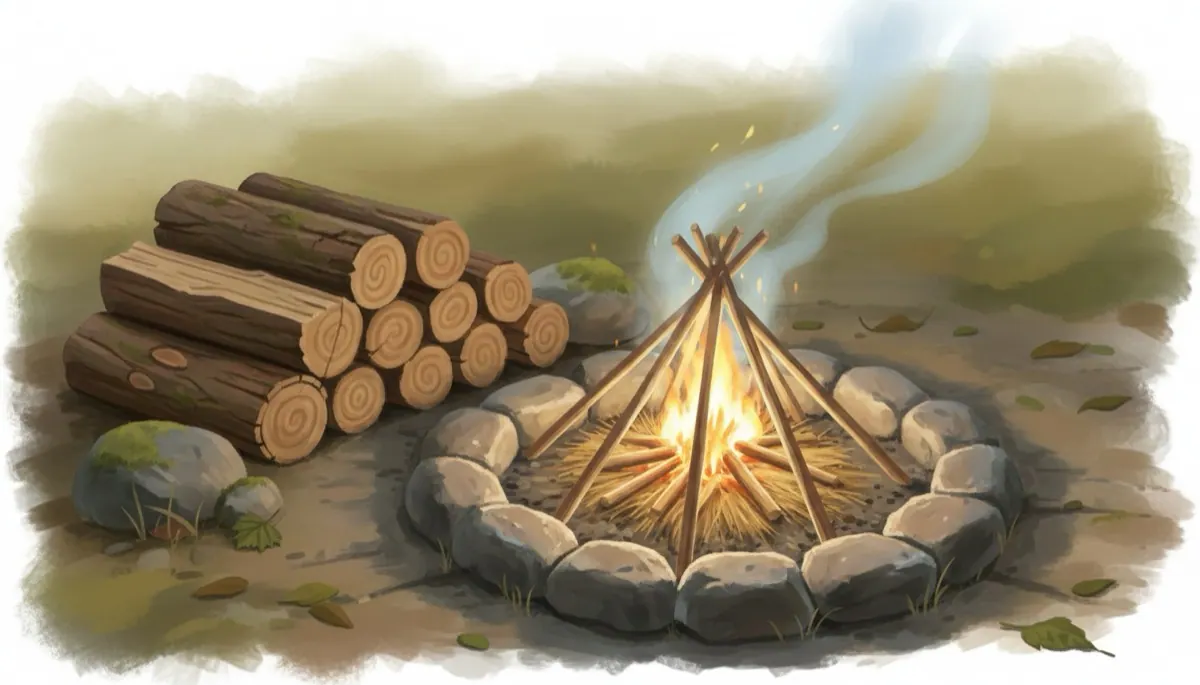
- Explain the fire triangle and why fires fail
- Gather and sort tinder, kindling and fuel by size
- Build and light a small fire in a safe, prepared spot
The fire triangle
Fire needs three things: heat, fuel and oxygen. Remove any one and the fire goes out, which is both how you light a fire and how you put one out. Most beginner fires fail for one of three reasons: the fuel is damp, the pieces are too big for the heat available, or the fire is packed so tightly that air cannot flow. Think of fire as something you grow rather than something you start. A match gives a tiny amount of heat, so the first fuel has to be tiny too. Each stage of the fire heats the next, slightly larger stage. Patience at the beginning saves matches later.
Tinder
Tinder is anything dry and fine enough to catch from a single spark or match flame. Good natural tinder includes dry grass, birch bark peeled in thin curls, the fluffy seed heads of thistles and bulrushes, dead pine needles and the fine dead twigs at the bottom of conifers. From your pockets, cotton wool, dryer lint, a strip of inner tube, or paper twisted tight all work. Gather a bundle at least the size of two fists. Tinder must be bone dry; test it by bending a piece. If it snaps, it is dry. If it bends, it will smoulder rather than burn.
Kindling and fuel
Kindling is the bridge between tinder and real fuel. Collect dead, dry twigs from pencil-lead thickness up to finger thickness, breaking them off standing dead branches rather than picking them off the damp ground. You need far more than you think: a bundle the size of your forearm at each size. Fuel is wrist-thick and larger. Sort everything into piles by size before striking a match, so you are never scrambling while the flame dies. Hardwoods like oak burn longer; softwoods like pine light faster but spit. Split larger pieces to expose dry wood inside if the outside has been rained on.
Building and lighting
Choose a spot on bare mineral soil, at least 3 metres from tents, overhanging branches, dry grass and roots. Scrape a circle 1 metre wide down to bare earth and ring it with stones if available. Place the tinder bundle in the centre, then lean the thinnest kindling over it in a small tepee, leaving a gap on the side the wind comes from. Light the tinder at its base, on the windward side, so the flame is pushed into the fuel. Add kindling one size at a time, always leaving air gaps. Only when finger-thick sticks are burning strongly should you add the first small fuel.
Keeping it small
A cooking or warming fire should be no bigger than a dinner plate. Small fires use less fuel, are easier to control, and are safer for the people around them. Feed the fire steadily rather than piling it high; a tall pile collapses and throws embers. Keep water or loose soil beside the fire from the moment it is lit. Never leave a fire unattended, even for a minute, and never build one when the wind is strong enough to blow embers into dry vegetation. In many places fires are banned outright in summer, and a permit is required at other times. Check before you strike a match.
Check yourself
Fire needs heat, fuel and oxygen. Removing any one puts it out, which is the basis of all fire safety.
Dry wood snaps cleanly; damp wood bends. Damp fuel smoulders and kills a young fire.
Lighting low on the windward side lets the breeze push the flame into the rest of the fuel.
A 3 metre clearance and a 1 metre circle of bare soil keep sparks away from anything that can burn.
Try it for real: Sort a fire kit without lighting it
- On a dry day, collect two fistfuls of natural tinder and test each piece with the snap test
- Gather a forearm-sized bundle each of pencil-lead, pencil and finger-thick dead twigs
- Lay them out in a tepee on a patio or in a fire pit, but only light it if fires are legal where you are and you have water beside you
- Make a petroleum jelly cotton wool tin for your kit
🛒 Gear for this skill
As an Amazon Associate I earn from qualifying purchases. It costs you nothing extra and keeps this site free.
Next lesson: Fire Safety and Putting a Fire Out →
Written and checked by the Human Skills team against the sources below. How we check our content
- Leave No Trace
- ICNF Portugal fire regulations
- US Forest Service campfire guidance
Related lessons
Fire Safety and Putting a Fire Out
Control, extinguish and never leave a hot spot behind
Natural Tinder: What Catches a Spark
Find, test and carry the fine fuel that turns a spark into flame
Fire Lays: Teepee, Log Cabin, Lean-to, Star
Choose the right fire structure for lighting, cooking, wind or a long burn
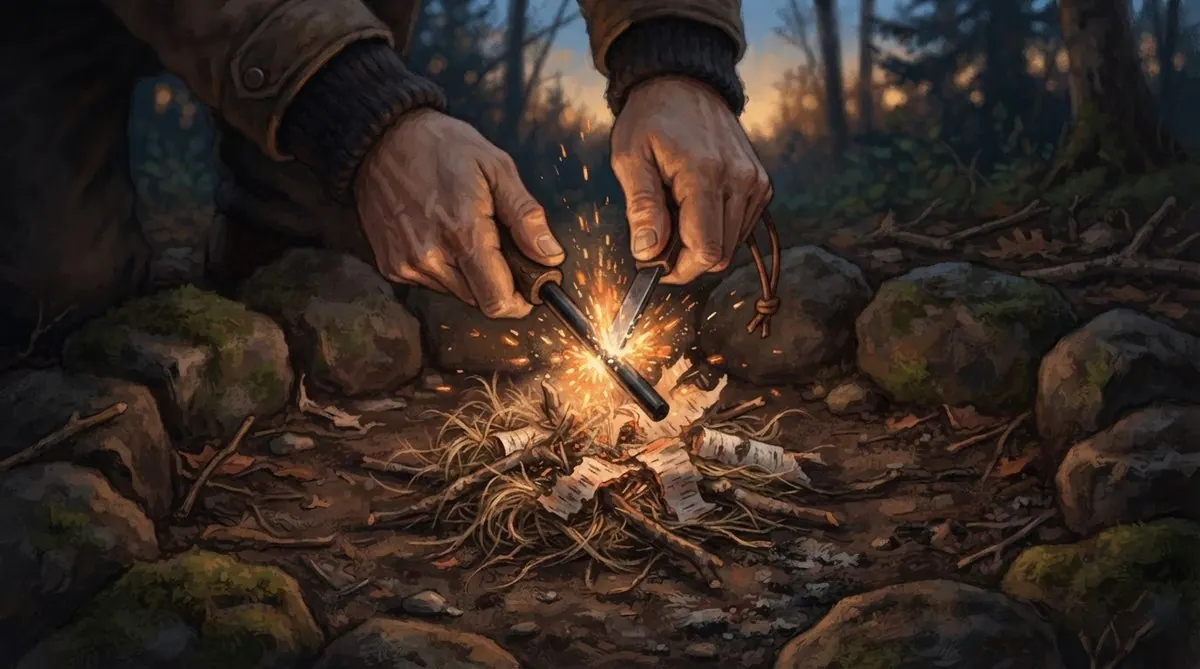
Fire Without a Lighter
Use a ferro rod, flint and steel, a battery or the sun to make fire