 Human Skills
Fire Safety and Putting a Fire Out
Control, extinguish and never leave a hot spot behind
5 minIntermediateUpdated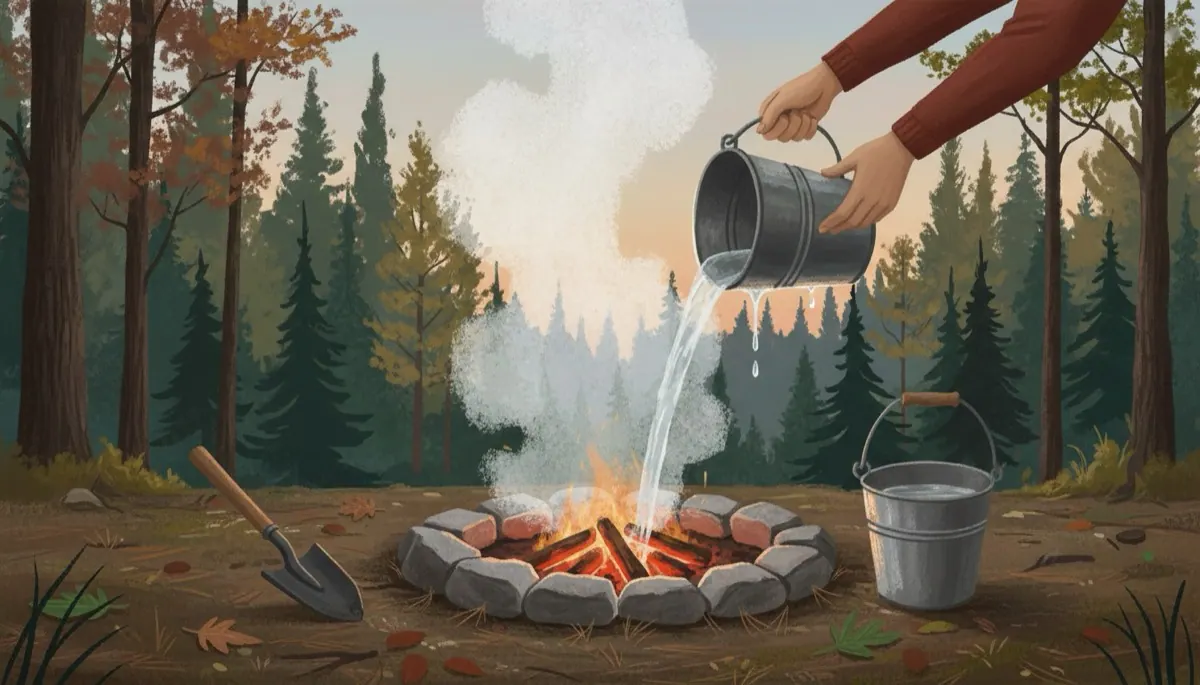
- Extinguish a campfire fully using the drown, stir, feel method
- Recognise wildfire risk conditions and what to do if one starts
- Handle a small home fire and know when to leave
Before you light anything
Most fire disasters start with a decision made before the match. Ask four questions. Is it legal here today? Many regions publish a daily fire danger rating; if it is high or above, do not light anything. Is the wind under about 15 kilometres per hour, enough to feel on your face but not enough to bend small branches? Is there at least 3 metres of bare ground in every direction, including above? Do I have enough water to drown the fire twice over? If any answer is no, use a stove with a shut-off valve or eat cold food. A cold meal is never a disaster; a wildfire always is.
Drown, stir, feel
A fire that looks out can hold heat in the ash for over 24 hours and reignite in a breeze. Extinguishing takes far more water than most people expect: plan on at least 10 litres for a plate-sized fire. Start 20 minutes before you intend to leave. Pour water slowly over the whole fire bed until the hissing stops completely. Stir the ash and embers with a stick, scraping the edges into the centre, then pour again. Now hold the back of your hand a few centimetres above the ash, then touch it. If it is too hot to touch, it is too hot to leave. Repeat until it is cold.
If a fire escapes
If flames spread outside your ring into grass or leaves, act within seconds. Throw water on the leading edge, beat small flames with a wet jacket or green branch, and scrape a line down to bare soil ahead of the fire. If it grows beyond about a metre wide or moves faster than you can walk, stop fighting it. Call your local emergency number, in Europe 112, give a clear location, and move away at right angles to the wind, downhill and towards already burnt ground, roads, water or open fields. Do not go uphill; fire climbs slopes many times faster than it moves on flat ground.
Wildfire awareness
Wildfires spread through dry fuel, wind and slope. Danger peaks on hot, dry, windy afternoons after weeks without rain. When conditions are like that, stay out of dense forest and scrub, keep your car pointed towards the exit with the tank at least half full, and check official fire maps before travelling. If you see smoke, do not investigate; report it and move away. If you are caught in the open, find a large area of bare ground, a wide road, rocks or water, lie face down with your body covered, and breathe through cloth close to the ground where the air is coolest. Never try to outrun a fire uphill.
Small fires at home
Kitchen fires are the most common household fire. If a pan catches fire, turn off the heat and slide a lid or a damp cloth over it from the side to cut the oxygen; never move it and never use water on hot oil, which explodes into a fireball. For a small fire in a bin or on a surface, a fire blanket or extinguisher used from 2 metres away, aimed at the base, will handle it. If a fire is bigger than a wastebasket, growing, or producing thick smoke, do not fight it. Get everyone out, close doors behind you, and call emergency services from outside. Objects can be replaced.
Check yourself
Only cold ash is safe. Drown, stir and feel until the back of your hand and then your palm can rest on it.
Fire races uphill and downwind. Move downhill, across the wind, towards burnt ground, roads or water.
Cutting off oxygen with a lid or damp cloth puts it out. Water on hot oil creates a fireball and moving the pan spreads it.
Once a fire outgrows a small container or moves faster than you can walk, leave, close doors and call emergency services.
Try it for real: Home fire safety check
- Test every smoke alarm and replace any batteries or units older than 10 years
- Place a fire blanket within reach of the cooker, but not above it
- Walk two escape routes from each bedroom with everyone in the home
- Save your regional fire danger map or app and check it once during the next hot spell
🛒 Gear for this skill
As an Amazon Associate I earn from qualifying purchases. It costs you nothing extra and keeps this site free.
Next lesson: Natural Tinder: What Catches a Spark →
Written and checked by the Human Skills team against the sources below. How we check our content
- Red Cross Fire Safety
- ICNF Portugal fire regulations
- US Forest Service campfire guidance
Related lessons
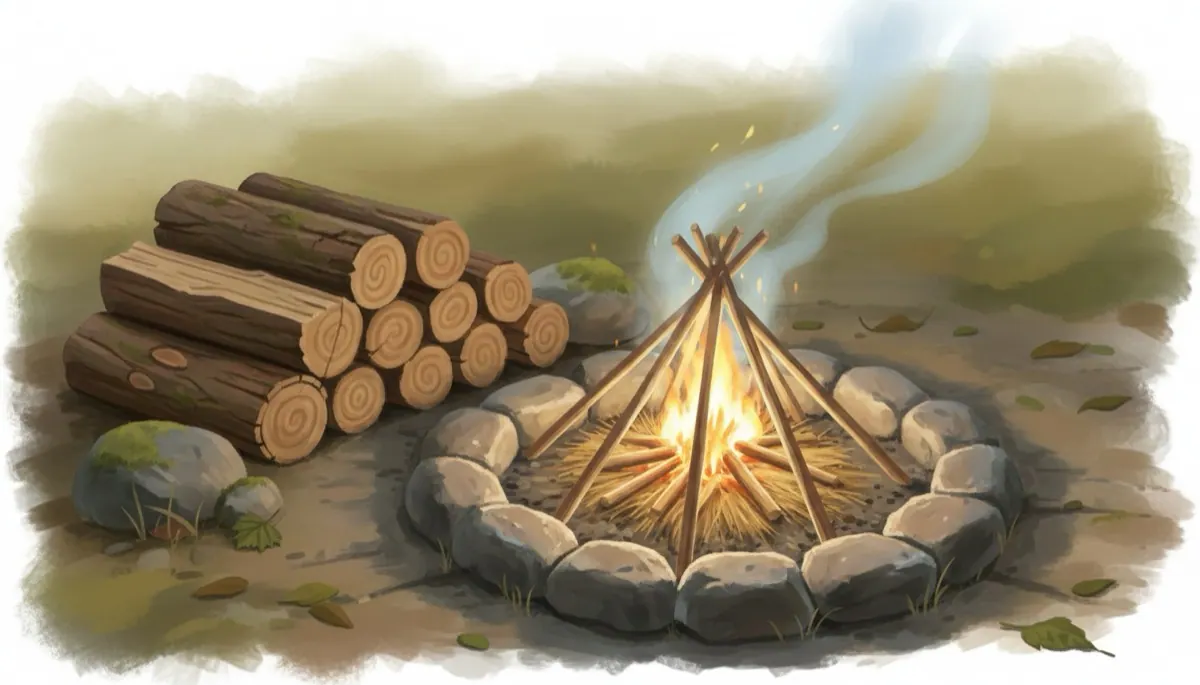
Fire Basics: Tinder, Kindling and Fuel
Build a small, controlled fire that lights first time
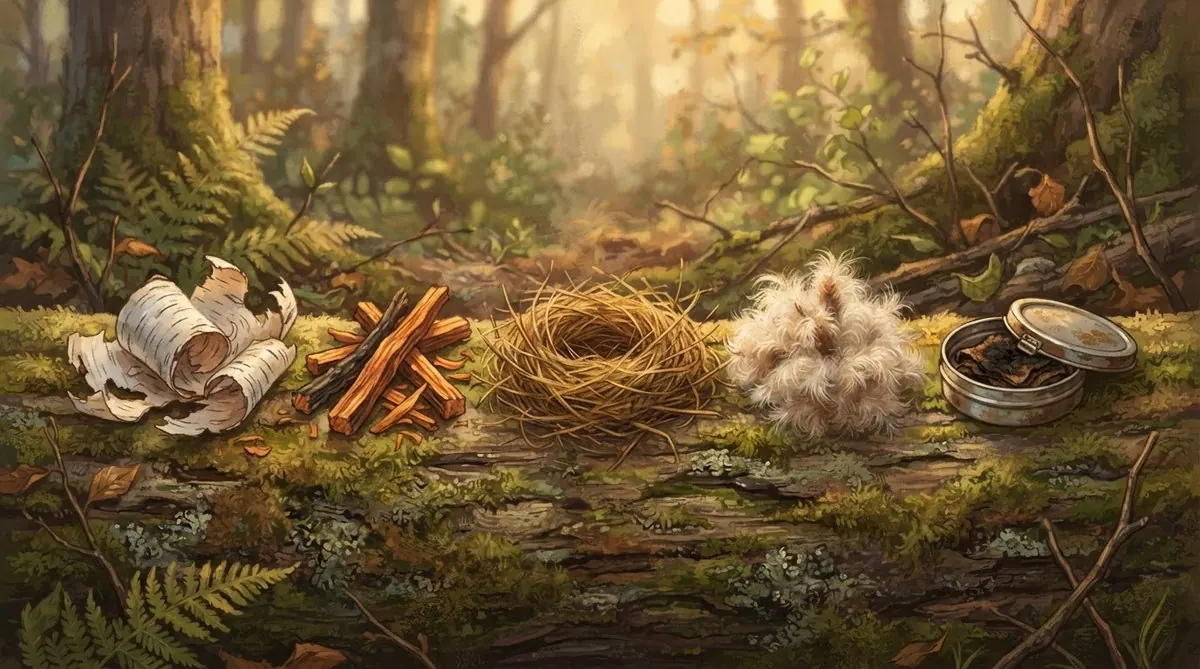
Natural Tinder: What Catches a Spark
Find, test and carry the fine fuel that turns a spark into flame
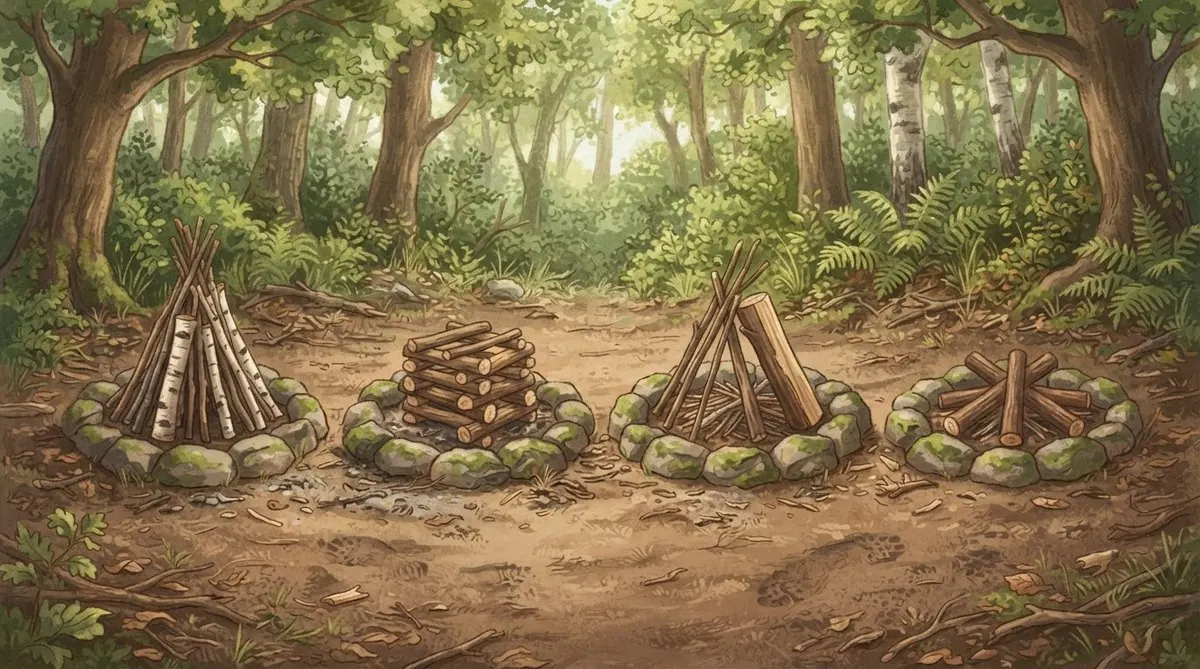
Fire Lays: Teepee, Log Cabin, Lean-to, Star
Choose the right fire structure for lighting, cooking, wind or a long burn
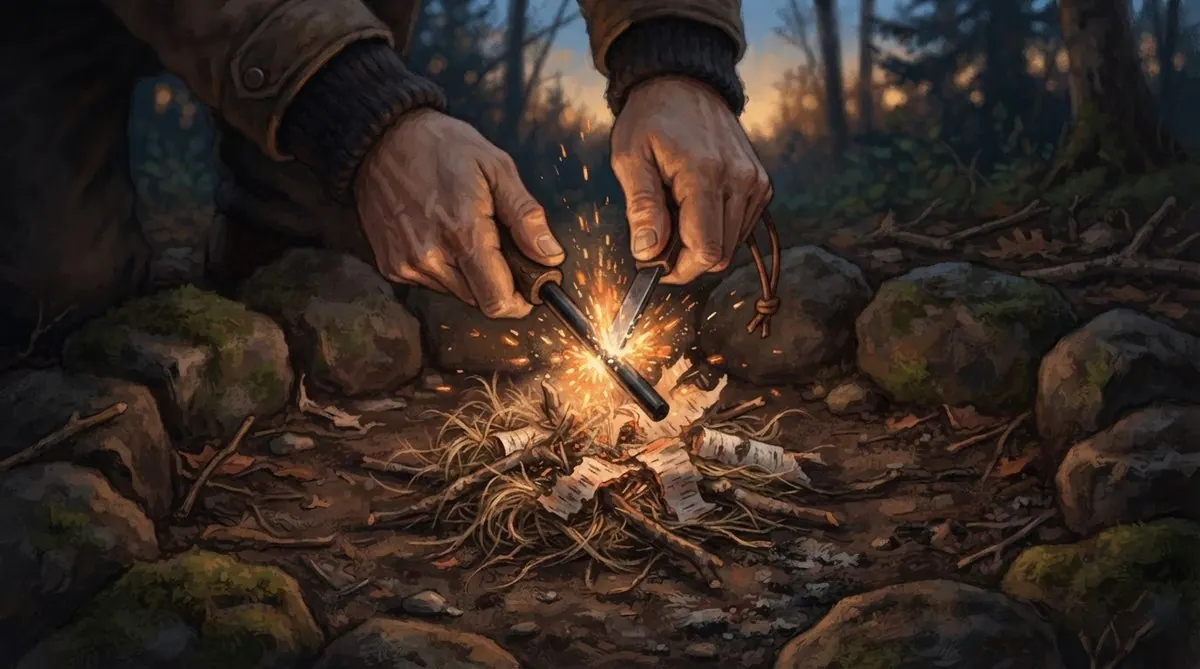
Fire Without a Lighter
Use a ferro rod, flint and steel, a battery or the sun to make fire