 Human Skills
Making Water Safe to Drink
Boiling, chemicals and filters, with the right times and doses
6 minBeginnerUpdated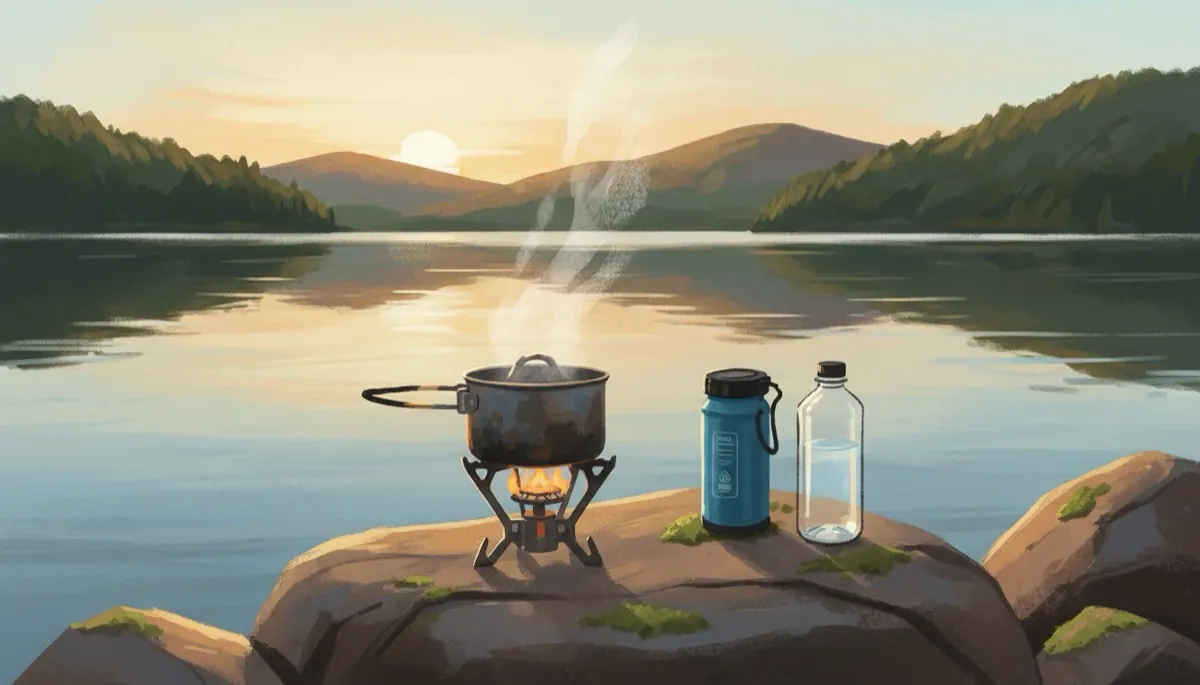
- Boil water for the correct time at any altitude
- Dose household bleach and iodine safely per WHO and CDC guidance
- Know what filters remove and what they miss
What you are removing
Water can carry three kinds of living contamination: bacteria such as E. coli, protozoa such as Giardia and Cryptosporidium, and viruses such as norovirus and hepatitis A. It can also carry chemicals and heavy metals, which no simple field method removes. Every purification method works against some of these and not others, so it helps to know the target. Boiling kills all three living groups. Chemicals kill bacteria and viruses well but are weak against Cryptosporidium. Most portable filters remove bacteria and protozoa but let viruses through. That is why the safest field approach is often two steps: filter, then boil or treat chemically.
Step one: settle and pre-filter
Cloudy water hides germs inside particles and uses up chemicals before they can work. Start by letting the water stand in a container for 30 to 60 minutes so sediment sinks, then pour the clearer top layer off gently. Pass it through a clean cloth, a coffee filter or a bandana folded several times to catch grit, leaves and insects. This does not make water safe on its own, but it makes every next step more effective and makes the water taste far better. Keep your dirty and clean containers separate and never let the treated water touch the untreated one.
Boiling: the gold standard
Bring the water to a full rolling boil, with large bubbles breaking the surface, and keep it there for 1 minute. Above 2,000 metres of altitude, boil for 3 minutes, because water boils at a lower temperature there and needs longer to do the same job. This is the WHO and CDC guidance and it kills bacteria, protozoa and viruses. Let the water cool with the lid on to keep it clean. Boiled water tastes flat because the air has gone; pour it between two clean containers a few times to bring the flavour back. Boiling does not remove chemical pollution, salt or heavy metals.
Chemical treatment: bleach and iodine
Use plain, unscented household bleach with 5 to 9 percent sodium hypochlorite and no added cleaners. Per CDC guidance, add 2 drops per litre of clear water, stir, and wait 30 minutes before drinking. If the water is cloudy or very cold, double the dose to 4 drops per litre and wait 60 minutes. A faint chlorine smell afterwards means the dose was enough. For 2 percent tincture of iodine, add 5 drops per litre of clear water, 10 drops if cloudy, and wait 30 minutes. Iodine should not be used by pregnant women, people with thyroid problems, or for more than a few weeks. Both methods are weak against Cryptosporidium, so filter or boil when you can.
Filters and UV
A good portable filter with a pore size of 0.1 to 0.2 microns removes bacteria and protozoa, including Cryptosporidium, but it does not remove viruses. In regions where viral contamination is likely, or where water is near sewage, pair the filter with chemical treatment or boiling. Some filters labelled purifiers include an extra stage that does remove viruses. UV pen devices work on clear water only and need working batteries. Replace filter cartridges on schedule and never let a wet filter freeze, because ice cracks the fibres. Wash your hands or use sanitiser before handling the clean side of any device.
Check yourself
WHO and CDC guidance is 1 minute at a full rolling boil, rising to 3 minutes above 2,000 metres.
The CDC dose is 2 drops per litre of clear water with a 30 minute wait, doubled to 4 drops if the water is cloudy.
Viruses are far smaller than the 0.1 to 0.2 micron pores of most filters, so add boiling or chemicals where viruses are a risk.
At altitude water boils below 100 degrees Celsius, so it needs 3 minutes to reach the same level of safety.
Try it for real: Practise the boil and bleach methods at home
- Fill a pot with tap water, bring it to a rolling boil and time exactly 1 minute
- Read the label on your household bleach and confirm it is unscented, 5 to 9 percent sodium hypochlorite
- Measure 2 drops into 1 litre of tap water with a clean dropper, wait 30 minutes and note the faint chlorine smell
- Write the doses on a label and stick it on the bleach bottle for emergencies
🛒 Gear for this skill
As an Amazon Associate I earn from qualifying purchases. It costs you nothing extra and keeps this site free.
Next lesson: Catching Rain in an Emergency →
Written and checked by the Human Skills team against the sources below. How we check our content
- WHO Guidelines for Drinking-water Quality
- CDC Guide to Drinking Water Treatment and Sanitation for Backcountry and Travel Use
Related lessons
Finding Water Outdoors
Where water hides and how to read the land for it
Catching Rain in an Emergency
Tarps, gutters, first flush and which roofs to avoid
Storing and Treating Rainwater
Keep it clean, keep it dark, and always treat before drinking
Water From Dew, Plants and Condensation
Dew rags, transpiration bags and honest yields