Human Skills
Building a Basic Pantry
A two-week food cushion and how to rotate it
5 minBeginnerUpdated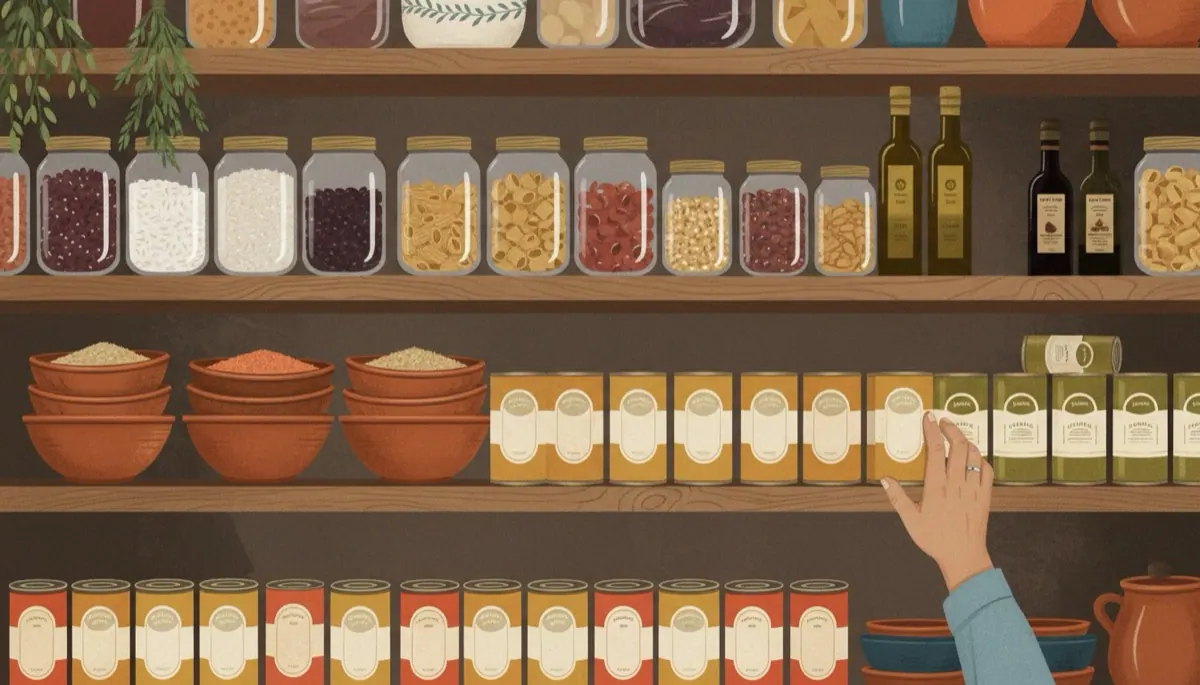
- Choose staples that keep for a year or more
- Size a pantry to two weeks of normal eating
- Rotate stock with first in, first out
What a pantry is for
A pantry is not a bunker. It is a small buffer that means a sick week, a strike, a storm or a tight month does not send you to the shop hungry. Aim for about two weeks of food that your household already eats, made from ingredients that keep for a year or more without a fridge. The key phrase is “already eats”. A shelf of tins nobody likes will be wasted. Start by writing down five meals you cook often, list their shelf-stable ingredients, and buy a little extra of those each week. In a couple of months the buffer is built without a big spend.
The core staples
Long-keeping staples with rough shelf lives in a cool cupboard: white rice (2+ years), dry pasta (2 years), dried beans, lentils and chickpeas (1–2 years, they get slower to soften as they age), oats (1 year), flour (6–12 months, longer frozen), sugar and salt (indefinite if dry), honey (indefinite), olive oil (12–18 months), canned tomatoes, fish, beans and vegetables (2–5 years), stock cubes, dried herbs and spices (1 year for flavour), UHT milk (6 months), peanut butter, and coffee or tea. Add a few tins of something ready to eat with no cooking. Round it out with onions, garlic and potatoes, which keep for weeks in a dark, ventilated spot.
Water counts as pantry
Keep drinking water alongside food. The standard planning figure from FEMA and the Red Cross is 4 litres per person per day for drinking and basic hygiene, and a minimum of three days, so 12 litres per person. Sealed bottled water keeps for years if stored out of sunlight and away from chemicals. Write the purchase date on the pack and rotate it into daily use every 12 months. If you have pets, add their water too. Water is bulky, so the crates under a bed or at the bottom of a wardrobe are fine.
Rotation: first in, first out
Rotation is the habit that stops a pantry from becoming a museum of expired tins. When you bring new stock home, put it at the back and pull the older items forward so the oldest is what you reach for. Write the month and year on the top of each tin or jar with a marker as you unpack the shopping; it takes seconds and beats squinting at tiny print. Once a season, take ten minutes to check dates and move anything within three months of its best-before to the front of the everyday cupboard. This is how the buffer stays fresh at zero extra cost.
Containers and pests
Pantry moths and weevils arrive in flour, rice and grain from the shop, then spread. Decanting into airtight glass or hard plastic containers keeps an outbreak in one jar instead of the whole cupboard. Freezing new flour or grain for 3 days kills any eggs before you decant it. Wipe shelves, keep the cupboard dry and check corners for webbing. Bay leaves in the flour are a tradition rather than a guarantee, but they do no harm. Store tins off the floor so they never sit in a spill, and throw away any tin that is bulging, leaking or badly dented on a seam.
Check yourself
FEMA and the Red Cross recommend about 4 litres per person per day for drinking and basic hygiene.
New stock goes to the back; the oldest item is the one you reach for, so nothing quietly expires.
Three days in the freezer kills eggs that may already be in the flour before it goes into your storage jar.
Bulging, leaking or seam-dented tins may have lost their seal and can harbour dangerous bacteria.
Try it for real: Start a two-week buffer
- List five meals you cook often and their shelf-stable ingredients
- Buy one extra of three of those ingredients on your next shop
- Mark each item with the month and year on the lid
- Set up one shelf where new stock goes at the back
🛒 Gear for this skill
As an Amazon Associate I earn from qualifying purchases. It costs you nothing extra and keeps this site free.
Next lesson: Reducing Food Waste →
Written and checked by the Human Skills team against the sources below. How we check our content
- USDA Food Safety and Inspection Service
- American Red Cross Emergency Preparedness