Human Skills
Food Storage Basics
Cold, cool, dry and the danger zone
4 minBeginnerUpdated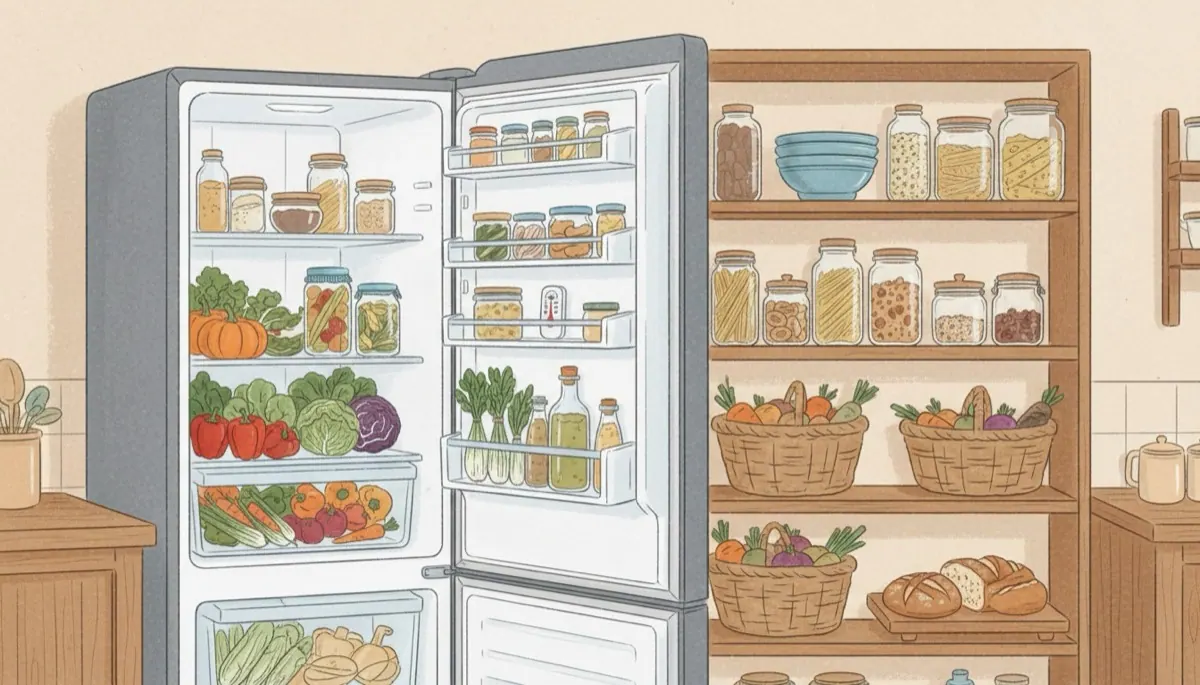
- Explain the 5–60 °C danger zone
- Set a fridge and freezer to the right temperature
- Store raw, cooked and dry food in the right place
Why food spoils
Food goes bad because bacteria, moulds and yeasts grow on it, and because its own enzymes keep working after harvest. Three things speed all of that up: warmth, moisture and air. Every storage method you will learn in this category removes at least one of them. A fridge removes warmth. Drying removes moisture. Vacuum bags and jars remove air. Salt and acid make the environment hostile to microbes. Once you see storage as controlling warmth, moisture and air, the rules stop feeling random. A loaf in a plastic bag on a warm counter has all three and moulds in days. The same loaf sliced and frozen keeps for months.
The danger zone: 5–60 °C
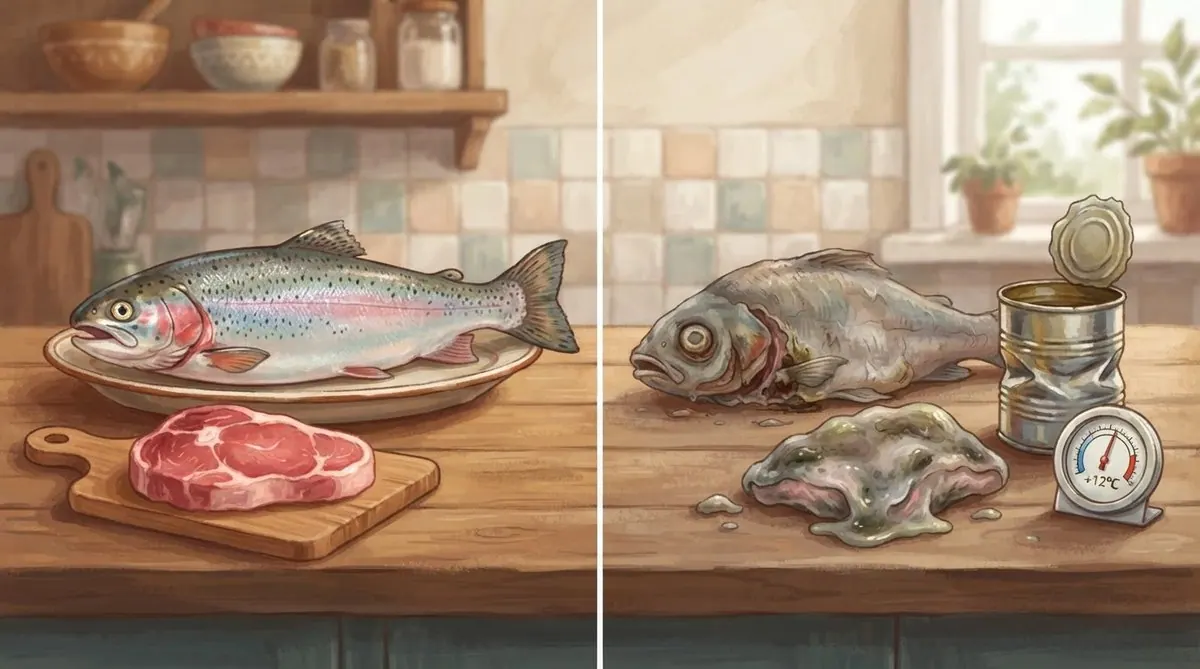
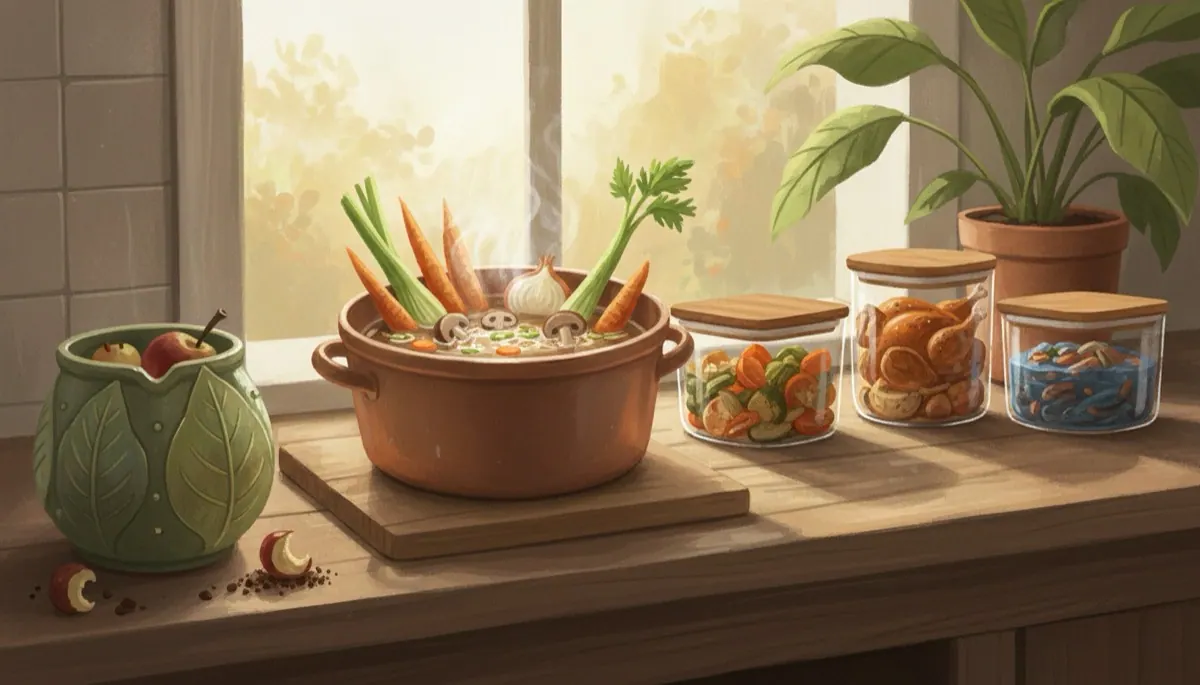
Bacteria multiply fastest between 5 °C and 60 °C. The WHO and USDA call this the danger zone. In that range a single bacterium can become millions in a few hours, and some of them produce toxins that heat will not destroy later. The practical rule: perishable food should spend no more than 2 hours in the danger zone in total, and no more than 1 hour when the room is above 32 °C. That includes the shopping trip, the time on the counter and the cooling-down of a cooked dish. Cool leftovers quickly by splitting them into shallow containers, then refrigerate within two hours. Reheat leftovers to 74 °C or until steaming hot all the way through.
Fridge and freezer settings
Set the fridge to 4 °C or below and the freezer to −18 °C. Many fridges are shipped set too warm, so check with a thermometer left on the middle shelf overnight. Cold air sinks, so the bottom shelf is coldest: keep raw meat and fish there, in a covered container, so they can never drip onto ready-to-eat food. The door is the warmest spot and swings every time you open it, so it suits condiments and drinks, not milk or eggs. Leave gaps between items so air circulates. Freezing does not kill bacteria, it pauses them, which is why thawed food must be handled like fresh food and thawed in the fridge, not on the counter.
Dry goods and the cool, dark cupboard
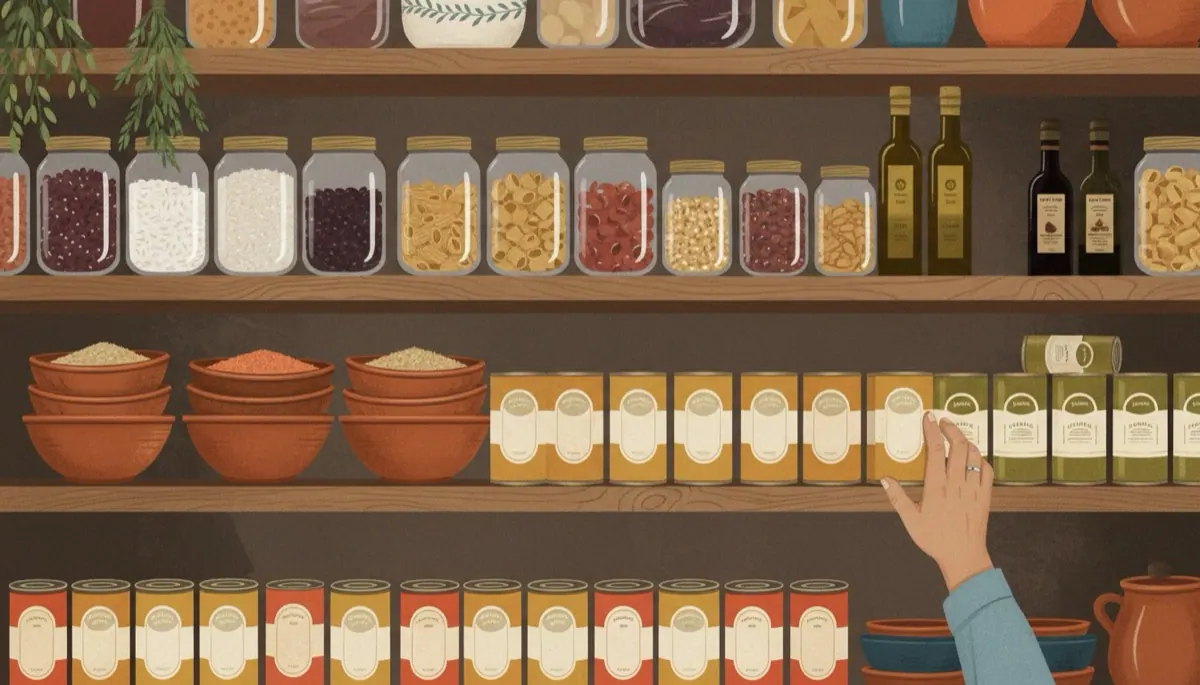
Rice, pasta, flour, beans, oil, sugar and canned goods want cool, dry and dark. Heat and light degrade oils, vitamins and flavour; moisture invites weevils and mould. Decant opened packets into sealed jars or food-grade containers and write the date on the lid. Keep them away from the oven, the dishwasher and any wall that gets sun. Olive oil keeps best in a dark glass bottle away from the stove and is at its best within a year of pressing. Potatoes, onions and garlic prefer a ventilated basket in the dark; keep onions and potatoes apart, because onions release gases that make potatoes sprout.
Reading the labels
A “use by” date is a safety limit for perishable food such as fresh meat, fish and dairy. Do not eat those foods after that date even if they look fine. A “best before” date is about quality, not safety: a dry pasta packet a month past best before is still safe, just possibly less tasty. Eggs are best before but are safe some weeks longer if kept in the fridge; a fresh egg sinks in water, an old one floats because its air cell has grown. Trust your eyes and nose for best-before foods and trust the date for use-by foods.
Check yourself
Between 5 °C and 60 °C bacteria multiply fastest, so perishable food should spend as little time there as possible.
4 °C or below keeps food out of the danger zone. Check with a thermometer, as many fridges run warm.
The bottom shelf is coldest and drips cannot fall onto ready-to-eat food below.
Use by marks the safety limit for perishable foods. Best before is only about quality.
Try it for real: Audit your fridge
- Put a thermometer on the middle shelf overnight and record the reading
- Adjust the setting until it reads 4 °C or lower
- Move raw meat and fish to a covered container on the bottom shelf
- Move milk and eggs out of the door
🛒 Gear for this skill
As an Amazon Associate I earn from qualifying purchases. It costs you nothing extra and keeps this site free.
Next lesson: Is It Still Safe to Eat? Meat and Fish →
Written and checked by the Human Skills team against the sources below. How we check our content
- WHO Five Keys to Safer Food
- USDA Food Safety and Inspection Service