Human Skills
How Much Water a Crop Needs
Litres per square metre, and how to check instead of guess
5 minBeginnerUpdated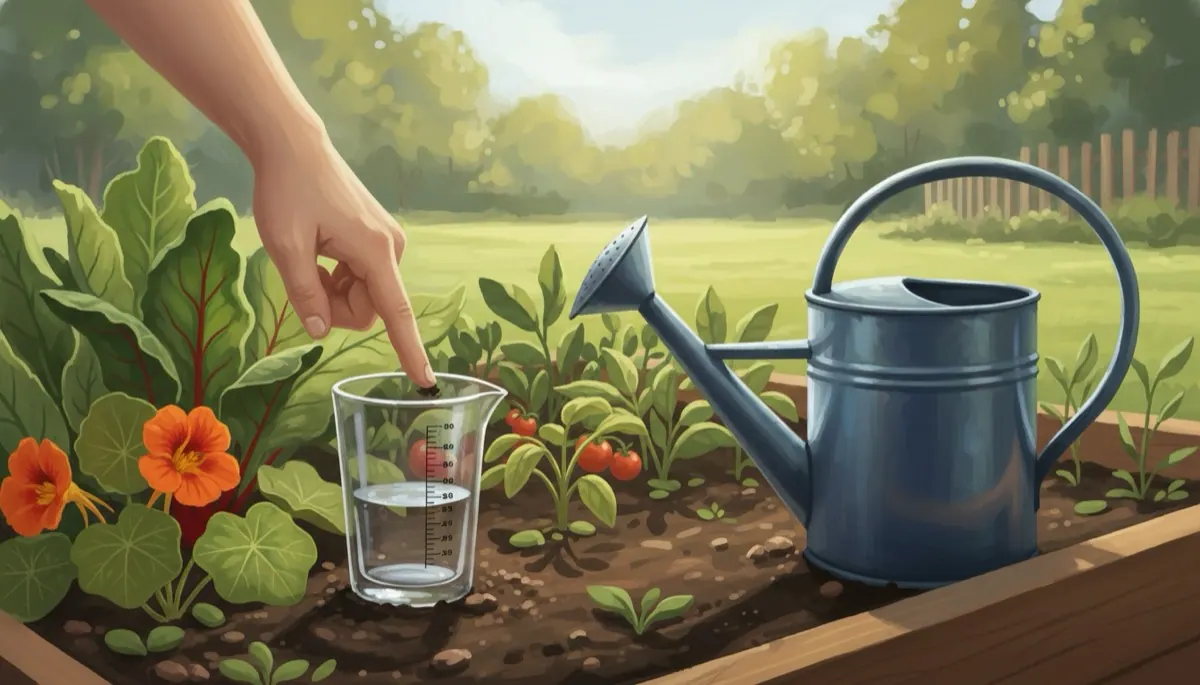
- Quote a weekly water figure per square metre for each crop group
- Explain why deep infrequent beats little and often
- Check soil moisture with a finger and a trowel
The base figure
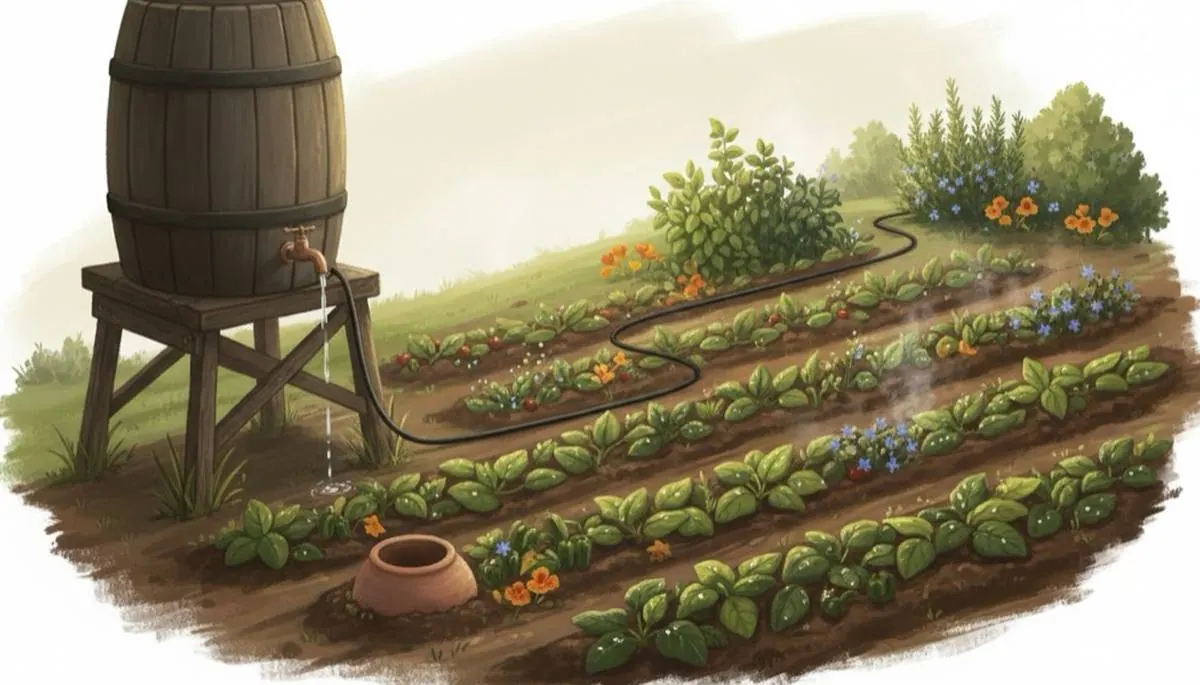
The standard working number for a temperate summer is 25 litres per square metre per week, which is the same as 25 mm of rain, and it wets the top 20 to 25 cm of most soils. Subtract whatever rain actually fell. In a Portuguese July, with heat, sun and wind, demand rises to 35 to 50 litres per square metre per week. A 10 square metre bed therefore wants 250 litres a week in a temperate summer and up to 500 in a Mediterranean one, which is two to four full 120 litre water butts. Work this out before you plan the plot: water, not land, is usually the limit on how much you can grow.
By crop group
Per square metre per week, in a warm summer, rain included. Shallow-rooted lettuce, spinach, celery and radish: 25 to 35 litres, and they bolt if they check. Fruiting crops in full production: tomatoes, peppers, aubergines, cucumbers, courgettes and beans, 30 to 40 litres, with the critical period from first flower to fruit set. Brassicas: 25 to 35 litres, more while hearting. Potatoes: 25 to 30 litres, and tuber bulking, three to six weeks after flowering, decides the yield. Onions and garlic: 15 to 20 litres, then stop entirely two to three weeks before harvest. Deep-rooted established crops, squash, pumpkin, sweetcorn, carrots and parsnips: 15 to 25 litres. Established fruit trees and vines: little or none in temperate climates, a deep soak every two to four weeks in a Mediterranean summer.
Deep and infrequent
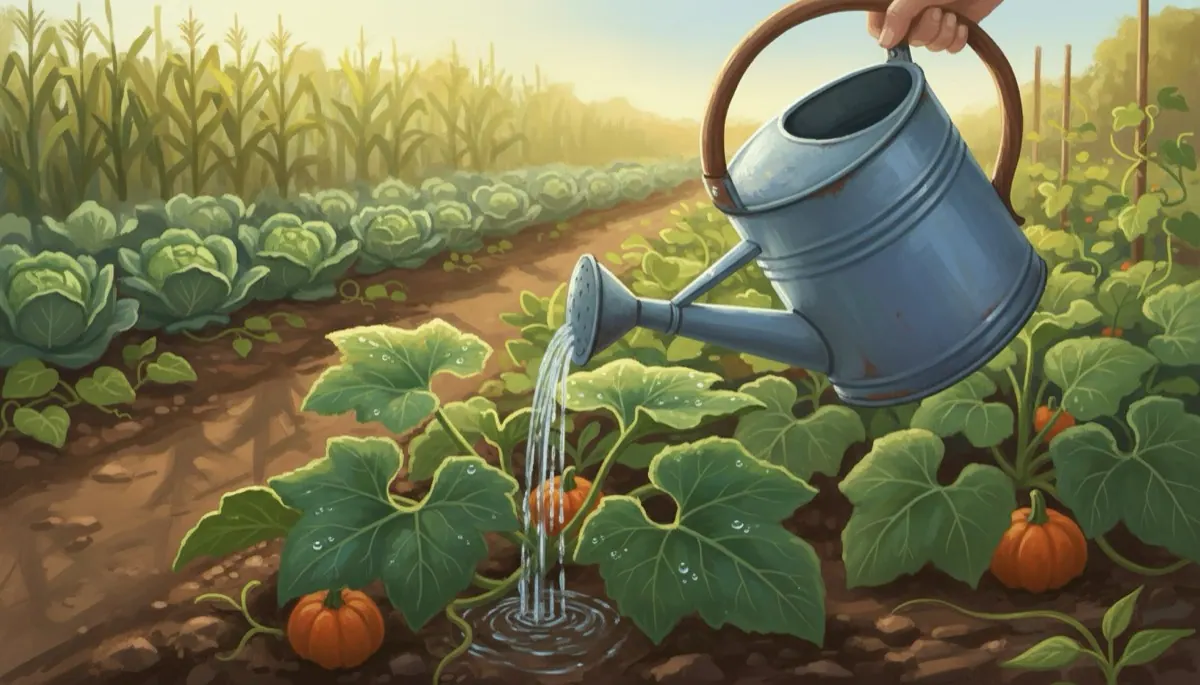
Twenty-five litres once a week beats 3.5 litres every day, even though the total is the same. A light daily sprinkle wets only the top 2 to 3 cm, most of which evaporates before it reaches a root, and it trains roots to stay shallow where the soil dries first. A deep soak pushes water to 20 cm or more and pulls roots down after it, so the plant carries itself through a hot spell. Deep watering also keeps the surface dry between soakings, which suppresses weed germination and slug activity. The exceptions are seedbeds and newly transplanted plants, which have no root depth yet and do need light daily water for the first week or two, and shallow containers, which can need water twice a day in a heatwave.
Check the soil, not the calendar
Push a finger in to the second knuckle, about 5 cm. Damp means wait. Better still, push a trowel in and lever open a slot 15 cm deep and look: dark and cool at the bottom means the reserve is there. A handful from 15 cm that forms a ball and leaves a faint damp mark on your palm is fine, while one that crumbles to dust needs water today. Do this at the same time of day, ideally morning, as plants wilt in midday heat even in wet soil and that wilt is not a signal to water. Check before every watering for a fortnight and you will calibrate your eye for good.
Evapotranspiration in plain words
Evapotranspiration, or ET, is everything the soil evaporates plus everything the plants breathe out, added together. It is the demand side of the equation. On a cool cloudy day in a temperate spring ET might be 1 to 2 mm, which is 1 to 2 litres per square metre. On a hot dry windy day in the Alentejo in July it can reach 6 to 8 mm, so a bed loses 6 to 8 litres per square metre in a single day. Wind matters more than most people expect and can double the figure. Practically: watch the weather, not the diary, add up the rain, and remember that a week of 35 degrees with a north wind costs you three times as much water as a cloudy week at 22.
Check yourself
One litre per square metre equals one millimetre of rain, so 25 litres per square metre is 25 mm.
A light sprinkle mostly evaporates and trains roots to stay in the layer that dries out first, leaving plants helpless in a hot spell.
Drying off onions and garlic before lifting firms the bulbs and helps them cure and store without rotting.
Evapotranspiration can reach 6 to 8 mm a day in those conditions, which is 6 to 8 litres per square metre.
Try it for real: Measure what you are actually applying
- Set three straight-sided tins across a bed and run your usual watering
- Measure the depth in each tin in millimetres and compare it with the 25 mm target
- Dig a trowel slot 15 cm deep straight afterwards and see how far the water reached
- Adjust the run time until one watering delivers 25 mm and reaches 20 cm down
- Keep a rain gauge and subtract each week's rainfall from the target
🛒 Gear for this skill
As an Amazon Associate I earn from qualifying purchases. It costs you nothing extra and keeps this site free.
Next lesson: When to Water and Where →
Written and checked by the Human Skills team against the sources below. How we check our content
- FAO Irrigation and Drainage Paper 56 Crop Evapotranspiration
- RHS Watering Guidance
- University of California Agriculture and Natural Resources