 Human Skills
When to Water and Where
Early morning, at the root, never at midday
4 minBeginnerUpdated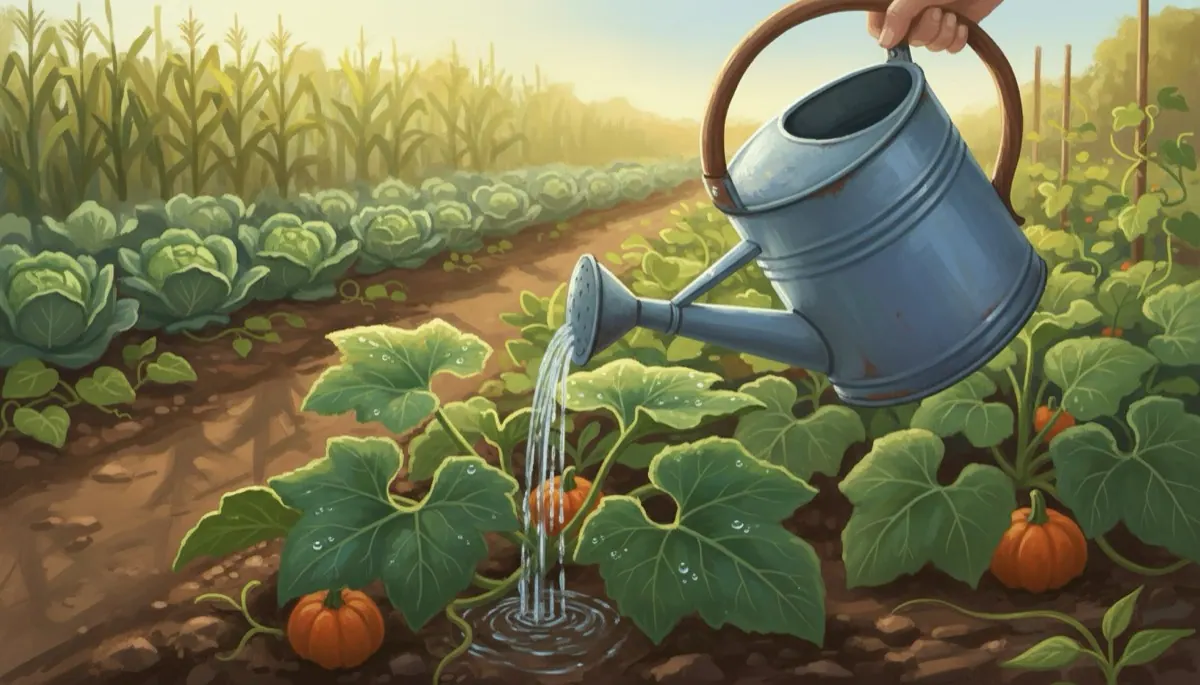
- Say why early morning is the best watering time
- Weigh the trade-off of evening watering
- Deliver water to the root zone instead of the leaves
Early morning wins
Water between dawn and about 9 am. The soil is at its coolest, the air is still and humid, and evaporation losses are typically 5 to 10 percent, against 30 to 50 percent in the middle of a hot day. The plant then has a full reserve going into the hours when it needs it most, so it never hits the afternoon already short. Any water that lands on foliage dries within an hour or two in the morning sun, which matters because most fungal spores, blight, downy mildew and botrytis among them, need several hours of continuous leaf wetness to germinate. Morning watering is the single cheapest disease control in a garden.
Evening, second best
Late afternoon or early evening is the second choice. Evaporation is low and the water has all night to soak down rather than being pulled straight back out, so it is efficient in pure water terms. The cost is leaf wetness: foliage watered at 8 pm stays wet until the morning dew burns off, which is exactly the long damp window that blight, mildew and grey mould need. Slugs and snails also feed on warm damp evenings and a freshly watered bed is an invitation. If evening is the only time you have, water the soil only, keep it off the leaves, and accept that tomatoes, potatoes, courgettes and grapes carry the most risk.
Why midday wastes it
Watering at noon in summer loses a third to a half of what you apply to evaporation from hot soil and wet leaves. The water that does land often hits soil hot enough to be shed rather than absorbed, especially on a crusted surface. The old story about droplets acting as lenses and scorching leaves is largely a myth on most plants, but cold water on a hot leaf or hot root zone genuinely does shock the plant and can check growth. The wilt you see at 2 pm is usually the plant closing down on purpose, not thirst. If a plant is genuinely collapsing and cannot wait, water it, but water the soil heavily and in the shade of the plant, and treat it as an emergency, not a routine.
At the root, not the leaf
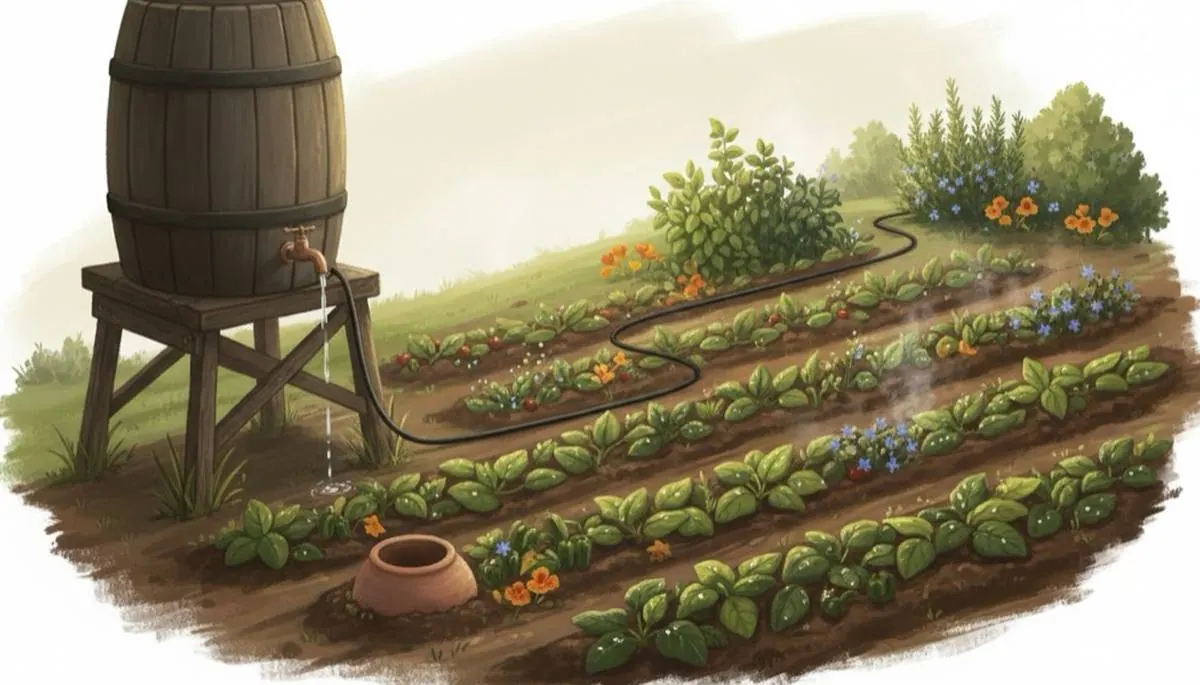
Aim water at the base of the plant and let it move down and sideways. Overhead sprinklers put 20 to 30 percent of their output where no root can use it and wet every leaf on the way. A watering can with the rose removed, a drip line, a seep hose or a sunken pot beside each plant all put water where it counts. Water a circle about as wide as the plant's canopy, because that is roughly where the feeding roots are, rather than a puddle against the stem, which encourages stem rot. For tomatoes, peppers and squash, sink a bottomless 2 litre bottle or a 15 cm pot next to each plant at planting time and fill that; the water goes straight to 20 cm down with nothing lost to the surface.
A practical routine
For established beds, one deep watering a week in mild weather and two in high summer, always in the morning. For newly sown seedbeds, a light watering daily until germination, then taper. For transplants, water in well at planting, then a can each evening or morning for the first week, then push them onto the weekly rhythm. For containers, check daily in summer and twice daily in a heatwave, watering until it runs from the bottom. Write the routine on a card by the door for the first month; after that your hands and eyes will do it. Adjust for rain, and skip a watering rather than adding one when you are unsure, because more gardens are drowned than dried out in temperate climates.
Check yourself
Cool still air means 5 to 10 percent evaporation loss, and any wet foliage dries quickly, which denies fungal spores the long damp window they need.
Evening watering is efficient but leaves foliage wet overnight, which suits blight, mildew and grey mould, and attracts slugs.
Hot soil, sun and wind can take a third to a half of what you apply before any of it reaches a root.
Feeding roots sit roughly under the canopy edge, and watering against the stem invites rot while wetting leaves spreads disease.
Try it for real: Move your watering to first light for two weeks
- Set an alarm and water one bed deeply between dawn and 9 am
- Fit a sunken bottomless bottle or pot beside three tomato or squash plants and water only through it
- Note which beds you previously watered overhead and stop doing so
- After two weeks, compare leaf health on the sunken-pot plants with the rest
- Write your finished routine on a card and keep it by the door
🛒 Gear for this skill
As an Amazon Associate I earn from qualifying purchases. It costs you nothing extra and keeps this site free.
Next lesson: Watering Without Mains Pressure →
Written and checked by the Human Skills team against the sources below. How we check our content
- RHS Watering Guidance
- University of California Agriculture and Natural Resources
- FAO Irrigation and Drainage Paper 56
Related lessons
Watering the Right Way
Deep, early and less often than you think
Mulch and Simple Irrigation
Cut watering in half with a bale of straw and a hose
How Much Water a Crop Needs
Litres per square metre, and how to check instead of guess
Watering Without Mains Pressure
Gravity drip, ollas, basins and wicking beds