 Human Skills
The Chicken Keeper's Year
Moult, heat, winter and what to expect month by month
5 minIntermediateUpdated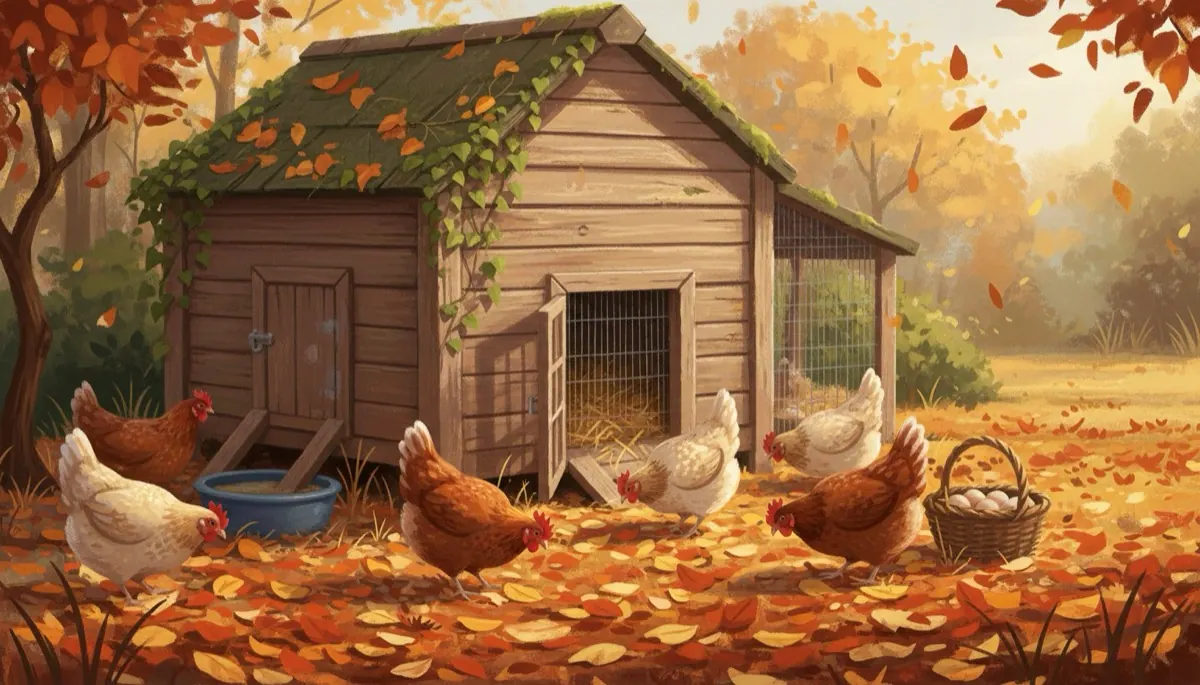
- Predict when laying rises, dips and stops
- Manage a flock through moult and through a heatwave
- Plan coop jobs for the right season instead of the wrong one
Laying follows daylight
A hen's laying is driven mainly by day length. Production climbs from late winter as days pass roughly ten to twelve hours, peaks in spring, dips in the hottest weeks of summer, and stops almost completely during the autumn moult. A good hybrid gives 280 to 320 eggs in her first full year, a dual-purpose breed 180 to 220, and each following year is about 15 to 20 percent lower. A flock that floods you with eggs in April and gives nothing in November is not broken. Plan your kitchen around the pattern rather than fighting it.
Spring: broodies, mites and chicks
From March the flock wakes up. Laying climbs fast, so collect twice a day and rotate the oldest eggs into the kitchen. Broody hens appear: flat in the nest, growling, breast feathers plucked. Decide early whether you want chicks, because breaking a broody gets harder the longer she sits. Red mite starts multiplying as soon as nights warm, so begin the weekly white-paper check on perch ends now rather than in June. This is also the season to clean out thoroughly, rest a section of run, and check every metre of fencing before predators start feeding young.
Summer: heat is the danger
Chickens are comfortable from about 10 to 24 degrees. Stress starts near 28, becomes serious above 32, and above 35 birds die. There are no sweat glands, only panting and heat radiating from comb, wattles and legs. Provide deep all-day shade over a third of the run, several drinkers refilled with cool water two or three times a day, a shallow pan to stand in, and feed at dawn and dusk rather than midday. Watch for open-beak panting, wings held away from the body and pale floppy combs. Collect eggs three times a day in real heat.
Autumn: the moult
From late summer, hens drop their feathers and grow a new set. It looks like a disaster in the coop and the eggs stop, because feathers are around 85 percent protein and a hen cannot build both at once. A fast moult takes four to six weeks, a slow one up to three months. Raise the feed to roughly 18 to 20 percent protein for that period, keep calcium available but do not push it, and handle the birds as little as possible since new pin feathers carry a blood supply and hurt. Never force a moult by withdrawing food, water or light.
Winter: damp, dark and predators
Cold is rarely the problem; damp and frozen water are. Keep high ventilation open all winter, top up deep dry bedding rather than stripping it, and use two drinkers so an iced one is never the only one. A roofed section of run with deep wood chip keeps a wet Portuguese winter from turning the ground to mud that both predators and coccidia love. Predator pressure peaks now, as wild food gets scarce and dusk arrives early, so lock up on time every night. Use the quiet weeks to review costs, losses and next year's flock size.
Check yourself
Feathers are about 85 percent protein, so a moulting hen cannot lay at the same time. Laying returns once the new feathers are grown.
Feather growth needs protein, not calcium, and restricting food to force a moult is cruel and banned in many places.
Open-beak panting and lifted wings are early warnings. A flat-out bird with a stretched neck is already an emergency.
Chickens tolerate cold well. Moist ammonia-laden air causes frostbite and respiratory disease, and a hen without water goes off lay within days.
Try it for real: Build your own flock calendar
- Write down the month you expect moult, heat risk and the winter laying dip where you live
- Put three coop jobs into the calendar: spring deep clean, summer shade, autumn repairs
- Set a weekly reminder for the perch-end mite check from March to October
- Record egg counts weekly for a month and compare with the expected curve
- List what you would do tomorrow if the forecast said 38 degrees
🛒 Gear for this skill
As an Amazon Associate I earn from qualifying purchases. It costs you nothing extra and keeps this site free.
Next lesson: Rabbits, Quail, Ducks and Bees →
Written and checked by the Human Skills team against the sources below. How we check our content
- RSPCA Chicken Welfare
- FAO Small-scale Poultry Production
- The Poultry Site
Related lessons
Keeping Backyard Chickens
Space, feed, water, predators and the rules

Eggs: Collecting, Cleaning and Storing
From nest box to kitchen without waste

Basic Animal Care Principles
The five freedoms, daily checks and when to call the vet
Designing a Coop That Works
Ventilation, perches, nest boxes and a run that stays dry