 Human Skills
Building an Emergency Kit
Everything your household needs for 72 hours in one place
5 minBeginnerUpdated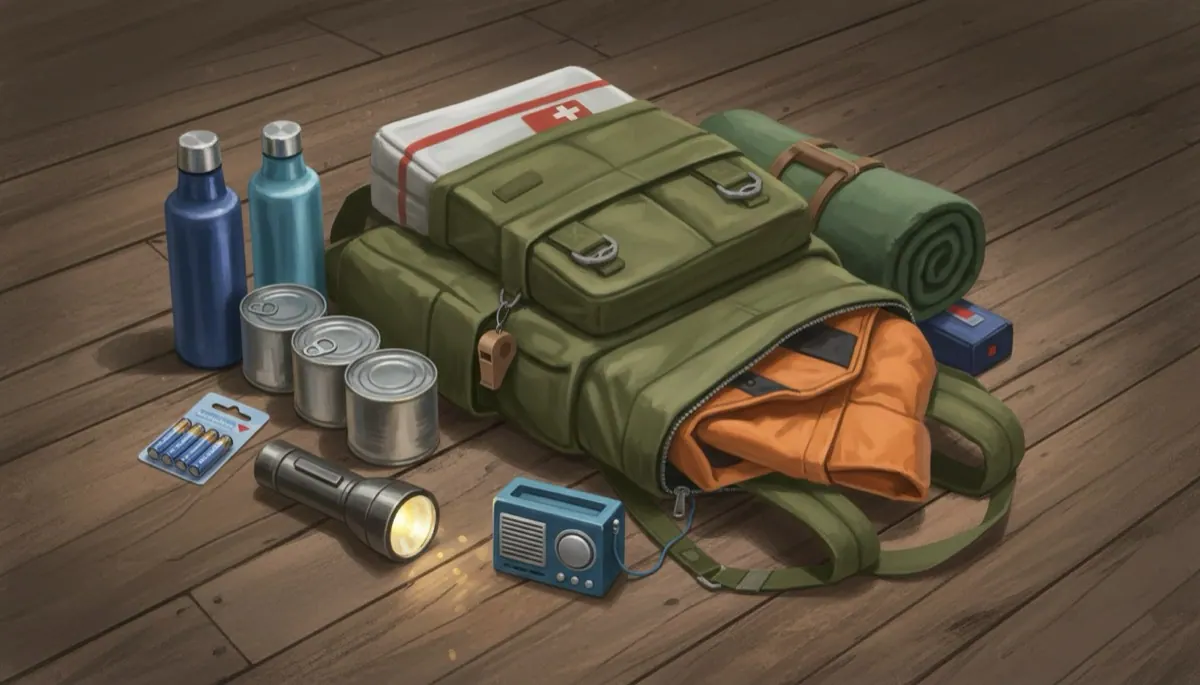
- Assemble a 72-hour home kit from a clear checklist
- Pack a small grab bag for leaving in a hurry
- Keep the kit useful with a simple rotation habit
Why 72 hours
After a major storm, flood, earthquake or long power cut, it commonly takes emergency services and utilities up to three days to reach every home and restore basic supplies. A kit that lets your household manage for 72 hours without shops, tap water or electricity turns a frightening event into an inconvenience. Building one is not about expecting disaster; it is the same logic as a spare tyre. Most items are things you already own, gathered into one place so you are not hunting for a torch in the dark. Start with the basics this week and improve the kit over time.
The core kit
Water: 4 litres per person per day for three days. Food: ready-to-eat items needing no cooking or refrigeration, such as canned fish and beans, nut butter, crackers, dried fruit and energy bars, plus a manual can opener. Light: an LED head torch per person and spare batteries, or hand-crank and solar lights. Information: a battery or wind-up radio for official broadcasts. Power: a charged power bank of at least 10,000 mAh and cables. Warmth: blankets, foil blankets and a change of warm clothes. Hygiene: toilet paper, bin bags, wet wipes, hand sanitiser, soap, sanitary products. Tools: multi-tool, duct tape, work gloves, whistle and a lighter or matches.
First aid and medicines
Buy a ready-made first aid kit and add to it: plasters in several sizes, sterile dressings, a triangular bandage, adhesive tape, scissors, tweezers, disposable gloves, antiseptic wipes, painkillers, antihistamines, rehydration salts and a digital thermometer. The most important addition is a two-week supply of any prescription medicines your household uses, rotated so they do not expire, along with a printed list of doses, allergies and conditions. Add glasses, hearing aid batteries, and baby or pet supplies as needed. Keep a small first aid guide in the box; in a stressful moment, a printed page beats memory.
Documents and cash
Card machines and ATMs stop working when the power or network fails, so keep enough cash in small notes for a few days of food, fuel and transport. Put copies of passports, identity cards, insurance policies, prescriptions and key phone numbers in a sealed waterproof bag, and store the same as encrypted files on your phone or a USB stick. Write down family contacts and an out-of-area relative who can be a message relay, because local lines are the first to jam. Include a paper map of your region with evacuation routes marked, and a photo of each family member and pet in case you are separated.
Grab bag and rotation
Alongside the home kit, pack a smaller grab bag you could carry while walking for an hour: 1 litre of water, snacks, head torch, power bank, foil blanket, whistle, basic first aid, medicines, documents copy, cash, a warm layer and a rain jacket. Keep one by the door and a smaller version in the car. Twice a year, when the clocks change, open both kits: eat and replace food near its date, rotate water and medicines, charge power banks, test torches and radios, and update documents and children's clothing sizes. A kit that has not been checked for three years is a box of surprises.
Check yourself
Utilities and emergency services commonly take up to three days to restore basics after a major event.
Electronic payments depend on power and connectivity; small notes let you buy food and fuel when both are down.
Two weeks covers most disruptions to pharmacies and deliveries; rotating it keeps it within date.
Clock changes are an easy twice-yearly reminder to rotate food, water, medicines and batteries.
Try it for real: Build your kit this week
- Gather everything from the core list that you already own into one tub or bag
- Write a shopping list of what is missing and buy the water, food and a head torch first
- Copy key documents into a waterproof bag and add cash in small notes
- Set two yearly phone reminders on clock-change weekends to check the kit
🛒 Gear for this skill
As an Amazon Associate I earn from qualifying purchases. It costs you nothing extra and keeps this site free.
Next lesson: Basic First Aid Principles →
Written and checked by the Human Skills team against the sources below. How we check our content
- Red Cross emergency preparedness guidance
- ANEPC Portuguese Civil Protection
- FEMA Ready.gov
Related lessons
Basic First Aid Principles
Stay safe, check, call, then help until professionals arrive

What to Do When the Power Fails
The first hour, the first night and keeping food and people safe
What to Do When Communications Fail
Reach the people who matter when phones, data and internet are down
Household Emergency Plan and Risk Assessment
Work out what could actually happen where you live and prepare for that