 Human Skills
Household Emergency Plan and Risk Assessment
Work out what could actually happen where you live and prepare for that
6 minAdvancedUpdated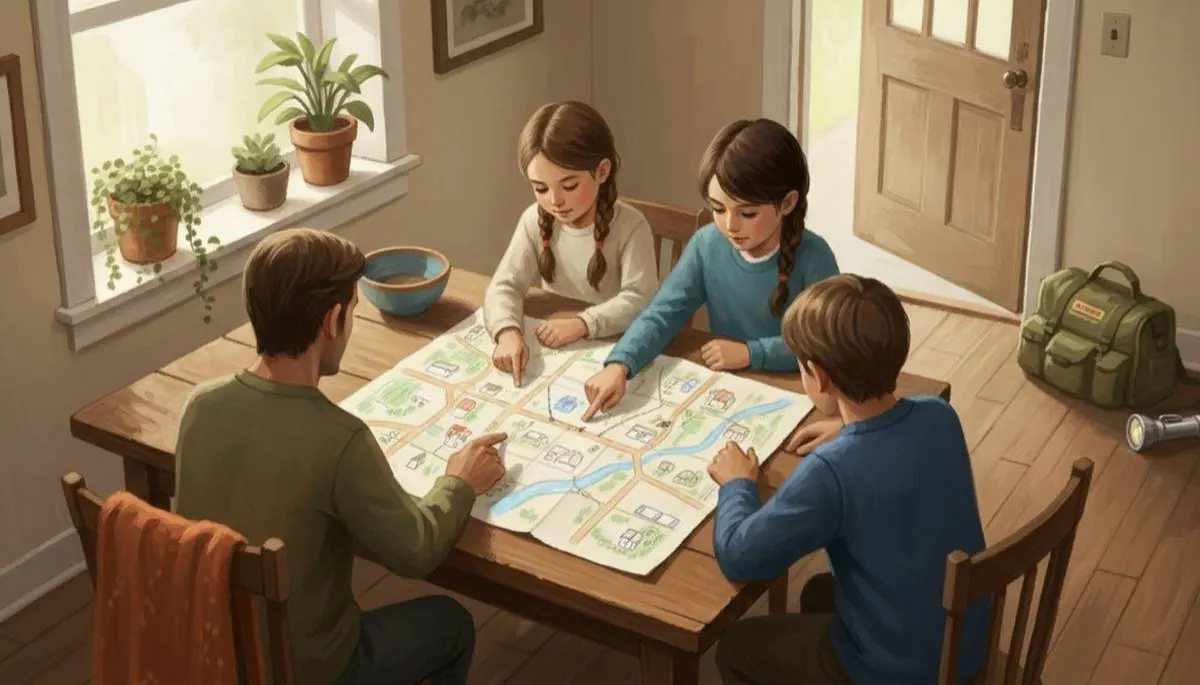
- Rank the real risks for your home by likelihood and impact
- Write a one-page plan for staying, leaving and reuniting
- Reduce the biggest risks with practical changes to the home
Assess your actual risks
Preparation works best when it is specific. Make a simple table with two columns: how likely is it in the next ten years, and how bad would it be. Consider power cuts, storms, flooding, wildfire, heatwave, earthquake, a house fire, a burst pipe, a serious illness at home, and a loss of income. Check official hazard maps for your address: flood zones, wildfire risk, and seismic zones are all published. Ask neighbours what has happened in the last twenty years. The events that score high on both columns get your attention first. For most homes that is a power cut, a house fire and whichever local natural hazard applies.
Stay or go
Every plan has two branches. Sheltering in place is right for power cuts, storms and most heatwaves: you need the 72-hour kit, water, a safe room away from windows and a way to hear official updates. Evacuating is right for wildfire, flood and gas leaks, and the rule is to leave early, before roads jam and smoke closes them. Decide in advance the triggers that mean go, such as an official order, smoke visible from home, or water reaching a certain point on the street. Know two routes out of your area in different directions, and where you would stay: a relative, a friend or an official shelter.
Write the one-page plan
Keep it to a single page on the fridge and a photo on every phone. Include: emergency numbers and your out-of-area contact; two meeting points; where the kit, the grab bags, the water shut-off, gas valve and electrical consumer unit are; each person's role, such as who grabs the pets, who takes the documents, who checks on the neighbour; the evacuation routes and the destination; and medical notes for everyone. Add a checklist for leaving in five minutes: people, pets, medicines, documents, kit, keys, phones. Long plans are never read. A short plan that everyone knows is the goal.
Reduce the risk itself
Planning for an event is good; making it less likely or less damaging is better. Fit smoke and carbon monoxide alarms on every floor. Learn where the water, gas and electricity shut-offs are and label them. Strap tall furniture and the water heater to the wall in earthquake areas. Clear gutters and keep a 50 metre zone of managed vegetation around rural homes in wildfire country, as Portuguese law requires. Keep valuables and documents above flood height. Keep the car at least half full of fuel in fire season. Check your insurance actually covers the hazards on your list. Each fix is small; together they change the outcome.
Practise and review
A plan that has never been rehearsed falls apart under stress. Twice a year, when you rotate the kit, walk through one scenario as a household: a night-time house fire, or an evacuation order with five minutes to leave. Time it, note what went wrong, and fix it. Include the people who need most help, such as small children, older relatives and anyone with a disability, and include pets, because people refuse to evacuate without them. Review the risk table after any real event nearby and whenever you move, have a child or change jobs. Preparedness is a habit, not a purchase, and the point of all of it is calm.
Check yourself
Events that are both likely and severe for your address deserve attention first; official hazard maps and neighbours tell you which.
Wildfire, flood and gas leaks require evacuation before roads close; power cuts and heatwaves are usually managed at home.
A single page that everyone has read and can find beats a detailed document nobody opens.
Pairing a rehearsal with the twice-yearly kit check keeps it current and turns the plan into a habit.
Try it for real: Write and rehearse your plan
- Look up official flood, wildfire and seismic maps for your address and build your risk table
- Write the one-page plan and put it on the fridge and on every phone
- Label the water, gas and electricity shut-offs and show everyone at home
- Run a timed five-minute evacuation drill with the whole household, pets included
- Fix the two biggest problems the drill revealed
🛒 Gear for this skill
As an Amazon Associate I earn from qualifying purchases. It costs you nothing extra and keeps this site free.
Next lesson: First Aid When Help Is Far →
Written and checked by the Human Skills team against the sources below. How we check our content
- ANEPC Portuguese Civil Protection
- Red Cross emergency preparedness guidance
- FEMA Ready.gov
Related lessons
Building an Emergency Kit
Everything your household needs for 72 hours in one place
Basic First Aid Principles
Stay safe, check, call, then help until professionals arrive

What to Do When the Power Fails
The first hour, the first night and keeping food and people safe

What to Do When Communications Fail
Reach the people who matter when phones, data and internet are down