Human Skills
Bleeding and Wounds
Stop the flow, clean the cut, watch for infection
6 minBeginnerUpdated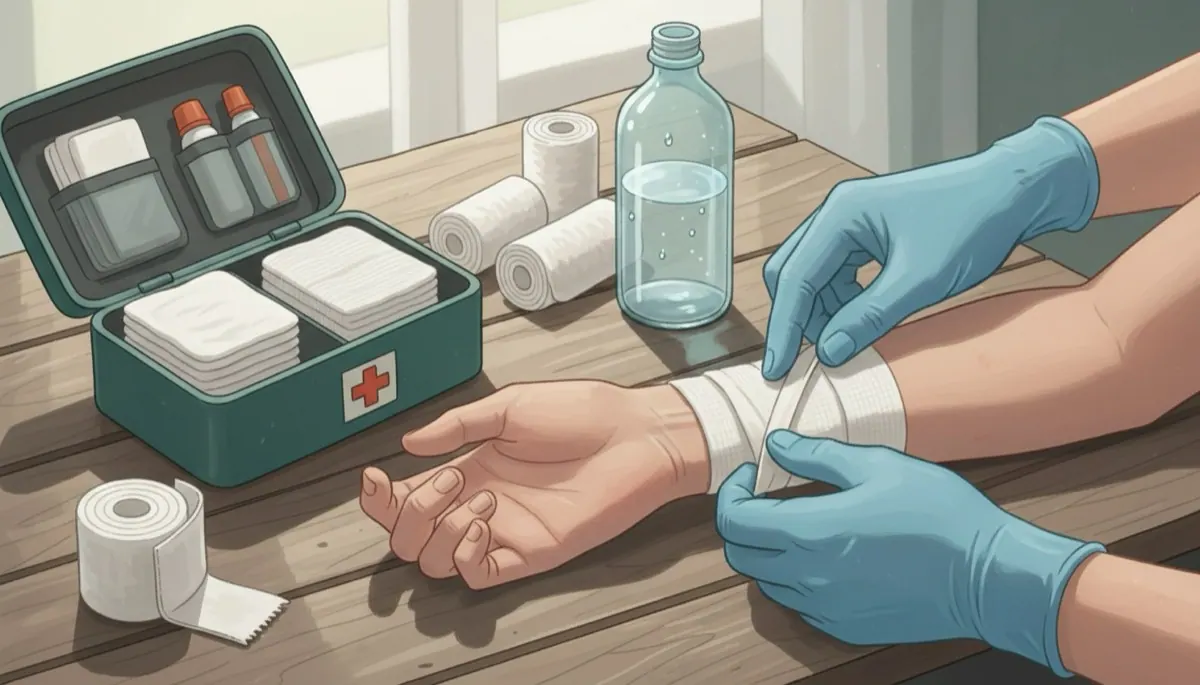
- Control serious bleeding with firm, direct pressure and wound packing
- Know when a tourniquet is justified and why training matters
- Clean minor wounds and recognise the signs of infection
Direct pressure, and keep it on
Most bleeding, even heavy bleeding, stops with firm, direct pressure. Put on gloves if you have them, or use a plastic bag over your hand. Press a clean pad, or any clean cloth, hard onto the wound and hold it for at least 10 minutes without peeking. Lifting it to check breaks the clot that is forming. If blood soaks through, put another pad on top and press harder; do not remove the first. Have the casualty lie down, because heavy blood loss can make them faint. Call your local emergency number (112 in Europe) for any bleeding you cannot control.
Packing deep wounds
A deep wound in a place where you cannot press flat, such as the armpit, groin or a gaping hole in a thigh, may need packing. Push clean gauze, or the cleanest cloth you have, firmly into the wound right down to the bleeding point, and keep feeding it in until the wound is full. Then press hard on top with both hands for at least 10 minutes. It hurts, and it works. Never pack wounds of the chest, abdomen or head: for those, press firmly on the surface and get help urgently.
Tourniquets: last resort for limbs
A tourniquet is only for life-threatening bleeding from an arm or leg that direct pressure and packing cannot control, such as spurting blood that soaks through everything. A proper commercial tourniquet goes 5 to 7 cm above the wound, never on a joint, and is tightened until the bleeding stops. It will hurt a lot. Note the time it went on and tell the emergency services. Once on, do not loosen it. Improvised tourniquets often fail, so carry a real one. Training is recommended, but anyone may use one when a life depends on it. A good first-aid course will show you how.
Cleaning cuts and spotting infection
For small cuts and grazes, rinse under clean running water for several minutes, or pour safe drinking water over it, until you can see no dirt. Pat dry and cover with a clean dressing. Watch it over the next days. Infection shows as spreading redness, heat, swelling, increasing pain, pus, a fever, or red streaks travelling up the limb. Red streaks and fever mean the infection is spreading: see a doctor urgently. Dirty wounds, animal bites and deep punctures also raise the risk of tetanus, so if your jabs are not up to date or you are unsure, get medical advice promptly.
Check yourself
Removing the first pad breaks the clot. Add more and keep pressing.
Clots need time. Peeking early restarts the bleeding.
Tourniquets are a last resort for limbs only, when firm pressure cannot stop life-threatening bleeding. Anyone may use one.
Red streaks and fever mean the infection is moving beyond the wound.
Try it for real: Pack a bleeding kit
- Check your kit has gloves, gauze, dressings and tape, and add what is missing
- Practise holding firm pressure on a rolled towel for a timed 10 minutes
- Check when you last had a tetanus jab
- Look for a first-aid course that covers catastrophic bleeding and tourniquets
🛒 Gear for this skill
As an Amazon Associate I earn from qualifying purchases. It costs you nothing extra and keeps this site free.
Next lesson: Sprains, Breaks and Splints →
Written and checked by the Human Skills team against the sources below. How we check our content
- British Red Cross first aid
- St John Ambulance
- European Resuscitation Council First Aid Guidelines