Human Skills
Burns, Heat and Sun
Cool the burn, spot heat stroke, prevent the rest
6 minBeginnerUpdated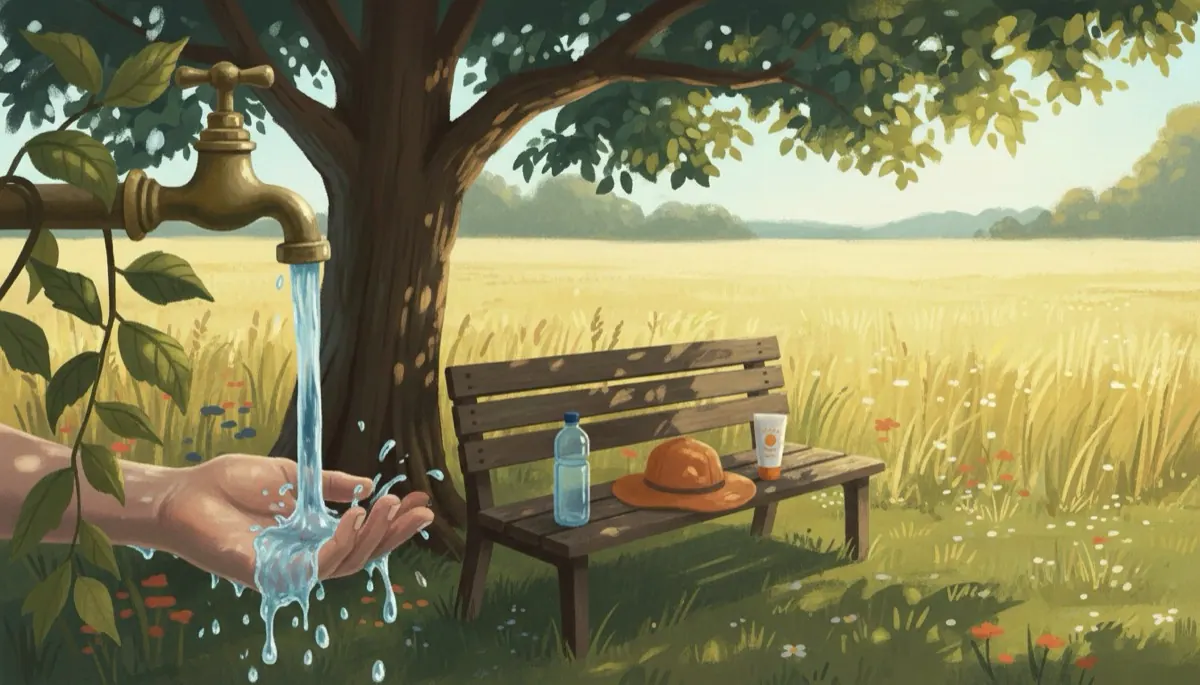
- Cool a burn correctly and know what never to put on it
- Tell heat exhaustion from heat stroke and act fast on heat stroke
- Prevent and treat sunburn and heat-related dehydration
Burns: cool running water for 20 minutes
Cool a burn as soon as possible under cool or lukewarm running water for 20 minutes. It feels long, but it keeps drawing heat out of deeper tissue. Remove rings, watches and clothing near the burn unless they are stuck to the skin. After cooling, cover it loosely with cling film laid on in strips, or a clean plastic bag for a hand. Never use ice, butter, oil, toothpaste or creams, and never burst blisters. Keep the rest of the person warm, especially children, as cooling a large area can chill them.
When a burn needs a hospital
Get professional help for any burn larger than the casualty's palm, any burn on the face, hands, feet, joints or genitals, any deep burn that looks white, charred or leathery, electrical and chemical burns, and any burn on a child or an elderly person. Call your local emergency number (112 in Europe) for large or deep burns, or if there was smoke inhalation: a hoarse voice, coughing or soot around the nose and mouth. Deep burns may not hurt, because the nerves are damaged, so a lack of pain does not mean it is minor.
Heat exhaustion vs heat stroke
Heat exhaustion comes first: heavy sweating, headache, dizziness, nausea, cramps, pale clammy skin and a fast pulse. Move them into shade, lie them down with legs raised, loosen clothing, cool the skin and give water or a rehydration drink. They should improve within 30 minutes. Heat stroke is an emergency. The body can no longer cool itself: temperature rises very high, and the person becomes confused, aggressive, drowsy, or collapses; they may stop sweating. Call your local emergency number (112 in Europe) and cool them fast: soak them with water, fan them, and put cold packs in the armpits, neck and groin.
Sun and sweat
Sunburn is a real burn. Prevent it with a hat, long sleeves, shade in the middle of the day and a high-factor sunscreen reapplied every two hours and after swimming. If it happens, cool the skin with cool water, drink extra fluids, and use an after-sun or aloe gel. Blistering, fever, chills or feeling unwell mean you should see a professional. Heat also drains water fast: on a hot hike you can lose over a litre an hour. Drink little and often, add some salt with food, and watch your urine. Dark and scanty means drink more.
Check yourself
20 minutes of cool running water is the current guidance, and still helps up to three hours after the burn.
Cling film covers it cleanly without sticking. Butter, ice and pastes do harm.
Confusion in the heat points to heat stroke. Call for help and cool them fast.
Shade, rest, cooling and fluids usually bring recovery within 30 minutes.
Try it for real: Heat-ready kit and plan
- Add cling film, a clean bag and sunscreen to your first-aid kit
- Time 20 minutes on a clock so you know how long burn cooling really is
- Write the signs of heat stroke on a card in your kit
- Plan your next summer walk around shade and water refills
🛒 Gear for this skill
As an Amazon Associate I earn from qualifying purchases. It costs you nothing extra and keeps this site free.
Next lesson: Cold, Wet and Hypothermia →
Written and checked by the Human Skills team against the sources below. How we check our content
- British Red Cross first aid
- NHS guidance on burns and heat stroke
- St John Ambulance