 Human Skills
A Whole Chicken, Nothing Wasted
Plucking, a pot roast and a broth from the bones
6 minIntermediateUpdated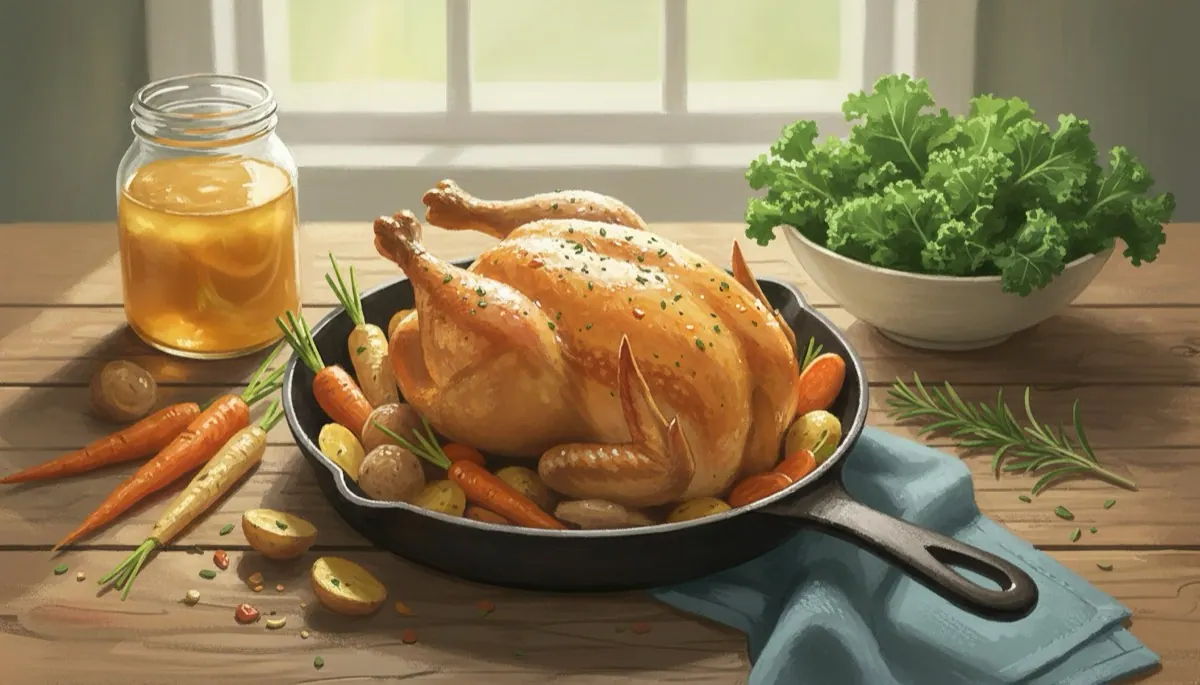
- Scald, pluck and clean a whole bird
- Pot-roast a chicken over a fire to a safe temperature
- Turn the carcass into a broth that makes two more meals
From your own flock
Keeping hens for eggs means that one day an old hen, or a spare cockerel, will become dinner. Killing an animal humanely is a skill you learn in person from an experienced keeper, not from a phone: it must be fast and certain, and the rules on home slaughter for your own table vary by country. Once that is done, the rest is simple kitchen work, and it is exactly the same with a whole chicken from the market.
Scalding and plucking
Heat a large pot of water to 60 to 65 °C, hot enough that you cannot keep a finger in it. Hold the bird by the feet and dip it for 30 to 60 seconds, moving it so the water gets under the feathers. Test a wing feather: if it pulls out easily, it is ready. Pluck in the direction the feathers grow, a handful at a time. Singe off the fine hairs over a flame. Too hot or too long and the skin tears.
Cleaning and chilling
Cut off the feet and head. Make a small cut at the vent, reach in and pull out the organs in one piece without bursting the gut or the green gall bladder next to the liver, which makes meat bitter. Keep the heart, liver and gizzard for gravy. Rinse inside, and chill the bird below 4 °C within two hours. Wash your hands, knife and board with hot soapy water: raw chicken carries Salmonella and Campylobacter.
Pot roast over the fire
Rub the bird with salt and fat, stuff it with an onion and garlic, and put it in a heavy lidded pot on a layer of potatoes and carrots with a glass of water. Set the pot on the embers and put a few coals on the lid. A 1.5 kg chicken takes about 1.5 hours. It is safe when the thickest part of the thigh reaches 74 °C, the juices run clear with no pink, and the leg wobbles loose in its joint.
Broth from the bones
The next day, put the carcass, the skin and any scraps in a pot with an onion, a carrot and water to cover. Simmer gently for 2 to 3 hours, skimming the foam, then strain. That broth is the base of a soup with rice or potatoes, and an old hen cooked this way from the start, simmered for 3 hours, gives both tender meat and a rich stock. Cool broth fast and keep it cold; use it within 3 days or boil it hard before reusing.
Check yourself
60 to 65 °C loosens the feathers. Boiling water cooks and tears the skin.
74 °C in the thickest part of the thigh kills Salmonella and Campylobacter.
The green gall bladder beside the liver turns anything it touches bitter.
Old birds are tough. Slow simmering makes them tender and gives a rich broth.
Try it for real: Three meals from one bird
- Roast a whole chicken and check the thigh reaches 74 °C
- Save the carcass and scraps
- Make a broth the next day
- Use the broth for a soup on the third day
🛒 Gear for this skill
As an Amazon Associate I earn from qualifying purchases. It costs you nothing extra and keeps this site free.
Next lesson: Cooking Mushrooms Without Dying →
Written and checked by the Human Skills team against the sources below. How we check our content
- USDA Safe Minimum Internal Temperatures
- UK Food Standards Agency: Campylobacter
- EU Regulation 1099/2009 on the protection of animals at the time of killing
Related lessons

Potatoes Five Ways Over a Fire
Boiled, ash-baked, fried, mashed and in soup

Cooking River Fish Safely
On a stick, in leaves and as a soup
Rabbit: From Whole to Stew
Skinning, jointing and a slow pot that feeds four
Cooking Mushrooms Without Dying
Which mushrooms to cook, how to cook them, and growing your own