 Human Skills
Rabbit: From Whole to Stew
Skinning, jointing and a slow pot that feeds four
6 minIntermediateUpdated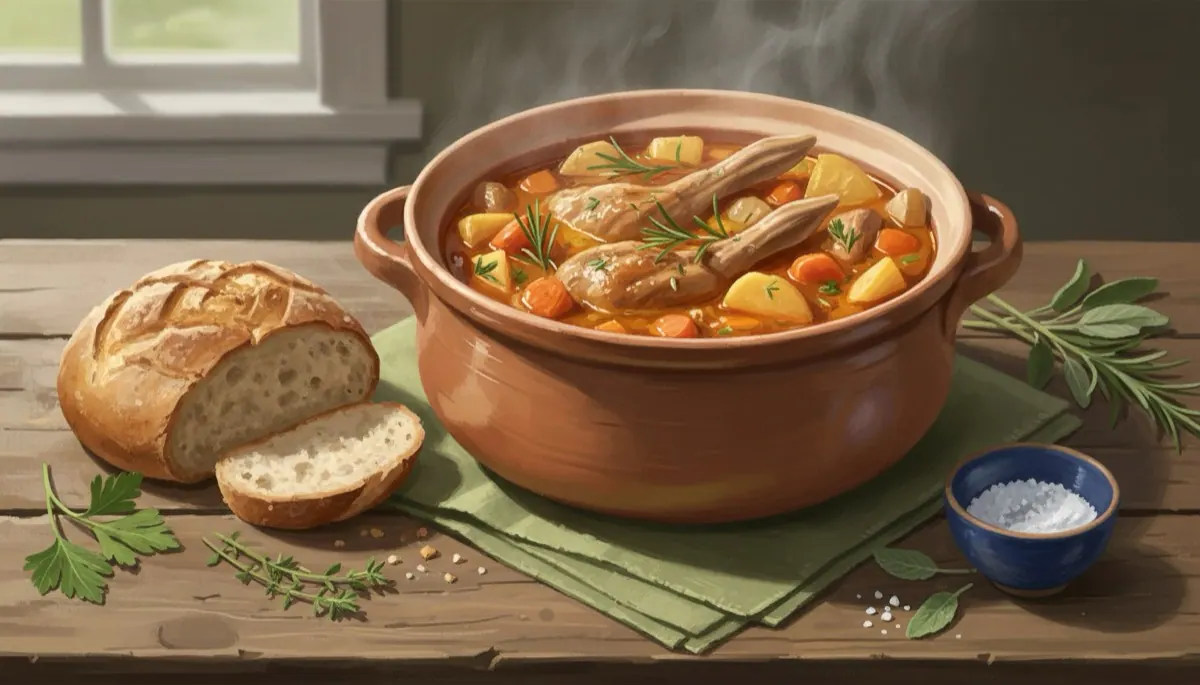
- Skin and joint a rabbit cleanly and hygienically
- Recognise a rabbit that is unsafe to eat
- Cook a slow rabbit stew and know why rabbit needs fat
Where the rabbit comes from matters
Rabbit is lean, fast to raise and one of the most efficient meats a small homestead can produce: a few does in hutches can supply a family year round. Wild rabbits are another matter. Hunting needs a licence almost everywhere and has seasons, and in Iberia wild rabbit numbers have crashed from disease, so taking them is restricted in many areas. Raised rabbits from your own hutch, or bought whole from a butcher, are the simplest and most legal way to learn.
Never eat a sick rabbit
Wild rabbits and hares can carry tularemia, a bacterial disease that passes to people through cuts and through undercooked meat. Do not eat any animal that moved slowly, was easy to catch, or was found dead. After skinning, look at the liver: small white or yellow spots on it are a warning sign, and the whole carcass should be buried or burned, not eaten. Rabbits with swollen, weeping eyes and lumps on the head have myxomatosis; it does not infect people, but a thin, sick animal is poor food. Wear gloves when skinning and wash your hands well.
Skinning and jointing
Rabbit skin comes off easily while the animal is still warm. Pinch the skin on the back, cut a small slit across it, push two fingers in and pull the two halves apart towards the head and the tail like taking off a jumper. Cut through at the neck, wrists and ankles. Open the belly carefully without piercing the gut, and remove the organs in one go, keeping the heart and a clean liver if you want them. Rinse in cold water and chill. Joint it into six pieces: two back legs, two front legs and the saddle cut in two.
A slow rabbit stew
Brown the pieces in fat or oil in a heavy pot. Take them out, soften an onion and garlic, add a glass of wine or water, potatoes, carrots, a bay leaf, salt, and put the rabbit back. Cover with water, put a lid on and simmer gently for 1 to 1.5 hours over low embers or a low flame until the meat pulls from the bone. Cook until the thickest meat reaches 71 °C; well stewed rabbit is far past that.
Why rabbit alone is not enough
Rabbit meat is so lean that a diet of almost nothing else causes rabbit starvation, a real condition trappers described: nausea, diarrhoea and hunger despite eating a lot, because the body cannot run on protein alone. Always cook rabbit with a source of fat, such as olive oil, lard or bacon, and eat it with potatoes, bread, beans or grains.
Check yourself
Spots on the liver can mean tularemia. Do not eat any of it, and wash your hands and knife well.
Tularemia bacteria can pass through small cuts in the skin. Gloves and hand-washing are the protection.
The body cannot live on protein alone. Always add fat and starch to lean meat.
Slow, gentle simmering makes lean rabbit tender and cooks it far past the safe 71 °C.
Try it for real: Cook a whole rabbit
- Buy a whole rabbit from a butcher or use one from your own hutch
- Joint it into six pieces
- Brown it with fat and make a slow stew with potatoes
- Keep the bones for a stock the next day
🛒 Gear for this skill
As an Amazon Associate I earn from qualifying purchases. It costs you nothing extra and keeps this site free.
Next lesson: A Whole Chicken, Nothing Wasted →
Written and checked by the Human Skills team against the sources below. How we check our content
- CDC Tularemia
- USDA Safe Minimum Internal Temperatures
- WHO Tularaemia fact sheet
Related lessons

Potatoes Five Ways Over a Fire
Boiled, ash-baked, fried, mashed and in soup
Cooking River Fish Safely
On a stick, in leaves and as a soup
A Whole Chicken, Nothing Wasted
Plucking, a pot roast and a broth from the bones
Cooking Mushrooms Without Dying
Which mushrooms to cook, how to cook them, and growing your own