 Human Skills
Potatoes Five Ways Over a Fire
Boiled, ash-baked, fried, mashed and in soup
5 minBeginnerUpdated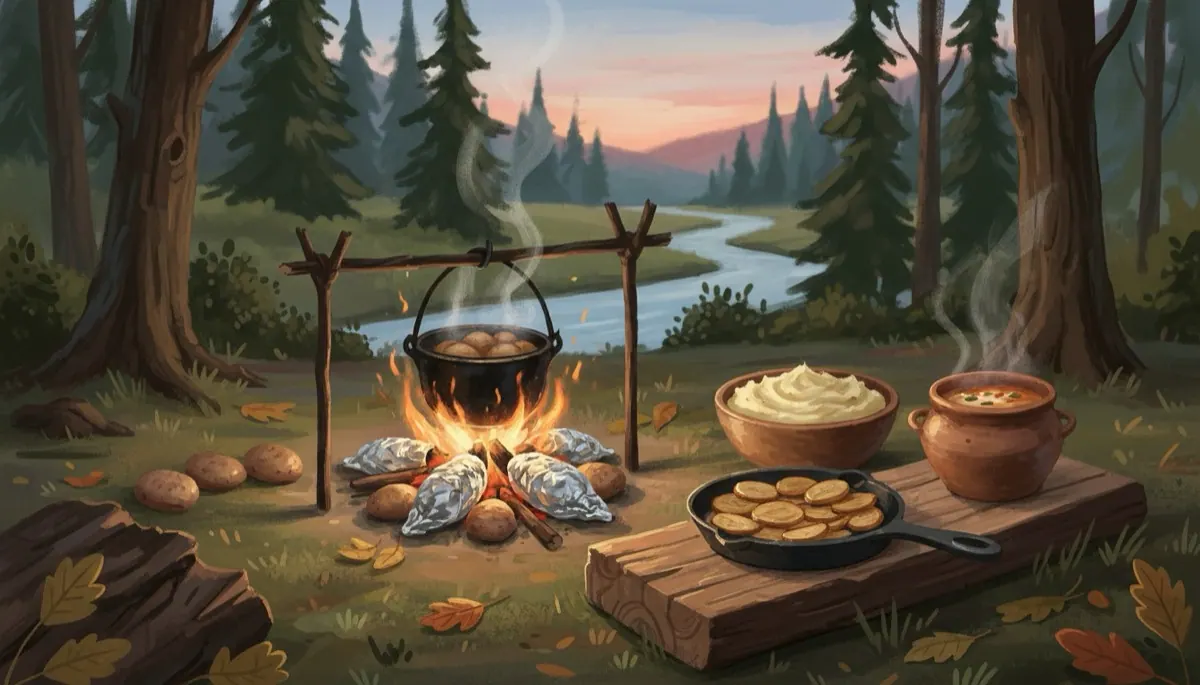
- Cook potatoes five ways with one pot, a pan or just embers
- Recognise green and sprouting potatoes and deal with them safely
- Turn a sack of potatoes into a week of varied meals
Why the potato comes first
One kilo of potatoes gives about 770 kcal, vitamin C, potassium and a little protein, and it keeps for months in a cool, dark place. It grows in almost any soil, and it can be cooked on anything that makes heat. If you learn one staple well, learn this one. Scrub rather than peel: much of the fibre and some of the vitamins sit just under the skin, and peeling wastes up to a fifth of the potato.
Green skin and sprouts: cut them out
Potatoes that have seen light turn green and build up solanine, a natural toxin that causes stomach pain, vomiting and headache. Cooking does not remove it. Cut away every green patch generously, remove the sprouts and the eyes around them, and throw away any potato that is green all over, soft and shrivelled, or tastes bitter. Store potatoes in the dark at 4 to 10 °C so it does not happen in the first place.
Boiled and mashed
Cut into even chunks the size of an egg, cover with cold water, add a good pinch of salt and bring to the boil. Simmer 15 to 20 minutes until a knife slides in with no resistance. Drain, keep the water for soup or bread, and let them steam dry for a minute. For mash, crush them with a fork or a clean bottle with a little fat or milk, salt and whatever you have: wild garlic, chopped onion, fried greens.
Baked in the embers
No pot at all. Wait until the fire has burned down to glowing coals with grey ash. Wrap each potato in foil, or in two layers of wet cabbage or dock leaves, and bury it in the edge of the embers. Turn it after 20 minutes. A medium potato takes 40 to 60 minutes. Squeeze it with a gloved hand: it is ready when it gives all the way through. Without foil the skin chars black, but the inside steams perfectly; just break it open and scoop it out.
Fried slices and potato soup
Fried: slice raw potatoes 5 mm thick, heat a thin layer of fat in a pan until a slice sizzles, lay them flat and leave them alone for 6 to 8 minutes until golden, then turn. Soup: fry an onion, add chopped potatoes and any vegetables, cover with water, salt and simmer 25 minutes, then crush half of it into the liquid to thicken. Potato soup with a handful of cooked nettles or kale is a complete, cheap meal that has fed rural families for generations.
Check yourself
Green means solanine, which cooking does not destroy. Cut it out, or throw away badly affected potatoes.
Size and variety change the time. The knife test is the only reliable one.
Embers give steady heat all round. Flames burn the outside long before the middle cooks.
Light causes greening and warmth causes sprouting. Cool and dark keeps them for months.
Try it for real: One sack, three meals
- Check your potatoes and cut away any green or sprouts
- Bake two in the embers of a fire or barbecue
- Boil the rest and keep the cooking water
- Turn the leftovers into soup the next day
🛒 Gear for this skill
As an Amazon Associate I earn from qualifying purchases. It costs you nothing extra and keeps this site free.
Next lesson: Cooking River Fish Safely →
Written and checked by the Human Skills team against the sources below. How we check our content
- UK Food Standards Agency
- USDA FoodData Central
- EFSA scientific opinion on glycoalkaloids in food
Related lessons
Cooking River Fish Safely
On a stick, in leaves and as a soup
Rabbit: From Whole to Stew
Skinning, jointing and a slow pot that feeds four
A Whole Chicken, Nothing Wasted
Plucking, a pot roast and a broth from the bones
Cooking Mushrooms Without Dying
Which mushrooms to cook, how to cook them, and growing your own