 Human Skills
Cooking River Fish Safely
On a stick, in leaves and as a soup
5 minBeginnerUpdated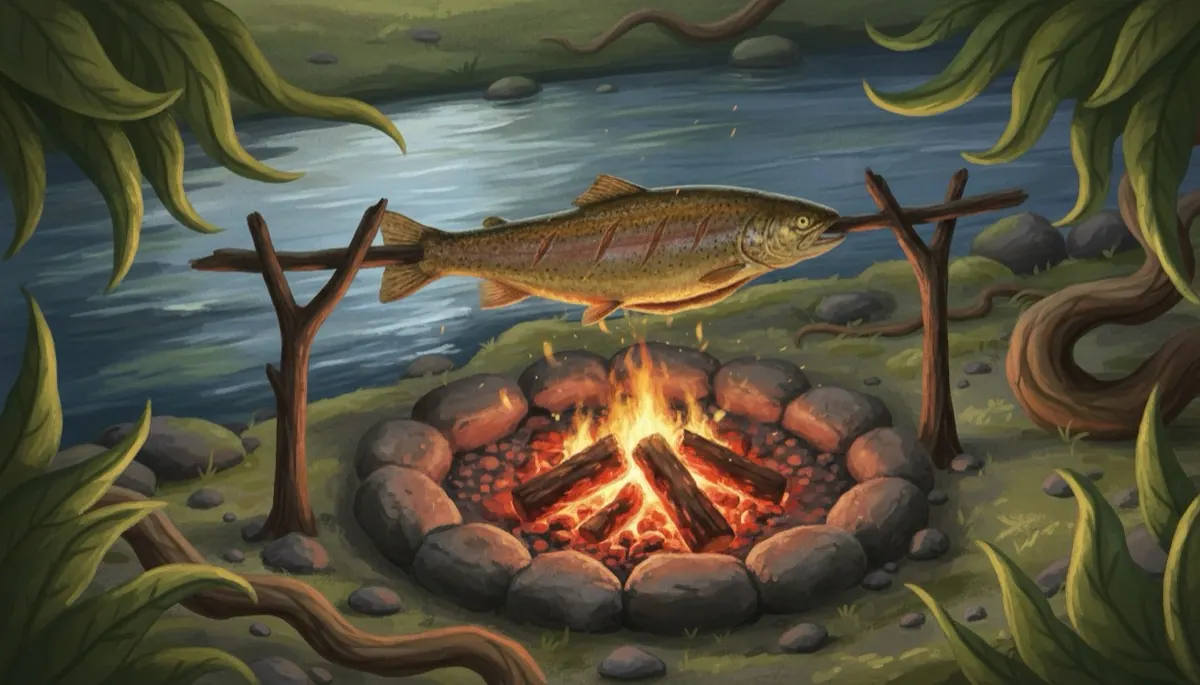
- Cook a freshwater fish on a stick, in a leaf parcel or in a pot
- Know the internal temperature that kills freshwater parasites
- Understand why river fish is never eaten raw
River fish is never eaten raw
Freshwater fish such as trout, perch, pike, carp and barbel can carry parasites, including the broad fish tapeworm, that survive in raw, smoked-cold, marinated or lightly cooked flesh. Sushi, ceviche and carpaccio are for sea fish that have been frozen hard, never for a fish you just pulled from a river. Cook every freshwater fish until the thickest part reaches 63 °C, or freeze it at minus 20 °C for at least 7 days before any raw preparation.
On a stick over the coals
Gut and rinse the fish (the Cleaning and Gutting lesson shows how) and leave the head and skin on: they hold it together. Push a green, non-toxic stick such as hazel or willow in through the mouth and along the backbone. Rub salt inside and out. Hold or prop it 20 cm above glowing coals, not flames, and turn it every few minutes. A trout of 300 g takes 12 to 18 minutes. It is done when the flesh lifts cleanly off the bone at the thickest point.
Steamed in a leaf parcel
Gentler, and it keeps the flesh moist. Season the fish, add a little fat and wild garlic or herbs inside, and wrap it tightly in foil or in several layers of large, well-washed, known-safe leaves such as fig or cabbage. Lay the parcel on the embers for 10 to 15 minutes, turning once. Open one end to check: opaque and flaking means it is ready.
Fish soup from the bones
Nothing is wasted. Put the heads, bones and tails in a pot with an onion, a potato, salt and water to cover. Simmer, never boil hard, for 25 minutes, then strain through a cloth to catch every small bone. Flake any cooked flesh back in, add chopped greens and simmer 5 more minutes. Bony fish like carp and barbel are far better eaten this way than grilled.
Check yourself
Freshwater parasites survive raw, cold-smoked and lightly cooked fish. Heat or deep freezing kills them.
63 °C at the thickest point kills parasites and bacteria while keeping the fish moist.
Oleander and yew are deadly poisonous, and their toxins pass into food. Use a known, safe green stick.
Straining a soup removes the small forked bones that make grilled carp and pike dangerous.
Try it for real: Cook one fish two ways
- Clean one fish from the river or a fishmonger
- Cook half on a stick or in foil over embers
- Make a small soup from the head and bones
- Check both are opaque to the bone before eating
🛒 Gear for this skill
As an Amazon Associate I earn from qualifying purchases. It costs you nothing extra and keeps this site free.
Next lesson: Rabbit: From Whole to Stew →
Written and checked by the Human Skills team against the sources below. How we check our content
- USDA Safe Minimum Internal Temperatures
- EFSA opinion on parasites in fishery products
- FAO fish handling guidance
Related lessons

Potatoes Five Ways Over a Fire
Boiled, ash-baked, fried, mashed and in soup
Rabbit: From Whole to Stew
Skinning, jointing and a slow pot that feeds four
A Whole Chicken, Nothing Wasted
Plucking, a pot roast and a broth from the bones
Cooking Mushrooms Without Dying
Which mushrooms to cook, how to cook them, and growing your own