 Human Skills
From a Garden to a Holding
Tools, hours, the labour calendar and the trap of starting too big
6 minIntermediateUpdated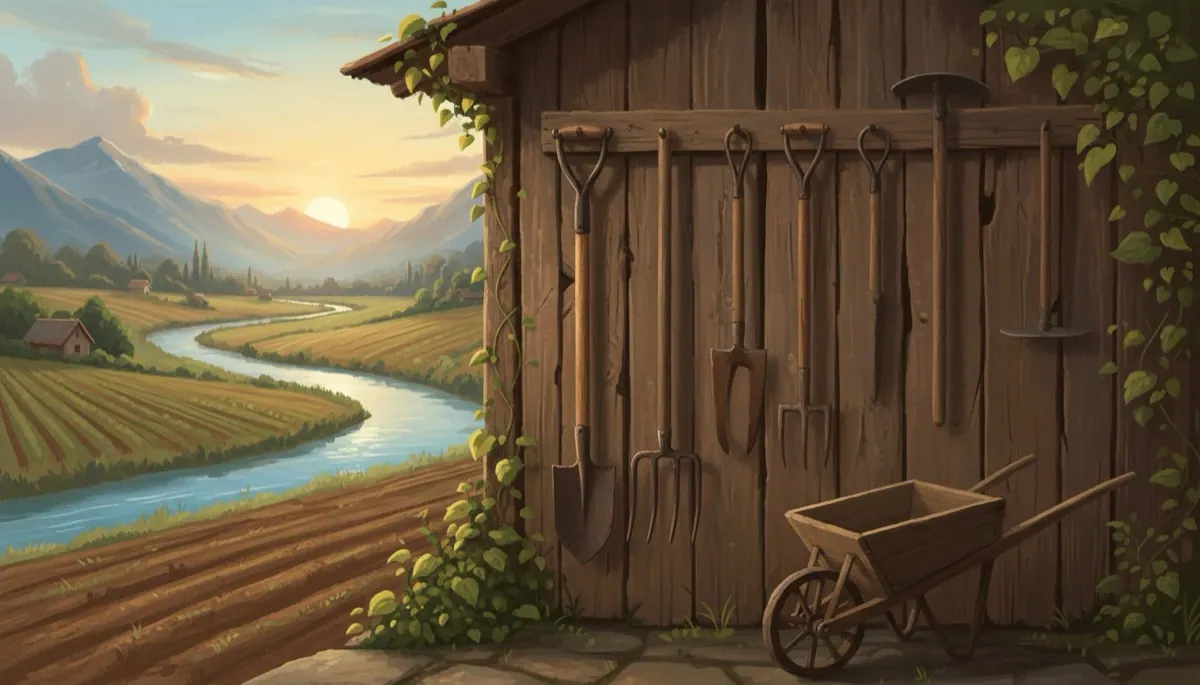
- Estimate the hours a given area really takes
- Decide what to mechanise and what to keep by hand
- Stage an expansion so it survives the second year
Hours, not hectares
Intensively worked vegetable ground takes roughly 2 to 4 hours per 10 square metres per season, once beds are established. So 100 square metres is around 30 hours a year, 500 square metres is 150 to 200 hours, and 2000 square metres is a part time job of 600 hours or more.
Those figures assume established beds, mulch, and no new ground breaking. The first year on any new area is two or three times that, because you are removing perennial weeds, building soil and making beds.
Before you take on more ground, work out how many hours a week you genuinely have in April, June and September, which are the three pinch points, and size the holding to the worst of those weeks rather than to your enthusiasm.
The tools that actually change things
In rough order of value per euro: a good spade and a digging fork, a sharp hoe used weekly rather than a blunt one used monthly, a wheelbarrow, a broadfork for opening ground without inverting it, a scythe or brushcutter for cutting mulch material and keeping edges, and a hose and timer.
A rotavator looks like the answer and rarely is. It chops perennial weed roots into hundreds of new plants, destroys soil structure and creates a pan below the tilled layer. Used once to break new ground it has a place. Used every year it degrades the soil it is preparing.
Keep tools sharp. A hoe you have to lean on is a hoe you will not use.
What to mechanise
Mechanise the jobs that are heavy, repetitive and time bound. Moving material with a barrow or small trailer, mowing and cutting mulch, and watering through a timed drip line are all worth machinery or automation, because they happen often and at the worst moments.
Keep sowing, transplanting, weeding and harvesting by hand at this scale. They need judgement, the machines that do them well are sized for fields, and these are the jobs where you actually see what is happening in your crops.
Above roughly 2000 square metres a two wheel walking tractor with a few implements starts to earn its keep. Below that, the same money spent on irrigation, mulch and a polytunnel returns far more food.
The labour calendar
Work is not spread evenly. In a Mediterranean year, February and March are sowing and planting, April is weeding and irrigation setup, May and June are the first big harvests and the last chance to plant summer crops, July and August are watering, harvesting and preserving almost daily, September is the second sowing window, October and November are lifting, storing, olive picking and planting garlic, and December and January are pruning, manuring and planning.
The two crunches are spring planting and high summer harvest and preserving. Everything else has slack in it.
Look at your own calendar and mark the weeks you are away, busy at work, or have family commitments. A holiday in the first half of August is incompatible with a holding that depends on tomatoes.
The trap of starting too big
The usual failure is not laziness, it is scale. Someone takes on 2000 square metres in March with great energy, plants all of it, and by late June the weeds have won, half the crops have failed and the whole thing feels like a rebuke. The next year they grow nothing.
Expand by no more than about 50 percent a year, and only after a year in which you actually harvested and stored what you planned. Bring new ground into production a piece at a time, keeping the rest under thick mulch, a green manure or grass, which costs nothing and keeps the weeds down until you are ready.
A well run 200 square metres feeds people. A neglected 2000 feeds weeds.
Check yourself
At 2 to 4 hours per 10 square metres per season, 500 square metres comes to roughly 150 to 200 hours a year.
Rotavating multiplies perennial weeds, breaks down soil structure and creates a compacted pan beneath the tilled layer.
Heavy, repetitive and time bound jobs pay for machinery. Sowing, weeding and harvesting need judgement and stay by hand.
Expanding by half after a year you genuinely harvested and stored keeps the work inside what you can actually do.
Try it for real: Size your holding to your real week
- Log the hours you spend on the garden every week for one month.
- Multiply to estimate a full season and compare it with the hours you have in June.
- Mark your three busiest non garden weeks of the year on a calendar.
- Decide the maximum area you can work at those weeks and cap next year's plan there.
- Put any extra ground under thick mulch or a green manure until you are ready for it.
🛒 Gear for this skill
As an Amazon Associate I earn from qualifying purchases. It costs you nothing extra and keeps this site free.
Next lesson: Cool Season and Warm Season →
Written and checked by the Human Skills team against the sources below. How we check our content
- FAO Farm Management for Smallholders
- RHS Allotment Gardening
- John Jeavons, How to Grow More Vegetables
Related lessons
Crop Rotation and Planning a Year of Food
Move plant families, fill every gap, eat all year
How Much Land Feeds One Person
The honest arithmetic behind a number everyone gets wrong
Why Salad Does Not Feed You
The staple four, and the hard problem of fat
Planning a Year of Eating
Work backwards from the kitchen, not forwards from the seed box