 Human Skills
Keeping a Fire Going and Cooking on It
Feed a fire, cook on coals, save embers and put it out properly
6 minBeginnerUpdated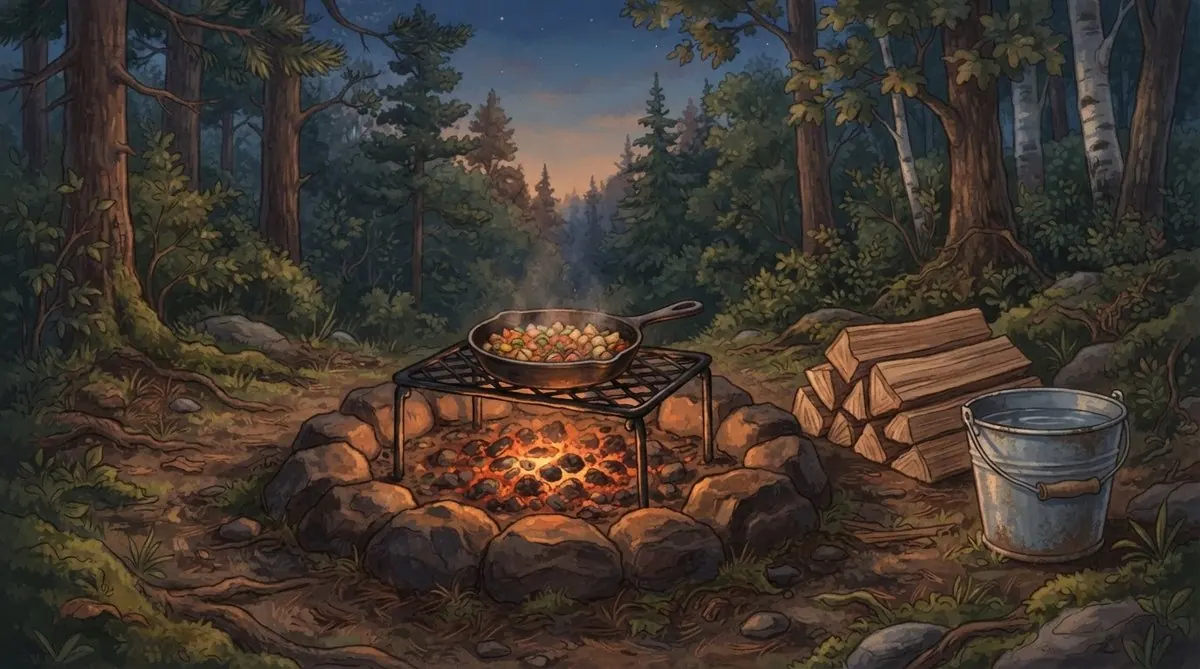
- Feed a fire in stages and judge how much wood you need
- Cook on coals rather than flames
- Put a fire out completely and safely
Feed in stages
A young fire grows in steps. Once tinder and kindling are burning well, add slightly thicker sticks a few at a time, then thumb-thick, then wrist-thick wood. Each size should catch before you add the next. Adding too much at once, or wood that is too big, smothers the flame by blocking air. Keep pieces loosely crossed so air can flow between them. If the fire starts to struggle, stop adding wood and gently blow at the base or open up a gap. A steady small fire is far easier to manage, and safer, than a big roaring one.
Coals cook, flames burn
Tall flames blacken food on the outside while leaving it raw inside, and they coat pots in soot. For cooking, let the fire burn down for twenty to forty minutes to a bed of glowing coals. Coals give an even, steady heat you can control by raking them closer or further away. Push some coals to one side to make a hot zone and a cooler zone. Use a stable pot on flat rocks or a grill, and keep long-handled tools and gloves handy. Never leave cooking unattended, and keep children and pets well back.
How much wood a night takes
People always underestimate fuel. Keeping a small fire going through an evening takes a surprising amount of wood, often an armful an hour, and a whole night needs a pile far bigger than you think. Gather it all in daylight and stack it by size, upwind of the fire and outside the 3 metre clear zone. Only use dead, fallen wood, never cut living trees, and in many places gathering wood is restricted, so check. Dry hardwood burns longer and gives better coals than softwood, which flares up and burns quickly.
Banking and saving coals
To keep a fire for later, you can bank it: rake the coals into a tight pile and cover them with a layer of ash, then lay a thick dry log alongside. The ash slows the burn, and in the morning you can scrape it back, add tinder and blow the coals back to life. Never leave a banked fire unattended for long, and never in dry or windy conditions or where fire rules forbid it. In most real situations it is safer and easier to put the fire out fully and relight it in the morning with your lighter.
Never bring fire inside
Never bring a fire, a stove, a barbecue or a tin of hot coals inside a tent, a car, a cabin with closed windows or any closed shelter, even for a few minutes to warm up. Burning fuel makes carbon monoxide, a gas you cannot see or smell. It makes you sleepy and confused, and it kills people every year in tents and campervans. Coals that look dead still give it off. Warm up with dry clothes, a sleeping bag, hot drinks from a stove used outside, and food instead.
Drown, stir, feel
Putting a fire out properly takes longer than most people think. Stop adding wood an hour before you leave so it burns down to ash. Then drown it with plenty of water, stir the ashes and embers with a stick to expose hidden heat, and drown it again until the hissing stops. Feel for heat with the back of your hand held close, then touch. If it is too hot to touch, it is too hot to leave. If you have no water, use soil, but never bury hot coals, as they can smoulder for hours. Leave no trace of your fire behind.
Check yourself
Coals give steady heat you can control. Flames burn the outside of food and leave the inside raw.
Carbon monoxide is invisible and odourless, and coals keep making it even when they look dead.
Stirring between two soakings exposes buried embers. If it is too hot to touch, it is too hot to leave.
Fire needs air. Too much wood, or wood that is too big, cuts off oxygen and the flame dies.
Try it for real: Cook a simple meal on coals
- Gather and stack a full evening's wood by size before you light anything
- Where and when fires are legal, light a small fire and let it burn down to coals
- Toast bread or heat water over the coals, never leaving it unattended
- Put it out with drown, stir, drown, feel and check it is cold to the touch
🛒 Gear for this skill
As an Amazon Associate I earn from qualifying purchases. It costs you nothing extra and keeps this site free.
Written and checked by the Human Skills team against the sources below. How we check our content
- Leave No Trace Center for Outdoor Ethics
- ICNF Portugal fire regulations
- US Forest Service campfire safety guidance
- Scout Association and Scouts BSA handbooks
Related lessons
Fire Basics: Tinder, Kindling and Fuel
Build a small, controlled fire that lights first time
Fire Safety and Putting a Fire Out
Control, extinguish and never leave a hot spot behind
Natural Tinder: What Catches a Spark
Find, test and carry the fine fuel that turns a spark into flame
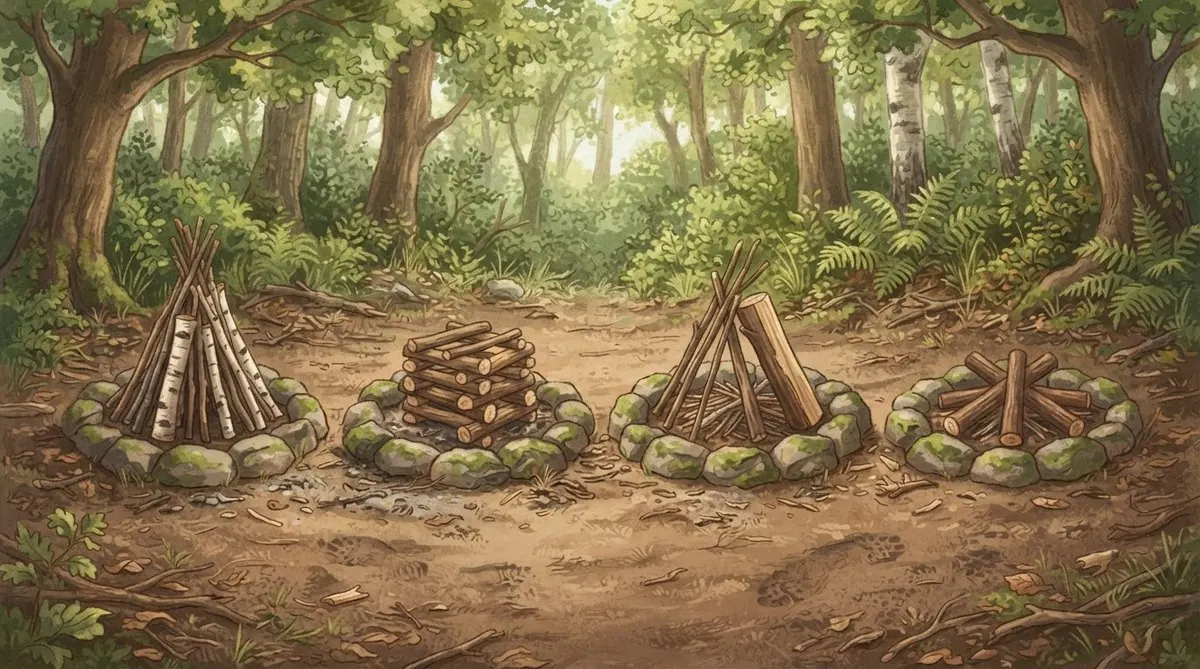
Fire Lays: Teepee, Log Cabin, Lean-to, Star
Choose the right fire structure for lighting, cooking, wind or a long burn