 Human Skills
Fire in the Rain
Find dry fuel, carve feather sticks and protect a fire in wet weather
7 minIntermediateUpdated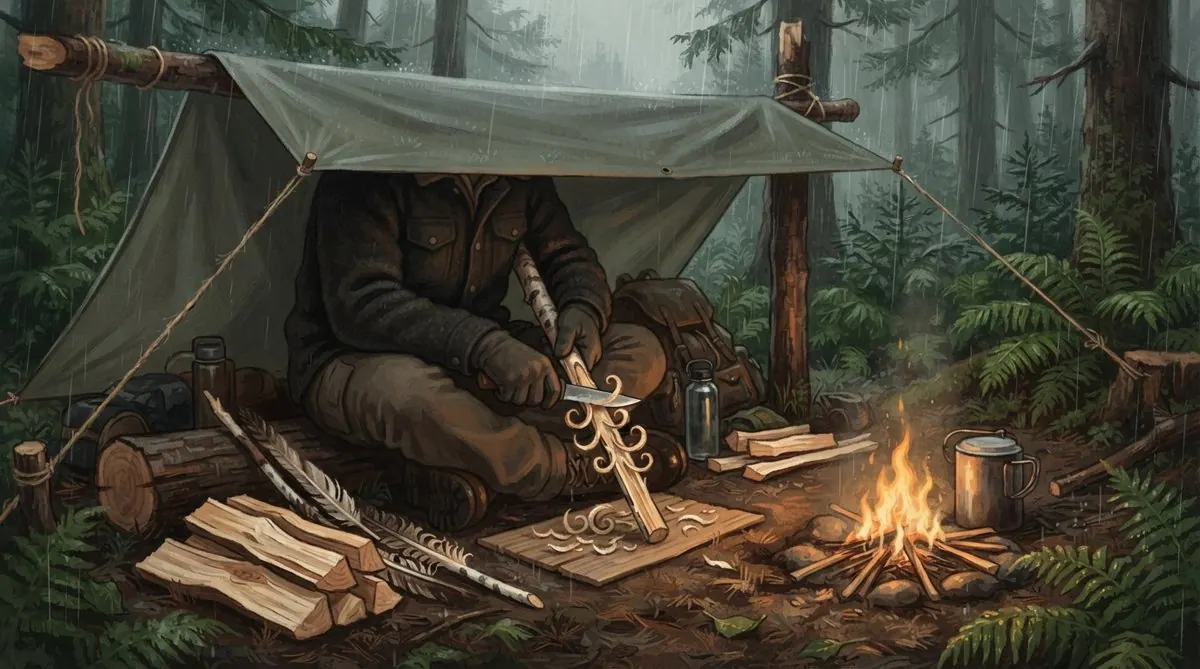
- Find dry wood in wet conditions
- Split wood and carve feather sticks safely
- Protect and raise a fire from wet ground
Wet weather changes the plan
Lighting a fire in the rain is possible, but it takes more time, more preparation and more tinder than you expect. Before you start, ask whether you really need a fire. Often warm, dry clothing, food and a tent or shelter will do more for you than a fire that takes an hour to light. If you do need one, check that fires are allowed, then spend most of your effort gathering and preparing fuel before you strike anything. The secret is that the inside of most dead wood stays dry, even after days of rain.
Where the dry wood is
Ignore wood lying on the ground, which soaks up water like a sponge. Instead look for dead branches still attached to trees, especially the small dead twigs low down on conifers, which are often dry because the canopy shelters them. Standing dead trees and branches that snap cleanly are also good. Look under rock overhangs and fallen trees. Resinous wood such as pine, especially fatwood from old stumps, burns even when damp because the resin repels water. Birch bark lights wet too. Collect everything before you start, ideally twice what you think you need.
Split to the dry core
Even soaked wood is usually dry a few millimetres inside. Split wrist-thick dead sticks to reach that dry core. Batoning means placing a fixed-blade knife on the end of a stick and tapping the spine with another piece of wood to drive it down the grain. Do it kneeling, with the stick standing on a solid log or stump, not on your leg, and keep your free hand clear of the blade's path. Only baton wood thinner than the knife blade is long, and use a sturdy fixed-blade knife, never a folding one, which can snap shut.
Feather sticks
A feather stick is a dry stick with many thin curls carved along it but left attached, like feathers. The curls catch flame easily and give you dry kindling when everything else is wet. Kneel, brace the end of a split, dry stick on a log angled away from you, and push the knife down the stick with long, thin, controlled strokes, stopping before each curl comes off. Always cut away from your body and keep your other hand behind the blade. Make three or four feather sticks and stand them in your teepee over your tinder.
Protect the fire
Build your fire on a platform of dry sticks or split wood laid side by side, so it is not sitting on wet ground or snow that steals heat. Shield it from rain with your body, a rock overhang or a tarp strung high above, at least two metres, never low enough to catch fire. Light it in the most sheltered spot you have, and feed it with your driest, thinnest wood first. Stack spare wood close to the fire so the heat dries it before you need it, but not so close that it catches. Never take the fire into a tent or under a closed shelter.
Bring more tinder than you think
Wet weather eats tinder. The first and second attempts often fail as moisture steals the heat, so carry prepared tinder such as jelly cotton balls or fatwood in a waterproof bag, and keep natural tinder you gather in an inside pocket. Never use petrol, lighter fluid or alcohol to help a reluctant fire, as the vapour can flash back and burn you badly. Patience works better: small dry pieces, plenty of air, and gentle feeding. Once you have a good bed of coals, even damp wood will dry and burn.
Check yourself
Dead branches held off the ground drain and dry far better than wood lying in the wet.
Water rarely penetrates far into dead wood, so splitting exposes dry wood that catches.
Bracing the stick and cutting away from your body keeps the blade moving away from you if it slips.
Wet ground or snow pulls heat away and can drown a young fire. A platform keeps it dry.
Try it for real: Wet weather drill
- After rain, collect dead twigs from low conifer branches and test them with the snap test
- Split three sticks to the dry core, kneeling with the stick on a log
- Carve two feather sticks, cutting away from your body
- Light a fire on a stick platform only where and when legal, with water beside you
🛒 Gear for this skill
As an Amazon Associate I earn from qualifying purchases. It costs you nothing extra and keeps this site free.
Next lesson: Keeping a Fire Going and Cooking on It →
Written and checked by the Human Skills team against the sources below. How we check our content
- Leave No Trace Center for Outdoor Ethics
- ICNF Portugal fire regulations
- US Forest Service campfire safety guidance
- Scout Association and Scouts BSA handbooks
Related lessons
Fire Basics: Tinder, Kindling and Fuel
Build a small, controlled fire that lights first time
Fire Safety and Putting a Fire Out
Control, extinguish and never leave a hot spot behind
Natural Tinder: What Catches a Spark
Find, test and carry the fine fuel that turns a spark into flame
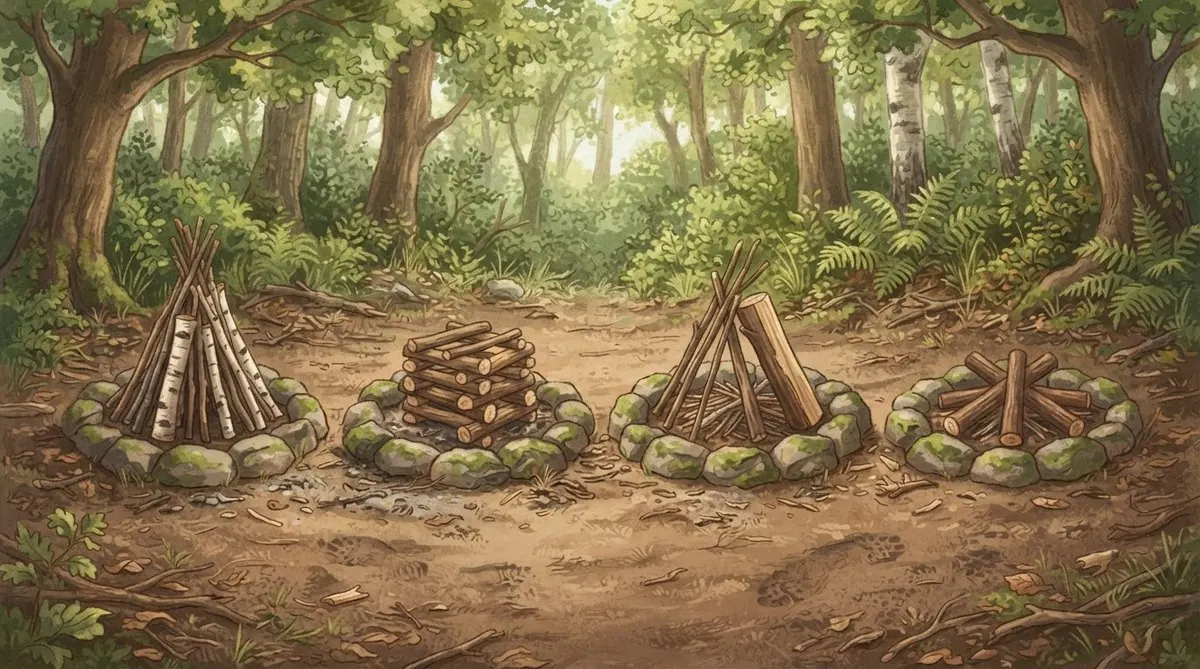
Fire Lays: Teepee, Log Cabin, Lean-to, Star
Choose the right fire structure for lighting, cooking, wind or a long burn