 Human Skills
Safe Drinking Water During an Outage
Storing, rationing and using the water already in your home
5 minIntermediateUpdated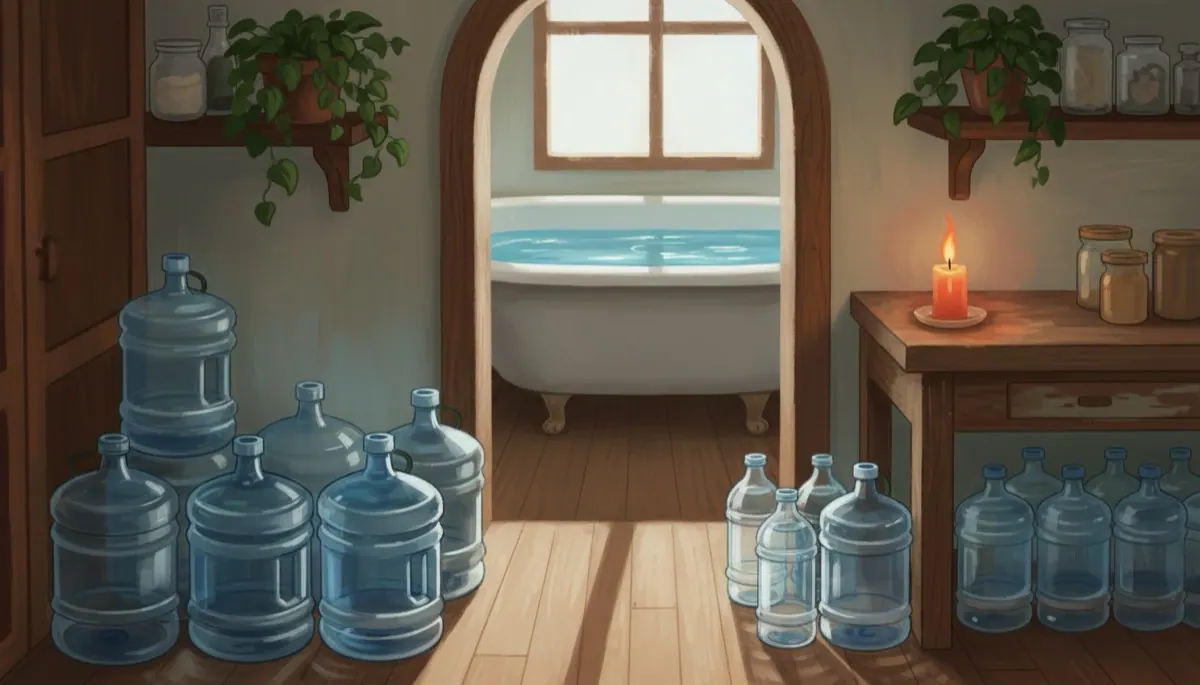
- Store enough water for your household for at least three days
- Find the hidden water already inside your home
- Respond correctly to a boil water notice
How much to store
Plan on 4 litres of water per person per day: 2 for drinking and 2 for basic hygiene and cooking. For a household of three, a three-day supply is 36 litres, which is about six 6-litre supermarket bottles or nine 4-litre ones. Add more for babies, pregnant women, people who are ill, pets and hot weather. Three days covers most local outages; a two-week supply is the target for areas with floods, storms or earthquakes. Store bottles somewhere cool and dark, away from petrol, cleaning chemicals and direct sunlight, and put the date on each one so you can rotate them.
Filling your own containers
Food-grade plastic containers with tight lids work well; never reuse milk or juice jugs because protein and sugar residues feed bacteria. Wash the container with soap, rinse, then sanitise with 1 teaspoon of unscented bleach in 1 litre of water, swirl, wait 30 seconds, and rinse. Fill from a treated municipal supply. If your tap water is chlorinated by the utility, no extra treatment is needed. If it comes from a private well, add 2 drops of unscented bleach per litre before sealing. Label with the date and replace every six months. A clean bathtub liner can hold 200 litres for washing and flushing.
Water already in your home
When the taps stop, your house still holds water you can use. A hot water tank holds 100 to 300 litres: turn off its power or gas first, let it cool, then drain from the tap at the bottom. The toilet cistern, not the bowl, holds several litres of clean water as long as no cleaning tablet is inside. Ice in the freezer melts into drinking water. Canned vegetables and fruit are packed in liquid you can drink. If you know a pipe has failed or a flood is coming, turn off the main stopcock so contaminated water cannot enter, and fill sinks, pots and the bath immediately.
Boil water notices
Utilities issue a boil water notice when the supply may be contaminated, usually after a burst main, flooding or a treatment failure. Until it is lifted, boil all water for drinking, brushing teeth, washing food, making ice and preparing baby formula, using the 1-minute rolling boil. Dishwashers on a hot cycle above 65 degrees Celsius are fine; hand-washed dishes should be rinsed in water with a teaspoon of bleach per 4 litres. Showering is safe for adults if you avoid swallowing water. When the notice is lifted, run cold taps for five minutes and flush ice makers to clear old water from the pipes.
Stretching what you have
Drink what you need; rationing drinking water makes people ill faster. Save water elsewhere instead. Use hand sanitiser rather than washing, wipe dishes with paper before rinsing, and reserve grey water from washing for flushing toilets by pouring a bucket straight into the bowl. Cook foods that need little water, such as canned meals, and avoid salty snacks that increase thirst. Keep pets watered too; they cannot tell you they are struggling. If supplies run low, contact your municipality or civil protection service, which typically sets up water distribution points within a day or two of a major outage.
Check yourself
Plan for 4 litres per person per day, half for drinking and half for hygiene and cooking, and more in heat.
Milk and juice residues feed bacteria and are almost impossible to wash out fully.
The cistern holds clean supply water, provided no cleaning tablet has been added; the bowl is never safe.
Anything that goes in your mouth, including brushing teeth, ice and baby formula, needs boiled or bottled water.
Try it for real: Build a three-day water store
- Count household members and pets and calculate 4 litres per person per day for three days
- Buy or fill that amount, date each container and store it cool and dark
- Locate your main stopcock and hot water tank drain and show another household member
- Set a yearly phone reminder to rotate the store
🛒 Gear for this skill
As an Amazon Associate I earn from qualifying purchases. It costs you nothing extra and keeps this site free.
Next lesson: Fire Basics: Tinder, Kindling and Fuel →
Written and checked by the Human Skills team against the sources below. How we check our content
- CDC Creating and Storing an Emergency Water Supply
- WHO Guidelines for Drinking-water Quality
Related lessons

Finding Water Outdoors
Where water hides and how to read the land for it
Making Water Safe to Drink
Boiling, chemicals and filters, with the right times and doses
Catching Rain in an Emergency
Tarps, gutters, first flush and which roofs to avoid
Storing and Treating Rainwater
Keep it clean, keep it dark, and always treat before drinking