Human Skills
The Allium Year
Garlic, onions and shallots from autumn to the store
6 minIntermediateUpdated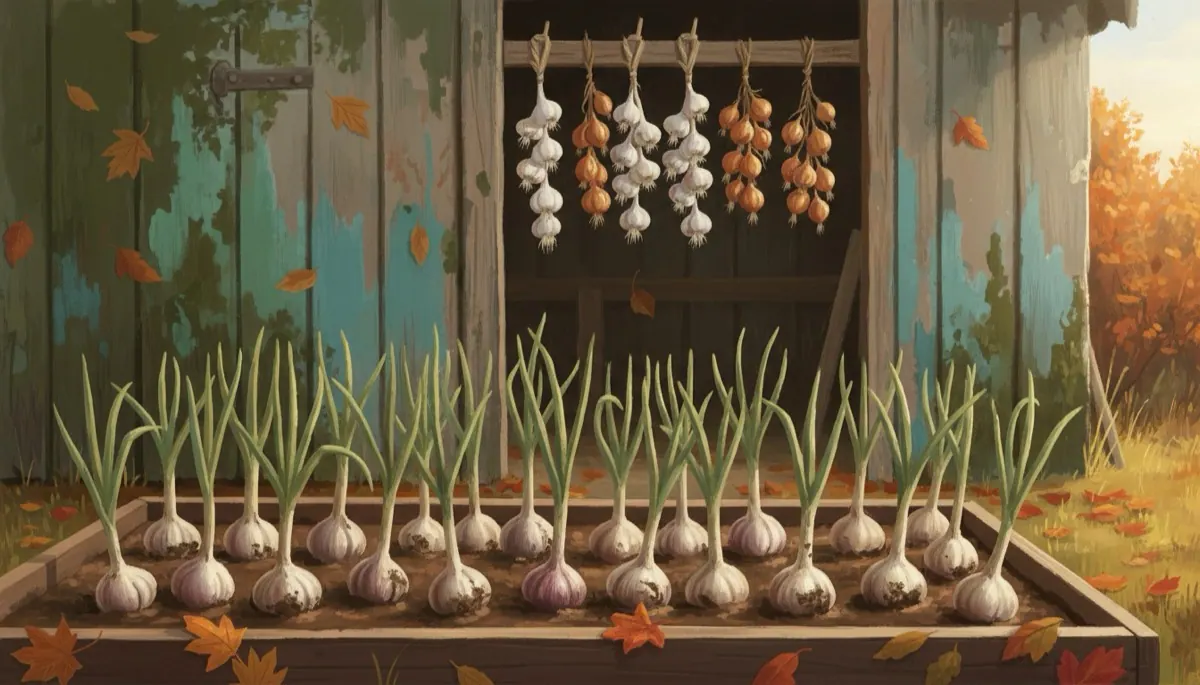
- Plant garlic and onions at the right point in the year
- Explain how day length triggers bulbing
- Dry and store a bulb crop that lasts until spring
Why autumn planting works
Garlic and many onions are planted in autumn, which surprises beginners. The clove or set puts down roots through the cool wet months, sits out the coldest weeks, then has a full root system ready the moment light and warmth return. Garlic in particular needs a cold period, roughly four to eight weeks below 10 degrees Celsius, or it makes one round bulb with no cloves. Plant garlic cloves pointed end up, 5 cm deep and 15 cm apart, in the two months before your first frost. Onion sets go in either in autumn, using overwintering varieties, or in late winter to early spring for a main crop.
Day length and bulbing
Onions grow leaves first and then, on a day length signal, stop making leaves and swell a bulb. Short-day varieties bulb at about 10 to 12 hours of daylight and suit latitudes below roughly 35 degrees. Intermediate-day types bulb at 12 to 14 hours. Long-day types need 14 to 16 hours and only work in northern gardens. Buying the wrong type is the most common onion failure: a long-day variety grown too far south makes leaves forever and never bulbs, while a short-day type grown far north bulbs tiny and early. Every leaf the plant makes before bulbing becomes one ring, so early planting means big onions.
Feeding, weeding and water
Alliums have shallow, sparse roots and lose badly to weeds, so hoe little and often and keep the bed clean all season. Feed nitrogen only in the leaf-making phase, in the first half of growth. Nitrogen once bulbing has started gives thick soft necks that rot in store. Water steadily while leaves are forming, about 20 litres per square metre a week in dry weather. Then, once the bulbs have swollen and the outer skins begin to firm, stop watering completely for the last two to three weeks. Continuing to water at that point is the main cause of split bulbs and short storage life.
Lifting and drying
Lift when about half to three quarters of the tops have flopped and yellowed naturally. Ease bulbs up with a fork rather than pulling by the leaves. Leave them on the surface for a day if the weather is dry and mild, then move them under cover. Dry them in a single layer with air moving all round, at 20 to 30 degrees Celsius, out of direct sun, for two to four weeks. They are ready when the necks are papery and dry all the way through and the skins rustle. Soft or damp necks mean more drying time, not storage.
Plaiting and storing
Softneck garlic and onions with intact tops can be plaited: start with three stems, add a new stem each time you cross, and finish with a loop of string. A plait hangs in air, dries evenly, and lets you spot a bad bulb early. Otherwise trim tops to 2 cm and store in net bags or slatted crates. Keep onions at 0 to 5 degrees Celsius, or in a cool dry room, with low humidity and good air movement. Garlic keeps best at similar temperatures but must stay dry. Keep any thick-necked or damaged bulbs aside and eat those first.
Check yourself
Garlic needs roughly four to eight weeks below 10 degrees Celsius to split into separate cloves.
Onions bulb on a day length signal, which is why short-day, intermediate and long-day varieties exist for different latitudes.
Late water gives split bulbs and soft necks that rot in store.
A damp neck is an open door for rot, so drying takes two to four weeks with air moving all round.
Try it for real: Plant and store a garlic crop
- Buy certified seed garlic suited to your climate, not supermarket garlic
- Plant the fattest cloves 5 cm deep and 15 cm apart before your first frost
- Hoe the bed clean every two weeks through winter and spring
- Stop watering two to three weeks before lifting
- Dry the bulbs for three weeks under cover, then plait or bag them
🛒 Gear for this skill
As an Amazon Associate I earn from qualifying purchases. It costs you nothing extra and keeps this site free.
Written and checked by the Human Skills team against the sources below. How we check our content
- RHS Growing Garlic and Onions
- FAO Onion Production Guidance
- Oregon State University Extension Allium Guides