Human Skills
The Potato Year
Chitting, earthing up, lifting and storing
6 minIntermediateUpdated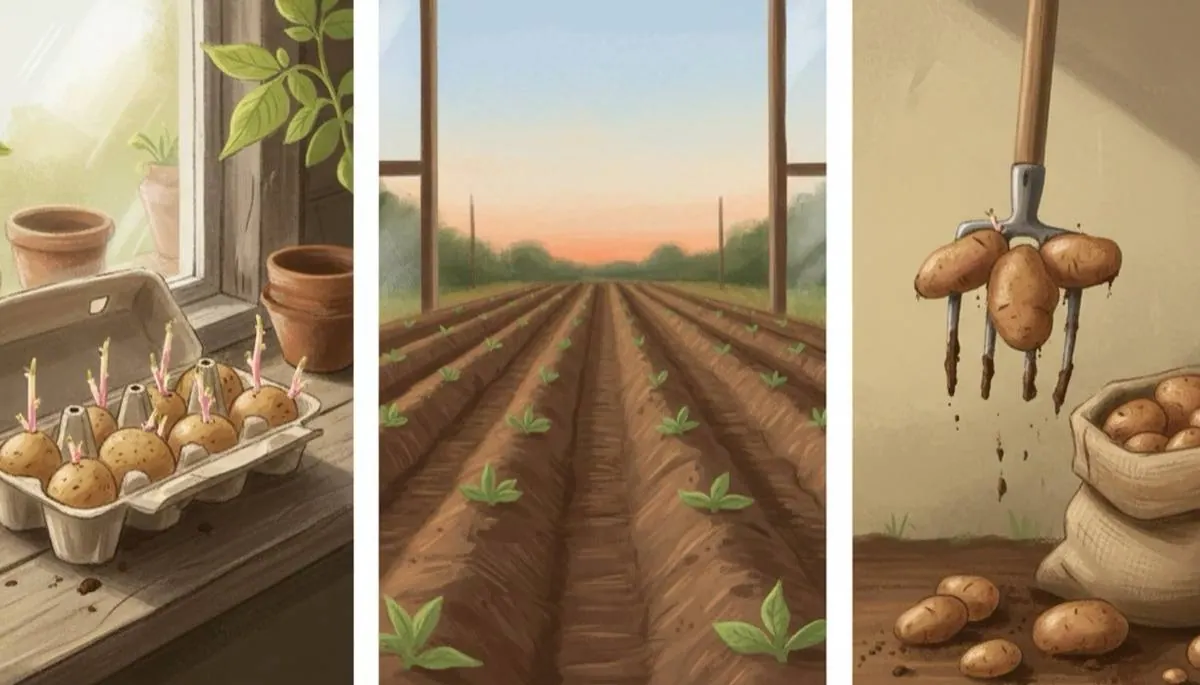
- Choose between first early, second early and maincrop
- Time planting by soil temperature and frost risk
- Cure and store a crop that keeps for months
Earlies and maincrop
Seed potatoes are sold in three groups that are really three lengths of season. First earlies are ready about 10 to 12 weeks after planting, give small waxy new potatoes, and dodge both late frost and summer drought. Second earlies take 13 to 15 weeks. Maincrop takes 18 to 22 weeks, yields two or three times more per plant and gives the floury tubers that store through winter. Earlies suit small plots, containers and hot dry climates because they finish before the worst heat. Maincrop suits anyone with space and a cool dark store. Most gardens do best with a bed of each.
Chitting
Chitting means sprouting the seed potatoes before planting. Six weeks before your planting date, stand them in egg boxes or shallow trays with the end carrying the most eyes facing up, in a bright, cool, frost-free room at about 8 to 10 degrees Celsius. You want short, stubby, dark green or purple shoots 2 cm long, not long white ones, which mean the room is too dark and warm. Rub off all but three or four shoots on maincrop for larger tubers. Chitting buys you two to three weeks of growing season, which matters most for earlies and in short seasons. Maincrop in a long season does fine unchitted.
Planting
Plant when soil 10 cm down holds at 8 degrees Celsius or above and is not waterlogged. In relative terms that is roughly two to four weeks before your last frost for earlies and around the last frost date for maincrop. Dig a trench 12 to 15 cm deep. Space earlies 30 cm apart in rows 60 cm apart, maincrop 40 cm apart in rows 75 cm apart. Cover and firm gently. If shoots break the surface while frost is still likely, pull soil over them or throw fleece across, because frosted haulm blackens and sets the crop back weeks even though the plant usually resprouts.
Earthing up and watering
When the shoots are 20 cm tall, draw soil or compost up around them to leave only the top 5 cm showing, and repeat two or three times over the following month until the ridge is 25 to 30 cm high. This is not decoration. It stops light reaching the developing tubers, which would turn them green and toxic, it supports the plant, and it buries early weeds. Water matters most from flowering onward, when tubers are swelling: 20 litres per square metre once a week beats a light daily sprinkle. Irregular water causes hollow centres and knobbly tubers. Stop watering once the foliage yellows.
Lifting, curing, storing
Lift earlies as soon as the flowers open and you find tubers the size of a hen egg; eat them within days. For maincrop, cut the haulm at ground level and wait two weeks before lifting, which sets the skin and stops blight spores on the foliage reaching the tubers. Lift on a dry day, leave them on the surface for two or three hours only, then cure them in the dark at 15 degrees Celsius and high humidity for 10 to 14 days. Store in paper sacks or wooden crates at 4 to 8 degrees, dark and airy. Never store in plastic or the fridge.
Check yourself
Below about 8 degrees the seed sits in cold wet soil and often rots instead of sprouting.
Light turns tubers green and produces solanine, which is toxic. Earthing up also supports the plant and buries weeds.
Cutting the foliage sets the skins for storage and stops blight spores on the leaves washing down to the tubers.
Potatoes need cool, dark, dry air. Plastic sweats and rots them, and fridge cold turns starch to sugar.
Try it for real: Run one potato bed start to finish
- Buy certified seed of one early and one maincrop variety
- Chit them in a bright cool room six weeks before planting
- Plant at 12 to 15 cm deep once soil reaches 8 degrees Celsius
- Earth up twice as the shoots reach 20 cm
- Cure the maincrop for two weeks in the dark before sacking it
🛒 Gear for this skill
As an Amazon Associate I earn from qualifying purchases. It costs you nothing extra and keeps this site free.
Next lesson: The Allium Year →
Written and checked by the Human Skills team against the sources below. How we check our content
- RHS Growing Potatoes
- FAO International Year of the Potato
- Teagasc Potato Crop Guides